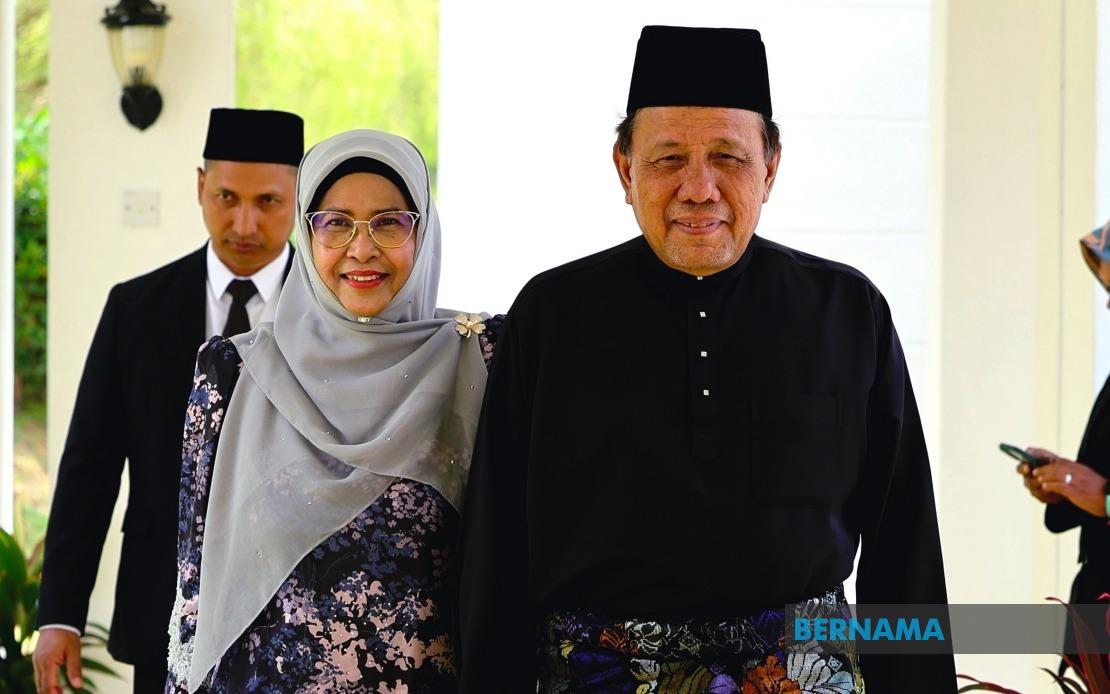
Negeri Sembilan's newly sworn-in Menteri Besar Datuk Ismail Lasim announced on August 2 that the state government would observe an occasion holiday the following day, recognizing the collective efforts that saw the 16th state election through to completion. The decision carries the approval of Tuanku Muhriz Tuanku Munawir, the Yang Dipertuan Besar of Negeri Sembilan, and represents a gesture intended to acknowledge both the electorate and organizations involved in orchestrating the electoral process.
Datuk Ismail, aged 67, had been formally installed as Menteri Besar earlier that morning at Istana Besar Seri Menanti in Kuala Pilah, taking his oath before the state's paramount ruler. During his inaugural press conference in the leadership role, he articulated his appreciation for the royal consent granted not only for his appointment but also for the announcement of the additional rest day. The Menteri Besar framed the holiday pragmatically, noting that numerous stakeholders remained physically drained from the intensive electoral campaign and administration, and that a break would benefit all involved parties.
The timing of this announcement reflects established Malaysian political practice where newly formed state administrations often signal goodwill through symbolic gestures during their opening days. The additional public holiday serves multiple functions: it acknowledges public participation in democracy, provides breathing room for government machinery to reset after the election cycle, and allows citizens and officials alike to recover from the demands of campaigning and voting. For a state that had just completed its democratic exercise, the reprieve carries particular significance.
Results from the August 1 election demonstrated a decisive outcome in Negeri Sembilan's political landscape. The Barisan Nasional coalition captured 18 seats within the 36-member State Legislative Assembly, while Perikatan Nasional secured seven seats. This distribution provided both major coalitions with comfortable working majorities and the capacity to govern effectively without reliance on independent assemblymen or minimal backing. The election had drawn participation from 103 candidates competing across the full complement of state constituencies.
The two-coalition arrangement that emerged from the election results represents a noteworthy development in Negeri Sembilan's recent political trajectory. Barisan Nasional's commanding position, reinforced by Perikatan Nasional's cooperation, creates a governing framework with substantial parliamentary breathing room. This configuration contrasts with the fractured outcomes seen in several other Malaysian states during recent electoral cycles, where single-coalition governments have struggled with razor-thin majorities or required external support. The stability this arrangement provides could facilitate medium-term policy implementation without constant coalition management anxieties.
The approval extended by the Yang Dipertuan Besar underscores the constitutional role that Negeri Sembilan's monarchy continues to exercise in state governance. Royal consent for both ministerial appointments and administrative decisions remains an integral feature of Malaysian federalism, with the Yang Dipertuan Besar wielding significant formal authority despite the largely ceremonial nature of much constitutional monarchy in modern Malaysia. Datuk Ismail's explicit acknowledgment of this approval in his public remarks demonstrates deference to these established conventions.
For Malaysian observers tracking state-level political developments, Negeri Sembilan's election outcome carries implications beyond the state boundaries. As a component of Malaysia's federal system, developments in smaller states often presage broader patterns in electoral behaviour and coalition dynamics. The strength of Barisan Nasional's performance here, measured against Perikatan Nasional's more modest showing, provides data points for assessing relative coalition fortunes across the peninsular electorate. These trends become relevant benchmarks as attention turns toward future state elections and the eventual federal contest.
The declaration of the public holiday also reflects practical governance considerations. Election days impose substantial demands on government machinery, from security provision to logistical coordination across multiple constituencies. Administrative staff require recovery time to transition from election mode to regular governance operations. Providing an official rest day facilitates this transition while demonstrating responsiveness to public exhaustion, a consideration particularly relevant in tropical climates where campaigning seasons prove physically demanding for participants.
Datuk Ismail's leadership priorities will likely emerge in coming days as his administration settles into routine operations. His opening gesture of declaring a public holiday and his explicit expressions of gratitude toward the Yang Dipertuan Besar signal an administration attentive to constitutional niceties and public sentiment. How this leadership style manifests across subsequent policy decisions and governance approaches will shape perceptions of his tenure in the months ahead.

