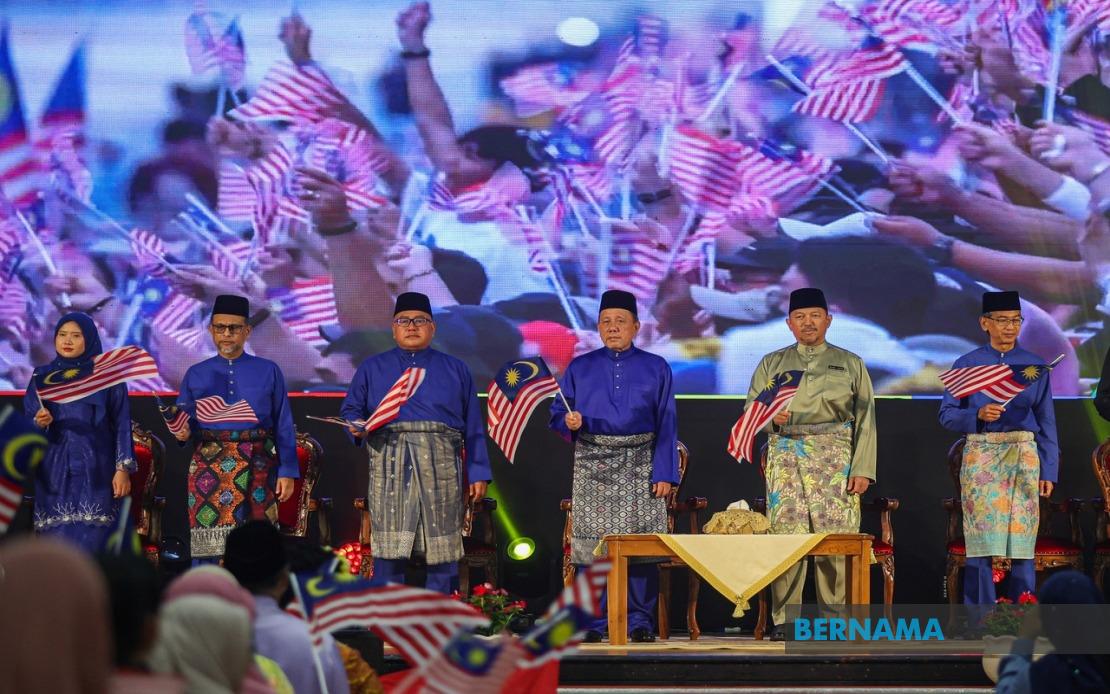
Negeri Sembilan's Menteri Besar Datuk Ismail Lasim has set out an ambitious vision for the state, anchoring the administration's work around three foundational pillars: stability, progress, and prosperity. Speaking at the Negeri Sembilan State-Level Public Servants Assembly in Seremban, Ismail framed these principles as essential guides for tackling public concerns, streamlining government processes, and raising living standards across the state's 1.2 million residents. The articulation of these pillars signals a deliberate shift toward institutionalised governance rather than mere electoral majorities, with clear implications for how the state administration will operate and engage with citizens over the coming years.
The emphasis on stability reflects a recognition that sustainable development requires more than political popularity. Ismail stressed the importance of anchoring public confidence in constitutional institutions, the monarchy, and established customs—the foundational structures that provide legitimacy and predictability to government action. This framing is particularly relevant for Negeri Sembilan, a state with a long history of constitutional monarchy traditions. By positioning institutional strength alongside political stability, Ismail signals to both the public and investors that administrative continuity and adherence to established frameworks will characterise the administration's tenure. Such messaging carries weight in Malaysia's broader political landscape, where questions of institutional integrity and consistency have become increasingly prominent.
Progress, as Ismail defines it, extends beyond conventional GDP metrics to encompass opportunity creation and equitable geographic distribution. This interpretation carries significant implications for how the state allocates resources and prioritises development initiatives. Rather than concentrating investment in established urban centres, the administration intends to ensure that rural communities, Federal Land Development Authority (Felda) settlements, and peripheral areas benefit from economic expansion. This balanced approach addresses a persistent challenge in Malaysian state governance: the tendency for prosperity to concentrate in urban cores while rural constituencies lag behind. For Negeri Sembilan's agricultural communities and smallholder farmers, such a commitment to inclusive development represents a tangible departure from development models that historically prioritised commercial hubs.
The economic backdrop underscores the administration's confidence in achieving its targets. Negeri Sembilan's state revenue has already reached RM522.4 million, with officials projecting that the RM1 billion revenue target by 2030 remains attainable. The state's gross domestic product expanded to RM55.8 billion in the most recent reporting year, up from RM54.3 billion previously, representing growth of 2.6 per cent. This expansion was propelled by the services and manufacturing sectors, which have emerged as drivers of economic activity. For investors and businesses evaluating opportunities in Malaysia's states, these figures suggest a diversifying economic base less reliant on primary commodities alone. The balance between services and manufacturing also indicates potential resilience to sector-specific downturns.
Ismail's emphasis on attracting quality investments points to a deliberate selectivity in the state's economic development strategy. Rather than pursuing investment at any cost, the administration seeks capital inflows that create sustainable employment, transfer technology, and integrate Negeri Sembilan into higher-value supply chains. This approach aligns with broader Malaysian efforts to move beyond low-cost manufacturing toward knowledge-intensive activities. For multinational corporations and domestic conglomerates assessing locations within Malaysia, Negeri Sembilan's positioning as a state serious about investment quality rather than mere volume carries strategic importance.
The newly constituted State Executive Council brings together diverse professional backgrounds and expertise, according to Ismail's characterisation. This composition is intended to strengthen the administration's capacity to navigate complex policy challenges simultaneously across economic, social, and institutional domains. The coordination between the Exco and the broader public service apparatus—a recurring theme in Ismail's remarks—suggests recognition that implementation capacity depends on bureaucratic alignment and departmental cooperation. In Malaysian state governance, such coordination has historically proven challenging, with turf competitions and bureaucratic silos sometimes impeding coherent policy execution.
Youth opportunity and agricultural strengthening feature prominently in the administration's stated objectives. The focus on youth reflects both demographic reality and economic necessity: younger Malaysians seeking employment and entrepreneurship opportunities look for states offering viable pathways and support systems. Similarly, the commitment to strengthening agricultural and rural economic sectors acknowledges that Negeri Sembilan, despite its urban centres, retains significant rural populations dependent on farming and agro-business. These constituencies represent both electoral constituencies and economic stakeholders whose prosperity contributes to overall state wellbeing.
The launch of the Kibar Jalur Gemilang campaign during Ismail's address demonstrates the administration's integration of civic nationalism into its governance messaging. By calling on government departments, local authorities, schools, business establishments, and residents to display the national flag during National Day celebrations, the administration ties patriotic observance to community participation and state identity. This blending of governance announcements with national symbolism reflects a broader pattern in Malaysian state politics, where administrative initiatives frequently intersect with national and religious observance.
For Malaysian policymakers and observers, Ismail's framework offers insight into how a newly constituted state administration approaches the transition to full authority. The emphasis on institutional stability rather than purely majoritarian politics suggests sophistication in understanding that electoral mandates, while important, require institutional architecture to translate into effective governance. The tripartite framing of stability, progress, and prosperity also reflects attempts to balance competing demands: institutional conservatives seeking predictability, growth advocates pushing for economic expansion, and equity-minded observers demanding inclusive prosperity. How successfully the Negeri Sembilan administration executes against these three pillars over the coming months and years will indicate whether this framework functions as genuine strategic guidance or serves primarily as rhetorical positioning.

