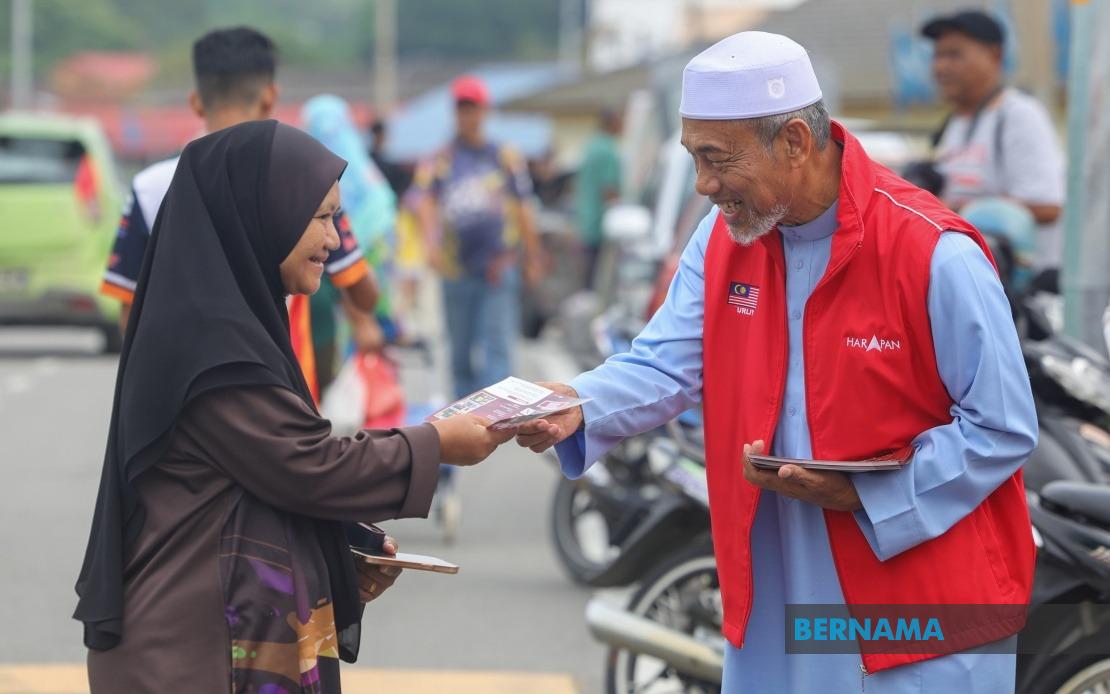
The race for control of Negeri Sembilan intensified on July 19 as candidates across the political divide launched coordinated efforts to connect directly with voters through intensive grassroots activity. With just over a fortnight remaining until polling day on August 1, contenders are maintaining relentless schedules designed to ensure maximum visibility and personal engagement at the constituency level. The second day of the official campaign period saw candidates executing carefully planned programmes that began before dawn and stretched into the evening, reflecting the high stakes involved in determining the state's political direction.
Menteri Besar Datuk Seri Aminuddin Harun, defending the Linggi state seat under the Pakatan Harapan banner, exemplified the intensity of the push. The Port Dickson Member of Parliament commenced his day with dawn prayers at Masjid Jamek Pasir Panjang alongside local congregants, establishing a tone of community integration that would characterise his subsequent movements. Following breakfast with residents, Aminuddin conducted consecutive walkabouts across multiple neighbourhoods including Pasir Panjang town, Taman Setia, Taman Kekatong, and two areas within Telok Pelandok, while also facilitating a dedicated engagement session with members of the Indian community. As chairman of Negeri Sembilan Pakatan Harapan and PKR vice-president, Aminuddin framed these encounters as opportunities to listen directly to constituent concerns rather than simply deliver campaign messaging.
Aminuddin articulated the strategic rationale underlying such labour-intensive approaches, emphasising that personal interaction strengthens both voter connection and his personal commitment to service delivery. His stated conviction that continued public support would enable comprehensive development benefiting all segments of Linggi's population underscores the narrative that Pakatan Harapan candidates are advancing across the state. This messaging strategy appeals particularly to voters seeking reassurance about post-election governance, moving beyond simple vote-seeking to implying a covenant of sustained engagement and results-oriented administration.
The opposition Barisan Nasional coalition pursued comparable grassroots strategies, though often leveraging incumbency advantages. Datuk Seri Mohamad Hasan, the incumbent Rantau assemblyman and BN deputy chairman known colloquially as "Tok Mat", invested campaign time at the BN Polling District Centre in Taman Kelab Tuanku, Mambau, allowing residents to approach him in structured settings. Meanwhile, Negeri Sembilan UMNO Liaison Committee chairman Datuk Seri Jalaluddin Alias combined community engagement with youth mobilisation, attending a sepak takraw tournament in Pertang before visiting the Orang Asli settlement at Kampung Utara Putra, demonstrating efforts to maintain support across demographic groups.
Different candidates have calibrated their campaign intensity to varying degrees. Some contenders, particularly those in competitive constituencies, have scheduled as many as nine separate programmes daily, transforming what might traditionally be campaign activities into sustained presence within communities. This density of engagement reflects contemporary political competition in Malaysian state elections, where marginal gains across multiple constituencies can determine overall outcomes. The Seri Menanti Pakatan Harapan candidate, Kamarul Ariffin Wafa, exemplified this approach by orchestrating eight programmes including market visits and community interaction sessions. Similarly, Serting PH candidate Yaacob Mahmood adopted informal breakfast sessions and business district visits in Bandar Seri Jempol, explicitly framing these as opportunities for candid dialogue rather than formal political address.
The geographic distribution of such activity reflects electoral mathematics in Negeri Sembilan, where victory ultimately depends on aggregate performance across multiple state constituencies rather than individual seat dominance. Candidates recognise that even modest improvements in voter turnout and support in secondary areas can produce consequential swings when aggregated statewide. This reality encourages the comprehensive grassroots presence evident across both Pakatan Harapan and Barisan Nasional campaigns, with candidates treating even small neighbourhood pockets as potentially decisive battlegrounds.
The electoral context underpinning this intensity stems from the state assembly's dissolution on June 5, triggered by political developments at the state level. The Election Commission subsequently set August 1 as the official polling date, with early voting scheduled for July 28 for military personnel, their spouses, and police officials. This compressed timeline compressed candidates' preparation and outreach periods, explaining the relentless pace evident by mid-campaign. With 12 days separating the July 19 campaign activities from election day, candidates face pressure to consolidate voter commitment while maintaining visibility.
The electorate itself comprises 889,490 registered voters distributed across Negeri Sembilan's constituencies, encompassing 867,151 ordinary voters alongside 16,884 military personnel and spouses and 5,455 police officials eligible for advance voting. This diverse voter base reflects Negeri Sembilan's composition spanning urban, semi-urban, and rural areas with distinct demographic characteristics. The inclusion of military and police voters through early voting provisions adds procedural complexity but also creates distinct engagement opportunities, as candidates attempt to build support across these constituencies.
Candidates' explicit emphasis on listening to constituent concerns rather than delivering top-down messages reflects evolving campaign tactics in Malaysian electoral politics. Direct engagement at markets, residential neighbourhoods, and religious institutions positions candidates as responsive to grassroots sentiment rather than imposing predetermined agendas. This rhetorical positioning carries particular weight in state elections, where governance directly affects local service delivery, infrastructure development, and community programmes that residents experience regularly. The willingness to invest substantial candidate time in informal settings suggests campaign strategists believe personal connection and demonstrated attentiveness generate electoral returns exceeding those from mass media exposure alone.
The competitive intensity evident in Negeri Sembilan reflects broader patterns across Malaysian state elections, where Pakatan Harapan and Barisan Nasional remain locked in close competition for control of state governments. Neither coalition enjoys the dominance necessary for complacency, compelling both to deploy resources and candidate effort comprehensively. Regional implications extend beyond Negeri Sembilan itself, as state election outcomes influence internal coalition dynamics and shape momentum heading toward potential federal electoral contests. Successive state elections therefore function as competitive laboratories where parties test messaging strategies, assess candidate viability, and gauge voter sentiment on various policy domains and leadership configurations.

