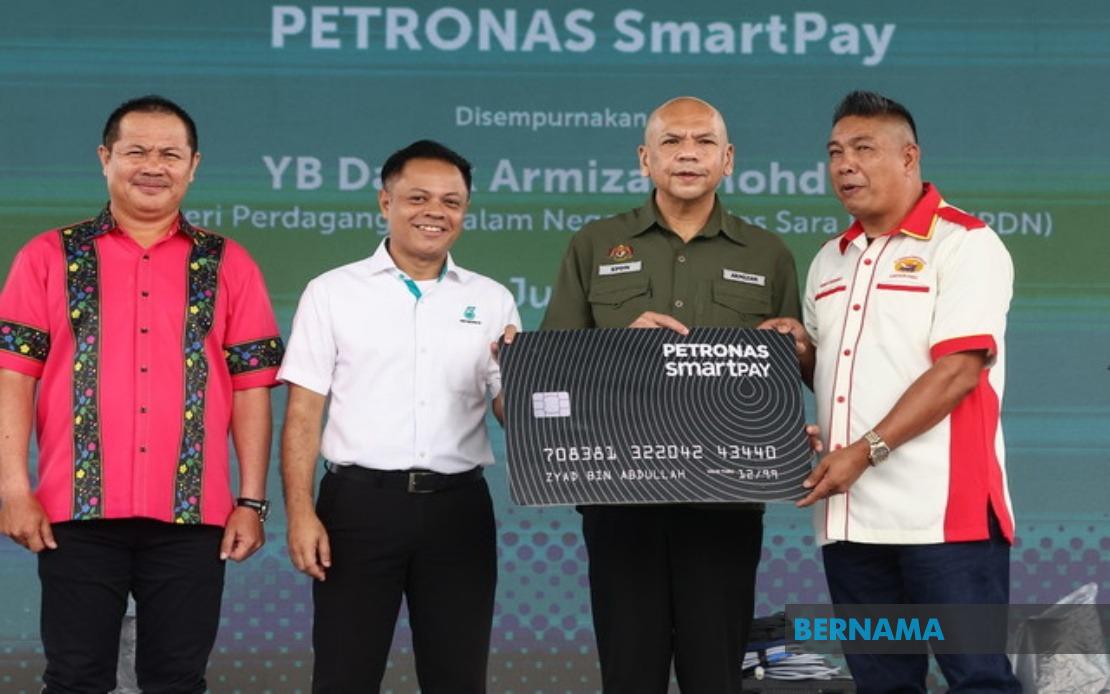
The Subsidised Diesel Control System (SKDS) has achieved significant penetration in East Malaysia, with Domestic Trade and Cost of Living Minister Datuk Armizan Mohd Ali disclosing that 67.9 per cent of companies registering under the newly expanded sector categories are headquartered in Sabah, Sarawak and Labuan. This concentration represents 10,453 registered enterprises operating 18,538 vehicles across the three regions, reflecting strong uptake in Malaysia's eastern territories where commercial transport plays a crucial economic role.
The announcement came during a fleet card handover ceremony at the Jom Malaysia Festival in Sandakan, where Armizan highlighted the positive response to the SKDS expansion that commenced on July 3. Since that date, 15,388 companies nationwide have registered under the new jeep and pickup vehicle categories, bringing the total fleet size to 25,781 vehicles. The disproportionately high participation from East Malaysia suggests that the scheme's benefits resonate particularly strongly with regional businesses, possibly reflecting the greater reliance on commercial vehicles for commerce in areas with less developed infrastructure.
The SKDS expansion introduced eligibility for sole proprietorships and partnerships that utilise jeeps and pickup trucks registered under private use classification, enabling these businesses to access a RM300 diesel subsidy through the established SKDS mechanism. This structural change fundamentally broadens the scheme beyond traditional transport operators, incorporating smaller enterprises and family-run operations that depend on such vehicles for commercial purposes. The decision to include these previously ineligible categories appears designed to recognise the reality that many East Malaysian businesses operate with flexible vehicle classifications that blur the line between personal and commercial use.
Beyond the newly expanded jeep and pickup segment, the SKDS framework encompasses two established sectors: public land transport operators and companies involved in land transport for consumer goods distribution. Participating enterprises in all three sectors gain access to fleet cards issued by petroleum retailers, enabling them to purchase diesel at subsidised rates. This card-based system creates a transparent distribution mechanism while allowing oil companies to manage inventory and pricing pressures arising from the subsidy structure. For businesses, the streamlined procurement process reduces administrative burden compared to manual claims or alternative subsidy channels.
The ministry has been actively encouraging eligible companies yet to register under SKDS to submit applications through the MySubsidi portal, recognising that uptake remains incomplete despite seven weeks of operation. Armizan's appeal suggests that awareness gaps may persist, particularly among smaller operators or partnerships unfamiliar with government digital platforms. Expanding the registered participant base would increase the subsidy scheme's economic reach and enhance price predictability for dependent industries across East Malaysia.
The regulatory framework distinguishes between Armizan's portfolio—responsible for diesel subsidies across 35 categories of commercial vehicles—and the Ministry of Finance's domain over individual consumer subsidies through programmes including Budi Diesel and Budi Agri-Komoditi. This administrative division reflects the broader government approach of separating business-oriented support from direct consumer welfare provisions. However, this separation has generated confusion and grievances regarding inconsistent eligibility conditions across different subsidy streams, particularly in East Malaysia where standardisation concerns have emerged prominently.
During his visit to Sandakan, Armizan fielded concerns from regional representatives regarding the standardisation of subsidy conditions for individuals and households accessing Budi95 petrol and Budi Diesel programmes. The representatives advocated for harmonisation of eligibility criteria, proposing that possession of a valid driving licence serve as the universal qualifying standard. Such proposals reflect a pragmatic desire to simplify administration and reduce the scope for arbitrary implementation variations across different jurisdictions and demographic groups. The minister acknowledged these concerns merit serious consideration and instructed that such feedback be channelled through the Sabah State Secretary to relevant federal agencies.
Another matter raised by Sandakan representatives concerns the inconsistency whereby the Ministry of Finance determines vehicle registration requirements under its subsidy programmes, creating potential conflicts with state-level vehicle registration practices. Armizan committed to facilitating dialogue on this issue through coordination platforms involving Sabah, Sarawak and relevant federal ministries, recognising that effective subsidy implementation requires alignment between federal policy architecture and state administrative machinery. This multilevel governance challenge exemplifies broader tensions in Malaysia's federal system where economic policy must accommodate significant regional variations in economic structures and administrative capacities.
The SKDS expansion reflects the government's recognition that commercial transport remains economically vital to East Malaysia, where geographic dispersion and lower population density necessitate road-based logistics. By extending subsidies to previously excluded vehicle categories, the policy acknowledges that formal distinctions between personal and commercial use often fail to capture operational reality in regional economies. However, the concentration of benefits in East Malaysia also raises questions about subsidy efficiency and whether regional concentration reflects genuine economic need or advantages in regulatory navigation and information access among certain business constituencies.
Looking forward, Armizan indicated that sustained interagency coordination would remain essential to maintaining SKDS effectiveness amid evolving implementation challenges. The ministry's commitment to collaborative engagement with the Ministry of Finance, state governments in Sabah and Sarawak, petroleum companies and other stakeholders suggests recognition that diesel subsidy policy operates within a complex ecosystem requiring continuous calibration. As commodity prices fluctuate and economic conditions shift, the SKDS framework must retain sufficient flexibility to remain responsive while maintaining fiscal sustainability and equitable distribution.
The SKDS expansion's strong uptake in East Malaysia underscores how targeted subsidy policies can generate differential impacts across regions, with important implications for business competitiveness and cost structures. The scheme's visible popularity in Sabah, Sarawak and Labuan indicates that regional enterprises view the RM300 diesel subsidy as economically meaningful, likely because fuel costs constitute a substantial proportion of operational expenses in transport-dependent sectors. Policymakers should monitor whether this concentration reflects appropriate targeting or whether it signals unequal awareness and capacity to navigate government schemes across different business communities. Future evaluation should assess whether the SKDS expansion achieves its intended objectives of strengthening commercial competitiveness while managing fiscal impact, particularly as regional economic development trajectories diverge across Malaysia's diverse landscape.

