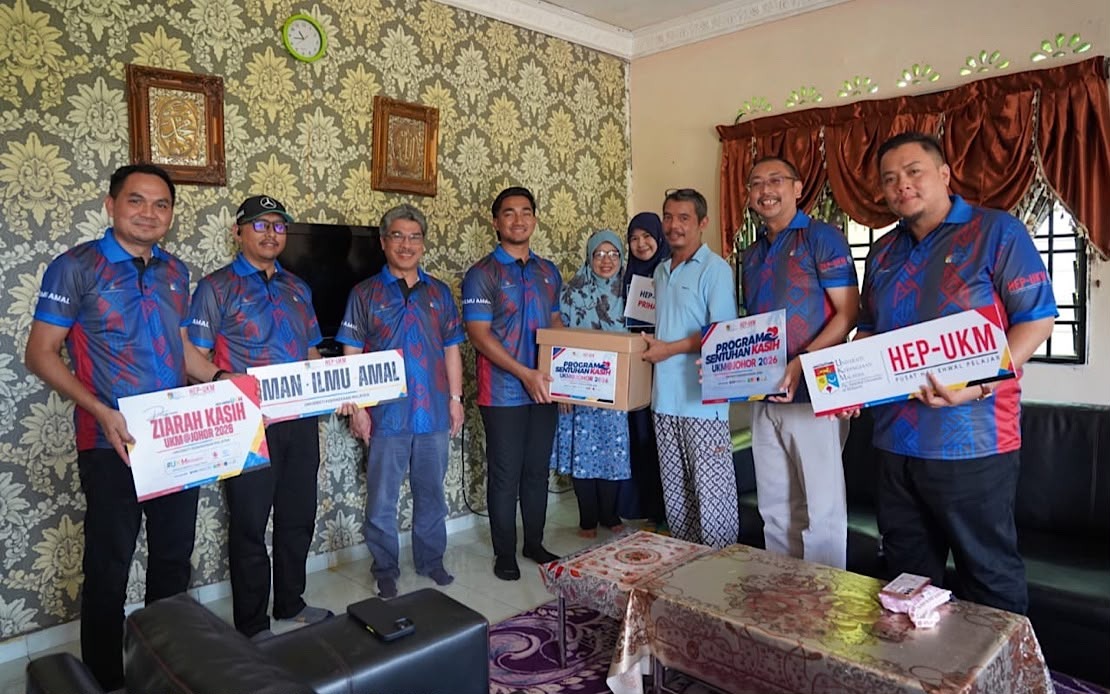
Universiti Kebangsaan Malaysia (UKM) has successfully launched an extensive community outreach initiative in Johor, bringing together nearly 1,000 local residents in what the institution describes as a strategic effort to deepen connections between academic institutions and the communities they serve. The Sentuhan Kasih UKM@Johor programme, coordinated through the university's Student Affairs Centre, unfolded across two days in late June, extending across four distinct neighbourhoods including Kota Masai in Pasir Gudang, Kampung Baru Sri Aman, and two locations in Skudai. The overarching theme, "Dari Kampus ke Komuniti, Menyebar Kasih dan Bakti" — translating to "From Campus to Community, Spreading Love and Service" — encapsulates a broader philosophical shift in how Malaysian universities conceptualise their social responsibilities beyond traditional academic delivery.
The initiative drew 78 student volunteers from UKM's own community, who fanned out across target neighbourhoods to execute a diverse portfolio of engagement activities. Beyond conventional community service activities such as gotong-royong or neighbourhood clean-up initiatives, the programme incorporated specialised components including mental health awareness screening and organised sporting activities designed to build rapport with residents. This multifaceted approach reflects contemporary thinking in community development, recognising that sustained engagement requires addressing both immediate practical needs and longer-term wellness concerns. The breadth of activities also demonstrates UKM's strategic approach to deploying student talent across multiple dimensions of community life rather than limiting volunteers to single-issue interventions.
Associate Professor Dr Darfizzi Derawi, who directs UKM's Student Affairs Centre and chairs the Sentuhan Kasih programme, articulated a vision of universities as active societal participants rather than insular institutions. His remarks emphasise that student engagement beyond campus boundaries yields returns that classroom instruction alone cannot replicate. The development of soft skills — communication, adaptability, and practical problem-solving — occurs most authentically through direct interaction with diverse community members facing real-world circumstances. This pedagogical philosophy aligns with contemporary graduate employment expectations, where employers increasingly prioritise interpersonal capabilities alongside technical competence. For Malaysian students particularly, such programmes address a persistent concern about the alignment between university education and workplace readiness.
Dr Darfizzi indicated that the Sentuhan Kasih model will expand progressively into other states, suggesting UKM envisions this as a template for institutionalised community engagement rather than a one-off initiative. Such expansion would position the programme as a significant component of UKM's regional presence and community footprint. For Johor specifically, this signals that the university views the state as a priority area for sustained partnership, likely reflecting both UKM's existing student population and broader demographic considerations regarding where institutional outreach can generate meaningful impact.
Local community leadership in Kota Delima Zone, represented by Herman Ismadi Ismail, provided perspective on community reception to the initiative. Despite acknowledging that approximately 80 per cent of area residents work in industrial sectors and face genuine time constraints during weekends, he characterised participation rates as encouraging and noted strong cooperation. This observation carries particular significance because it demonstrates that well-designed outreach can penetrate communities with high occupational demands, provided the timing, structure, and messaging are sufficiently compelling. Industrial workers often have limited engagement with higher education institutions, making neighbourhood-based university presence particularly valuable for familiarising residents with academic opportunities available to their families.
Herman Ismadi emphasised that the programme served an awareness-building function, allowing residents to develop understanding of UKM's institutional landscape and the array of opportunities it offers. For working-class Johor residents, direct contact with university representatives and student volunteers may substantially lower psychological barriers to engaging with higher education. Many parents in industrial areas harbour assumptions about university accessibility being limited to elite networks or specific demographic groups. Grassroots outreach of this nature directly contradicts such perceptions by demonstrating institutional commitment to their neighbourhoods.
Beyond the neighbourhood-level engagement, UKM conducted targeted home visits to seven families of university students residing in Tiram and Puteri Wangsa areas. This dimension of the programme reflects a complementary institutional concern: student welfare and family support systems. By extending outreach to students' home communities, UKM signals that it recognises the interconnection between student success and family circumstances. For families of modest means, such visits may facilitate access to information about support services, scholarships, or other institutional resources that might otherwise remain unknown.
UKM Vice-Chancellor Prof Datuk Dr Sufian Jusoh contextualised the initiative within the university's broader commitment to holistic student development. His framing explicitly prioritises student well-being as equivalent in importance to academic achievement, a positioning that challenges older narratives emphasising credentials above all other considerations. In the Malaysian higher education landscape, where student mental health challenges have received increasing policy attention, institutional programmes addressing wellness directly contribute to systemic capacity building. Dr Sufian's reference to support mechanisms extending beyond financial assistance acknowledges that contemporary student challenges — isolation, anxiety, family stress — require multidimensional responses.
The emphasis on long-term investment in student welfare carries significant implications for university competitiveness in Southeast Asia's higher education marketplace. Institutions that systematically support student success, including through community-embedded welfare services, generate superior retention rates and graduate outcomes. For prospective students and their families evaluating university options, such tangible commitments to student support increasingly influence decision-making. Dr Sufian's articulation of this philosophy thus serves both immediate community relations purposes and longer-term institutional positioning.
Higher Education Minister Datuk Seri Dr Zambry Abd Kadir's attendance at the programme events signals government endorsement of UKM's approach and suggests alignment between institutional and ministerial priorities regarding community engagement. Such political visibility elevates the programme's profile and may encourage other universities to develop comparable initiatives. The presence of government leadership also validates community participation, signalling official recognition of the programme's importance.
For Malaysian communities in industrial zones and working-class neighbourhoods more broadly, UKM's Sentuhan Kasih initiative represents a tangible manifestation of university commitment to regional equity and inclusion. Many such communities experience limited regular interaction with higher education institutions, with universities often perceived as geographically or socially distant. By deploying students and resources directly into neighbourhood spaces, UKM challenges this perception and normalises university presence as integral to community infrastructure. This approach carries particular relevance in Johor, where industrial and port economies attract significant working populations whose educational aspirations may receive limited institutional encouragement.

