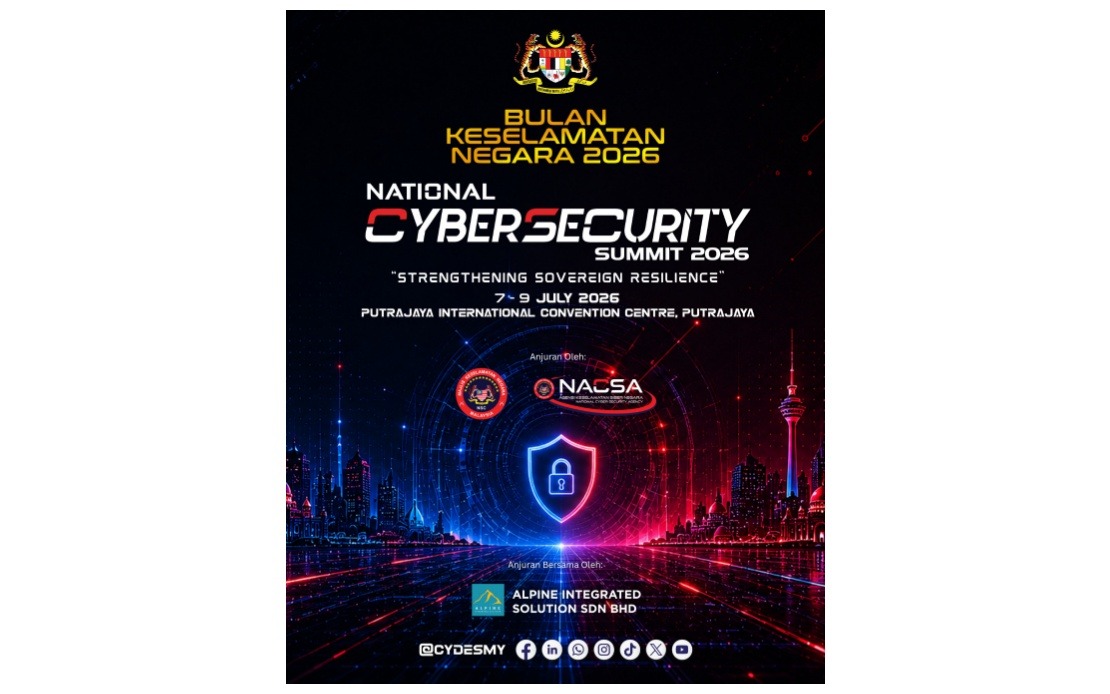
Malaysia's cyber security landscape is entering a defining moment with the National Cyber Security Agency, operating under the Prime Minister's National Security Council, preparing to convene the National Cyber Security Summit 2026 at the Putrajaya International Convention Centre from July 7 to 9. This high-level gathering represents a critical juncture in the country's efforts to build institutional safeguards against increasingly sophisticated digital threats that pose risks to national infrastructure, private sector operations and citizen security.
The summit's timing proves particularly significant, arriving on the heels of the Dewan Rakyat's passage of the Cybercrimes Bill 2026 on July 1. This legislative advancement signals Parliament's recognition that Malaysia's legal framework must evolve in tandem with emerging threat vectors. The bill represents years of deliberation and stakeholder consultation, establishing clearer penalties, investigative authorities and jurisdiction mechanisms for addressing cyber offences that previously existed in jurisdictional grey zones. By anchoring the summit to this legislative milestone, Malaysian authorities are demonstrating that effective cyber governance requires harmonised action across legislative, executive and private sector domains.
Underpinning these institutional developments is the Malaysian Cyber Security Strategy 2025-2030, a comprehensive strategic roadmap that provides the overarching policy direction for the country's approach to digital security over the next five years. This framework acknowledges that cyber threats transcend traditional sectoral boundaries—a breach affecting banking infrastructure has cascading implications for government services, while attacks targeting critical utilities can disrupt supply chains that span multiple industries. The MCSS 2025-2030 therefore coordinates responses across telecommunications, financial services, energy, healthcare and e-government domains, recognising that resilience is only as strong as the weakest institutional link.
The summit operates under the thematic banner of "Strengthening Sovereign Resilience," a phrase encapsulating Malaysia's determination to build domestic cyber security capabilities rather than relying exclusively on foreign expertise or solutions. This sovereignty dimension carries particular weight in Southeast Asia, where digital colonialism—the disproportionate dependence on foreign technology platforms and security providers—poses subtle but significant risks to national autonomy. By convening local practitioners, academic researchers and domestic technology firms alongside international counterparts, the summit creates knowledge transfer opportunities that strengthen indigenous expertise.
The scale of the gathering underscores its importance within Malaysia's security architecture. Organisers anticipate welcoming 3,000 participants encompassing government officials, enforcement agency representatives, private sector security officers, technology vendors and academic specialists. This cross-sectoral composition mirrors contemporary understanding that cyber threats require ecosystem-wide vigilance—a single negligent employee in one organisation can compromise networks spanning multiple connected entities. The participation of 96 speakers and panellists, drawn from government ministries, technology companies, law enforcement and educational institutions, creates forums where best practices can be exchanged and emerging challenges collectively analysed.
The business dimension of the summit reflects Malaysia's positioning as a regional technology hub. The event will host 122 companies, including 78 Malaysian firms and 44 international companies from seven nations, indicating both the maturation of the domestic cyber security sector and sustained foreign investment interest in Malaysia's market. This commercial ecosystem development has tangible policy implications—companies that invest in local cyber security infrastructure and talent development create employment opportunities while simultaneously reducing the nation's vulnerability to single-point technology provider failures. The presence of international firms also facilitates technology transfer and exposure to global best practices in areas where Malaysia's domestic capabilities remain nascent.
Notably, the summit's programming reflects evolving understanding of cyber security's multifaceted nature. Beyond traditional technical discussions, the agenda encompasses a Women in Cyber initiative, acknowledging that gender diversity in security professions strengthens problem-solving capabilities while addressing the talent shortage that currently constrains the sector. The inclusion of specialised forums addressing crime investigation, information and communication technology security governance, and cryptographic frameworks demonstrates sophisticated appreciation for cyber security's diverse dimensions—technical infrastructure protection, legal enforcement mechanisms and policy harmonisation all prove essential.
Prime Minister Datuk Seri Anwar Ibrahim's scheduled launch of three significant policy instruments—the National Security Policy 2026-2030, the National Cryptography Policy (MyKriptografi) and the Artificial Intelligence Systems Cybersecurity Framework—elevates the summit beyond an industry conference into a platform for announcing major strategic initiatives. The cryptography policy holds particular significance for Malaysia's digital sovereignty, as cryptographic standards directly influence the nation's ability to protect sensitive government and commercial communications from unauthorised access. The AI cybersecurity framework similarly addresses a crucial emerging vulnerability, as artificial intelligence systems themselves can become attack vectors or be manipulated to compromise other infrastructure.
The summit's alignment with National Security Month creates a broader messaging architecture around cyber awareness throughout the Malaysian population. Cyber security increasingly transcends technical specialisation to become a matter of public education and societal resilience. Citizens who understand phishing tactics, practise strong password hygiene and report suspicious digital activity constitute a distributed defence layer that complements institutional safeguards. By elevating cyber security to national security month prominence, Malaysian authorities signal that this domain deserves public attention equivalent to traditional security concerns.
For Malaysia's regional standing, hosting this summit reinforces the country's position as a serious participant in Southeast Asian cyber governance. Regional neighbours including Singapore, Thailand and Indonesia face comparable threats and regulatory pressures. Malaysia's articulation of comprehensive strategic frameworks, demonstrated investment in institutional capacity-building and convening of multi-stakeholder forums establishes Malaysia as a knowledge contributor within regional security discussions rather than merely a consumer of externally-developed standards. This positioning carries diplomatic implications, influencing regional norm-setting discussions within ASEAN and bilateral security dialogues.
Looking forward, the outcomes of NCSS 2026 will likely shape Malaysia's cyber security trajectory for years ahead. The strategic framework documents launched at the summit will guide government procurement decisions, influence regulatory requirements imposed on financial institutions and telecommunications providers, and establish benchmarks against which corporate cyber security investments are measured. The business relationships formed during the three-day gathering may catalyse partnerships that strengthen Malaysia's domestic technology capacity. The legislative, policy and institutional developments converging at this moment reflect Malaysia's recognition that cyber security cannot remain peripheral to national strategy but must be woven throughout governance structures, commercial operations and public consciousness.

