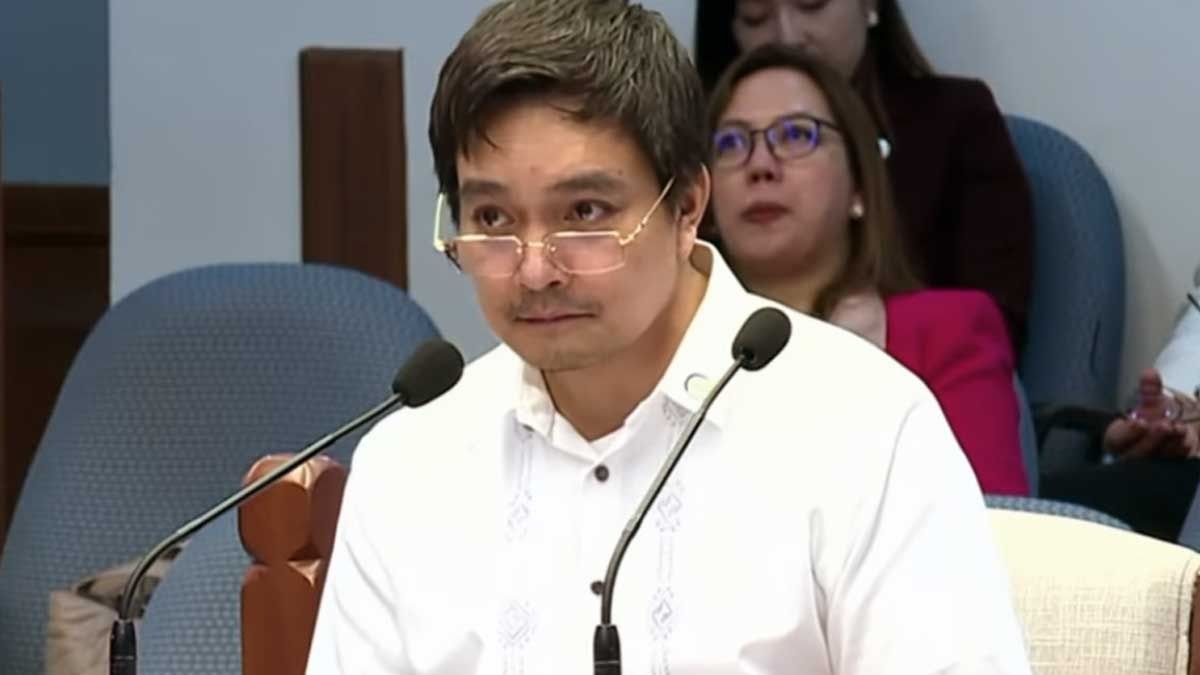
The impeachment trial of Vice President Sara Duterte took a contentious turn when the National Bureau of Investigation's Jeremy Lotoc, who headed the Crime Division during the investigation, found himself defending the evidentiary basis for linking the Vice President to an alleged assassination plot. Lotoc conceded under cross-examination that he possessed no firsthand knowledge that Duterte had engaged someone to kill the president, first lady Liza Araneta-Marcos, or former House Speaker Martin Romualdez, yet he maintained that their investigative findings supported this conclusion.
The crux of the prosecution's case against Duterte rests partly on remarks she made during a November 23, 2024 online media briefing where she allegedly stated she had contracted someone to kill these three figures. Those comments formed the basis of the fourth impeachment article filed against her. The defense strategy, led by Mark Vinluan, sought to expose weaknesses in the prosecution's chain of reasoning by pressing Lotoc on the distinction between direct knowledge and circumstantial inference. This distinction carries particular weight in Philippine legal proceedings, where the burden of proof in impeachment cases demands more than suspicion or inferential reasoning.
The exchange between Lotoc and Vinluan grew increasingly heated, prompting Senate presiding officer Francis "Chiz" Escudero to intervene repeatedly. Escudero, visibly frustrated, reminded both legal teams that they were conducting an impeachment trial rather than a "college debate," suggesting that the proceedings had devolved into rhetorical sparring rather than substantive examination of evidence. The tension escalated when Vinluan drew a parallel between Lotoc's acknowledgment of Duterte's utterances in the video and his claim that those utterances constituted proof of her intent. If the witness could confirm only the existence of statements without verifying their truthfulness, Vinluan argued, he equally lacked grounds to conclude the statements represented actual criminal conspiracy.
The defense counsel's logic placed Lotoc in a precarious position. When Vinluan pointedly asked whether Lotoc had personal knowledge that the Vice President contracted an assassin, Lotoc initially attempted to reference Duterte's own remarks in the video as supporting evidence. Vinluan blocked this approach, demanding a simple affirmative or negative answer. Lotoc eventually conceded he had no such personal knowledge, a damaging admission that undermined the prosecution's narrative that direct evidence existed.
Yet Lotoc refused to abandon the investigation's central conclusion. He insisted he believed Duterte's statement about contracting an assassin because of "pieces of evidence" the NBI gathered, though he remained vague about the specifics. This reliance on general assertions of evidentiary support, rather than itemized proof, reflects a broader challenge facing prosecutors in this case: demonstrating that observable facts necessarily lead to the accusation rather than merely being consistent with it. The distinction matters significantly in a political trial where the stakes involve removing a sitting constitutional officer.
When Senate President Sherwin Gatchalian later pressed Lotoc on what evidence demonstrated Duterte's capability to carry out such threats, Lotoc initially suggested her position as Vice President itself proved capability. Gatchalian swiftly rejected this logic, correctly noting that holding high office does not automatically confer the ability or willingness to commit murder. This exchange highlighted how the prosecution's case rested on inferential leaps rather than concrete, verifiable facts. Capability, motive, and means are essential elements of any conspiracy charge, yet the testimony suggested uncertainty on these fundamental points.
Lotoc then pivoted to referencing the International Criminal Court case against Duterte's father, former President Rodrigo Duterte, concerning alleged extrajudicial killings during the war on drugs. The NBI official contended that because the former president faced such charges, his daughter, as Vice President, possessed demonstrated capability to orchestrate killings. This line of reasoning drew criticism for its circular logic: it assumed that familial connection to a figure accused of extrajudicial killings automatically transferred capability and intent to another family member. Legal analysts in the Philippines have noted that such associative reasoning frequently encounters resistance in formal proceedings.
The impeachment trial of Duterte carries profound implications for Philippine governance and regional stability. The trial occurs amid ongoing tensions between the executive and legislative branches, with the Senate serving as judge and jury in a proceeding that many observers view through a partisan lens. The weakness in Lotoc's testimony—the gap between belief and proof—may prove decisive if other prosecution witnesses similarly struggle to present direct evidence rather than inference and interpretation.
For Malaysian and Southeast Asian observers, the Duterte impeachment saga underscores the fragility of constitutional institutions when political antagonisms intensify. The Philippines' system allows for the removal of a sitting Vice President through impeachment, a power that demands the highest evidentiary standards to prevent weaponization against political opponents. The proceedings also reflect broader regional patterns of executive-legislative conflict that have emerged across Southeast Asia in recent years, where courts and legislative bodies frequently become arenas for political struggles rather than neutral arbiters of law.
The trial's trajectory will likely hinge on whether prosecution witnesses can produce evidence meeting higher standards than Lotoc's inferential testimony. Defense counsel will continue pressing for specificity, clarity, and direct proof rather than circumstantial connections. Escudero's visible irritation suggests that even the presiding officer recognizes the need for the proceedings to achieve greater rigor and clarity. As the trial progresses, the burden falls on prosecutors to transform their investigative conclusions into legally sufficient proof of criminal conspiracy, a task that remains substantially more challenging than the preliminary examination suggested.

