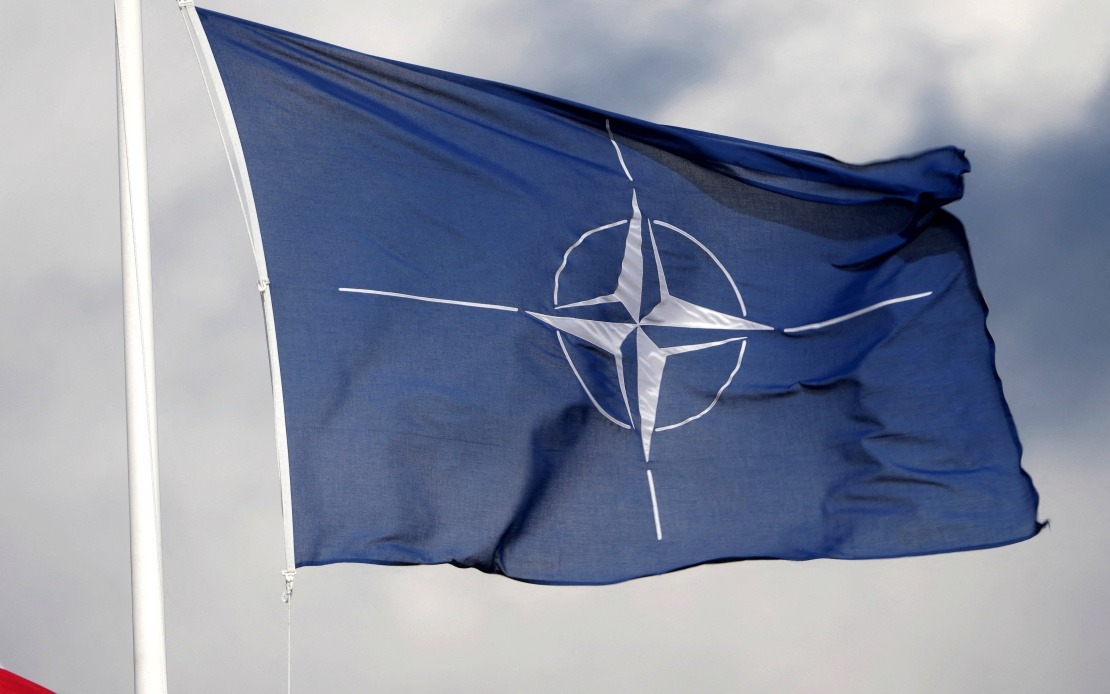
NATO's 32 member states are set to dramatically increase defence expenditure to exceed US$1.8 trillion in 2026, reflecting a significant acceleration in military spending across the alliance. This projection, released by NATO this week, underscores a substantial 11 per cent jump from the estimated US$1.63 trillion allocated in 2025, driven by heightened geopolitical tensions and renewed commitments to collective security following last year's NATO summit in The Hague.
The escalating defence budgets signal a fundamental shift in how Western alliances are approaching regional security challenges. This spending trajectory has direct implications for Southeast Asian nations, particularly those navigating complex security dynamics with major powers. As NATO fortifies its military capacity, questions arise about how such investments might influence global military posturing, arms race dynamics, and international balance of power—factors that reverberate across Asia-Pacific strategic calculations.
The United States continues to shoulder the lion's share of the alliance's military burden, with defence spending projected at approximately US$1.03 trillion, representing roughly 57 per cent of NATO's total outlay. This dominance reflects America's established role as the security backbone of the alliance, though it also highlights the persistent disparity in defence contributions among member states. For Malaysia and other regional players, American military commitments to Europe inevitably have consequences for broader Indo-Pacific engagement and strategic availability.
European allies are dramatically expanding their defence investments in response to evolving security imperatives. Germany, as Europe's largest economy, is expected to allocate roughly US$147 billion to defence, positioning itself as the second-largest NATO spender after the United States. The United Kingdom follows with anticipated spending of US$110 billion, while France commits approximately US$80 billion. These substantial figures demonstrate Europe's determination to reduce strategic dependence on American military support and develop indigenous defence capabilities.
Eastern European nations, historically vulnerable to external pressure, are making particularly aggressive defence investments. Poland plans to spend around US$53 billion, while smaller Baltic states—Lithuania, Estonia, and Latvia—are directing over 3.5 per cent of their respective GDPs toward core defence spending. Greece similarly exceeds this threshold, reflecting the alliance's eastern and southeastern periphery's heightened security consciousness. These commitments underscore how proximity to geopolitical tensions translates into tangible military outlays.
Other significant contributors include Italy at US$57 billion, Canada at US$52 billion, and Türkiye at US$48 billion. This geographical spread of defence spending demonstrates that security concerns are not confined to any single region within NATO, but rather pervade the entire alliance structure. For maritime-focused economies like Malaysia, observing how NATO members balance naval investments alongside ground forces provides relevant perspective on contemporary defence spending priorities.
NATO leaders established an ambitious long-term framework at The Hague summit requiring member states to invest five per cent of GDP in defence and defence-related spending by 2035. This commitment encompasses three per cent directed toward core defence capabilities and an additional 1.5 per cent allocated to broader security infrastructure, including critical infrastructure protection, societal resilience, and technological innovation. Such comprehensive spending mandates represent an unprecedented peacetime defence mobilisation across the alliance.
Currently, NATO's average core defence spending reaches 2.86 per cent of GDP, demonstrating that the alliance collectively remains below the 3.5 per cent threshold while approaching the broader strategic objectives established by alliance leadership. Five nations—Lithuania, Estonia, Latvia, Poland, and Greece—have already surpassed the 3.5 per cent core defence benchmark, positioning themselves as models for alliance-wide compliance. Their achievement suggests that attaining the 2035 targets, while demanding, remains feasible across the broader membership.
The escalation in NATO defence spending carries significant economic implications for member states and broader global markets. Increased military procurement will stimulate defence industrial production, create employment in related sectors, and potentially influence technology development trajectories. However, these investments simultaneously represent opportunity costs, with substantial fiscal resources directed toward defence rather than social programmes, infrastructure development, or economic investment—a calculus familiar to regional governments balancing security needs against domestic priorities.
For Southeast Asian nations observing NATO's strategic evolution, these spending trends offer instructive lessons regarding alliance cohesion and burden-sharing mechanisms. Malaysia and its ASEAN partners, navigating their own security challenges without formal alliance structures comparable to NATO, might consider whether similar collective commitment frameworks could strengthen regional stability. The NATO experience demonstrates how shared defence objectives, when backed by substantive financial commitments, can coordinate military capabilities across diverse national interests.
The implications extend beyond mere budgetary figures. NATO's investment trajectory signals determination to maintain military superiority amid intensifying great power competition. This positioning influences global security architecture, potentially accelerating arms development, advancing military technology, and reshaping strategic partnerships worldwide. Regional actors must calibrate their security strategies accordingly, recognising that NATO's choices reverberate through international power dynamics affecting their own strategic environments and security calculations.

