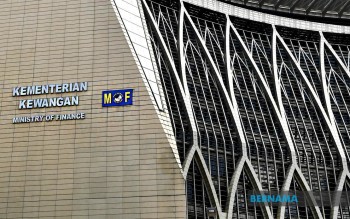
Malaysia has taken a significant step toward securing its financial future after the Dewan Rakyat passed the National Trust Fund Bill 2026, ushering in the first comprehensive restructuring of the National Trust Fund (KWAN) since its inception nearly four decades ago. The legislation, which will now proceed to the Dewan Negara, represents a pivotal moment in how the country manages its collective resources, replacing decades-old administrative frameworks with modern governance standards designed to serve both current citizens and their descendants.
The Finance Ministry framed the Bill as a cornerstone of the MADANI government's broader economic reformation agenda, emphasising that the reforms demonstrate a commitment to robust public financial management and long-term fiscal sustainability. Rather than treating today's natural resources and government revenues as funds available for immediate consumption, the legislation institutionalises the principle that Malaysia's wealth must be stewarded responsibly across generations. This philosophical shift carries particular weight in a region where resource management has frequently been subject to short-term political pressures and budget constraints.
At its core, the Bill establishes the National Trust Fund (Incorporated) as a statutory body with full legal personality, replacing the existing panel structure that has governed KWAN since 1988. This transition marks a modernisation of institutional architecture comparable to reforms undertaken by peer economies seeking to formalise their sovereign wealth management. The move grants the fund independent standing while establishing a board empowered with clear administrative, managerial and investment authority. During the transition phase, Bank Negara Malaysia will maintain operational control to ensure seamless continuity, a pragmatic approach given BNM's three-decade track record in growing the fund to RM22.43 billion as of end-2024.
For Malaysian policymakers, regional observers and fiscal strategists, the Bill's most consequential feature may be its introduction of legally binding contribution mechanisms that remove discretion from annual budget cycles. The Federal Government must now contribute a minimum of 0.1 per cent of projected annual revenue, alongside automatic allocations of 2.0 per cent of Petronas dividends and 2.0 per cent of depletable resource export duties, after state allocations are deducted. These prescribed floors represent mandatory fiscal obligations rather than voluntary provisions subject to political fluctuation, a structural safeguard that insulates intergenerational savings from opportunistic spending pressures.
The contribution framework acknowledges Malaysia's position as both an energy exporter and a developing economy balancing immediate development needs with long-term resource conservation. By tying contributions to Petronas dividends and resource duties, the Bill creates an elegant linkage between commodity-generated wealth and sovereign savings, ensuring that extraordinary gains from hydrocarbons and minerals feed dedicated reserves rather than disappearing into consolidated revenues. The flexibility for additional voluntary contributions above the minimum thresholds allows governments to allocate surplus revenues to the fund during periods of exceptional fiscal performance.
Equally important are the Bill's withdrawal constraints, which impose disciplined limitations on accessing accumulated capital. The fund's resources may be deployed exclusively toward education, healthcare, and climate change mitigation and adaptation—sectors representing genuine long-term national priorities rather than discretionary expenditures. Annual withdrawals are capped at no more than 50 per cent of the expected long-term real rate of return, a conservative threshold that prioritises capital preservation while permitting prudent spending from investment earnings. Any withdrawal exceeding this boundary requires Dewan Rakyat approval, inserting parliamentary oversight into what might otherwise become executive resource grabs.
This withdrawal architecture carries profound implications for Malaysia's fiscal flexibility during economic downturns or national emergencies. By enshrining these limits in legislation rather than administrative guidelines, the Bill raises the political cost of depleting the fund, requiring lawmakers to publicly justify exceptional access and defend their decisions against accusations of squandering intergenerational inheritance. For other Southeast Asian nations grappling with sovereign wealth fund governance, Malaysia's approach demonstrates how statutory frameworks can simultaneously permit legitimate access while protecting core capital.
The Bill mandates that KWAN's capital be deployed across approved asset classes guided by a Strategic Asset Allocation framework approved by the Finance Minister. This requirement establishes professional investment management standards while maintaining ministerial oversight of strategic direction. The specification reflects international best practice in sovereign wealth management, moving beyond passive preservation toward active wealth generation that compounds purchasing power across decades. Such disciplined investment governance distinguishes genuine sovereign wealth funds from mere government bank accounts, positioning KWAN to accumulate real returns that grow the fund's absolute capacity to finance education, healthcare and climate initiatives for future generations.
Finance Minister II Datuk Seri Amir Hamzah Azizan articulated the philosophical foundation underpinning these reforms, asserting that natural and financial resources enjoyed today belong inherently to future Malaysians alongside current citizens. This reframing of resource ownership as trusteeship rather than outright possession resonates with contemporary global conversations about climate stewardship, resource finite-ness, and intergenerational justice. For Malaysian students entering the workforce in 2045 or 2050, the fund should theoretically represent accumulated wealth available for their education and healthcare, provided current generations resist the temptation to raid accumulated capital.
The legislative journey reveals broad parliamentary consensus around intergenerational responsibility, with fourteen Members of Parliament participating in Dewan Rakyat debates before the Bill advanced with majority support. This cross-party backing suggests that Malaysia's political establishment recognises the electoral logic of demonstrating long-term stewardship, particularly as climate-related fiscal pressures mount and education financing demands intensify throughout Southeast Asia. The Bill's passage positions Malaysia ahead of several regional peers in formalising sovereign wealth management through comprehensive statutory frameworks.
As the legislation transitions to the Dewan Negara, implementation planning should focus on the technical architecture supporting the new statutory body, including board appointment processes, investment advisory mechanisms, and transparent reporting standards. The effectiveness of these reforms will ultimately depend not on legislative provisions alone but on sustained political commitment to respecting withdrawal boundaries and contributing the prescribed percentages even during budgetary strain. Malaysia's experience will likely inform debates throughout Southeast Asia regarding how developing economies can balance immediate development imperatives with long-term resource conservation, offering a potentially replicable model for nations seeking to transform commodity wealth into durable intergenerational benefits.

