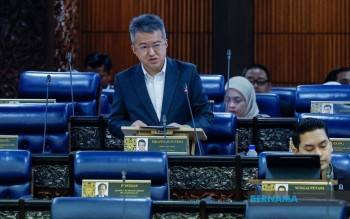
The Dewan Rakyat gave its stamp of approval yesterday to the National Trust Fund (KWAN) Bill 2026, marking a significant legislative milestone in strengthening Malaysia's mechanisms for preserving wealth across generations. Deputy Finance Minister Liew Chin Tong steered the bill through parliament, where it secured majority backing following deliberations involving 15 Members of Parliament. The passage represents a watershed moment for institutional reform, transforming a fund that has operated for nearly four decades under loose administrative guidelines into a framework anchored in statutory discipline and parliamentary accountability.
The KWAN's evolution from its 1988 inception to the present day reveals the gradual recognition among policymakers that voluntary mechanisms alone cannot sustain long-term fiscal prudence. As of the end of 2024, the fund's assets reached RM22.43 billion, a figure that underscores both the potential of mandatory savings and the inadequacy of the existing voluntary structure. Petronas, the national oil company, stands as the sole contributor to date, having injected RM13.5 billion over the fund's lifespan. This lopsided dependency on a single voluntary donor exposes the vulnerability inherent in discretionary frameworks, where contributions rely entirely on corporate goodwill rather than institutional obligation.
The impetus for legislative overhaul became unmistakable following the RM5 billion withdrawal in 2021, an episode that triggered considerable public discourse about governance lapses and the absence of withdrawal safeguards. This incident crystallised concerns that the existing legal architecture permitted unlimited access to accumulated reserves without sufficient parliamentary scrutiny or protective mechanisms. Under the previous framework, contributions remained entirely discretionary, withdrawal thresholds did not exist, and the fund's purpose lacked definition—conditions that Liew identified as requiring fundamental restructuring to align with contemporary standards of fiscal stewardship.
The 2026 bill introduces three cardinal improvements that reshape the fund's operational landscape. First, it establishes statutory contribution obligations, replacing the voluntary model with binding requirements that persist regardless of political cycles or changing administrations. Second, it imposes withdrawal discipline through defined limits and procedural safeguards, preventing ad hoc depletion of reserves accumulated for future generations. Third, it implements modern governance protocols and transparency mechanisms that clarify fund management, investment strategies, and accountability lines between custodians and elected representatives. Collectively, these provisions position KWAN as an institutionalised vehicle for inter-generational equity rather than a discretionary repository subject to immediate fiscal pressures.
The contribution rate fixed at 0.1 per cent represents a carefully calibrated baseline designed to ensure steady accumulation while remaining economically viable for contributing entities. Critically, Liew emphasised that this rate functions as a statutory minimum rather than a ceiling, signalling governmental intention to treat the reserve as foundational rather than aspirational. The permanence of this threshold depends upon parliamentary amendment, a requirement that introduces a constitutional safeguard against arbitrary reduction by future governments seeking to redirect resources elsewhere. By tying rate changes to Dewan Rakyat approval, the legislation embeds protection for the fund's integrity across successive administrations, transcending the vulnerabilities of executive discretion.
The parliamentary gatekeeping mechanism holds particular significance for Malaysia's long-term policy environment. Governments cannot unilaterally dilute contribution obligations or circumvent established withdrawal protocols without returning to the legislature, thereby creating institutional friction that discourages short-term manipulation in service of immediate policy objectives. This structure mirrors approaches adopted by peer economies managing sovereign wealth and national savings vehicles, where legislative rigidity serves to insulate funds from political capture. The requirement for parliamentary amendment transforms what might otherwise remain an executive instrument into a democratically-anchored institution with cross-government legitimacy.
For Malaysian stakeholders and regional observers, the bill's passage reflects a maturing institutional approach to fiscal discipline. The RM22.43 billion in current assets represents substantial capital that, if properly managed and systematically augmented, can address future liabilities arising from demographic shifts, infrastructure renewal, and social spending pressures. The statutory contribution mechanism ensures that these reserves grow predictably rather than sporadically, creating a dependable pool of resources insulated from short-term budget pressures. This approach aligns with international best practices for sovereign wealth management, where separating savings vehicles from ordinary budget cycles enhances both financial sustainability and inter-generational fairness.
The legislation also carries implications for corporate governance more broadly. By elevating Petronas's voluntary contributions into a statutory framework applicable sector-wide, the government signals that major revenue-generating entities bear responsibility for wealth preservation. The singular dependence on Petronas under the previous regime created operational risk; introducing statutory obligations across relevant sectors diversifies contribution sources and reduces reliance on any single entity's financial performance. This structural diversification strengthens the fund's resilience during periods of sectoral volatility or corporate restructuring.
Parliamentary engagement during debate substantiated the bill's legitimacy and technical soundness. The participation of 15 Members across the chamber ensured that diverse constituencies contributed perspective on implementation challenges, contribution fairness, and withdrawal discipline. This deliberative process, while time-consuming, generated legislative product with broader political consensus than executive-drafted alternatives might command. The resulting bill thus carries endorsement extending beyond the treasury benches, enhancing its prospects for sustained observance across future administrations operating under different political complexions.
Looking forward, the KWAN Bill 2026 establishes foundational infrastructure for generational savings, yet its success ultimately hinges upon consistent enforcement and transparent reporting. Implementation mechanisms, contribution mechanisms across sectors, and auditing protocols will determine whether statutory frameworks translate into genuine fiscal discipline. Malaysian policymakers have signalled their commitment to inter-generational equity through legislative form; sustaining that commitment through administrative rigour will determine whether this fund fulfils its mandate to preserve national wealth across cycles of political change.

