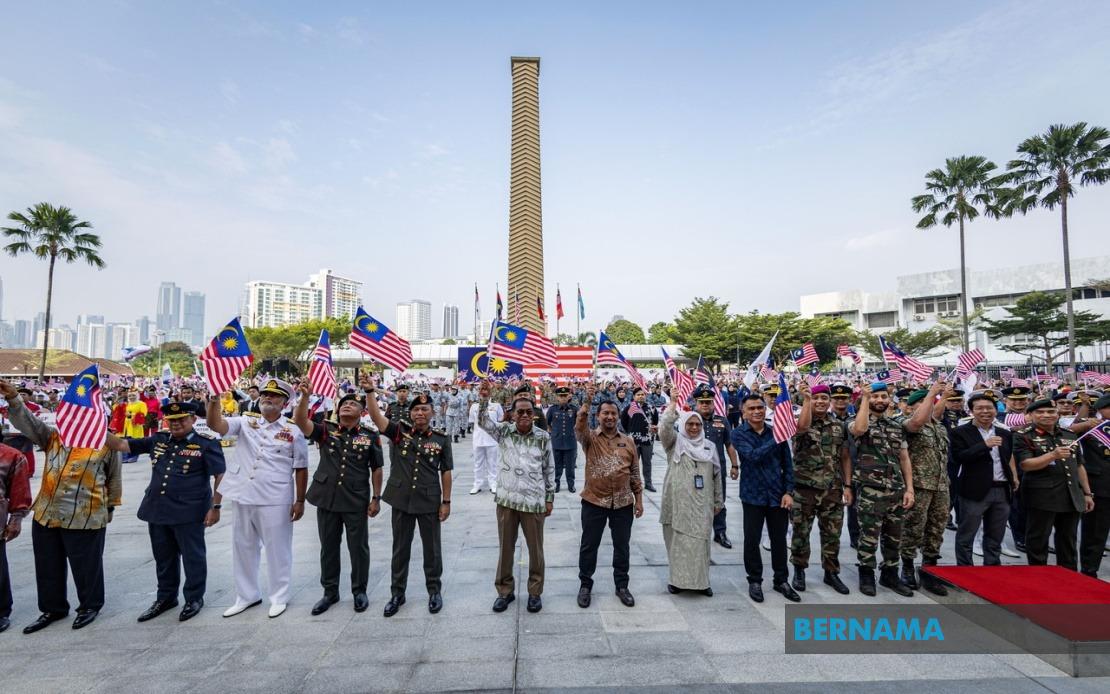
Defence Minister Datuk Seri Mohamed Khaled Nordin has cautioned the nation against weaponizing its most cherished patriotic occasions, delivering a pointed message during the launch of the Defence Ministry's National Month and Fly the Jalur Gemilang celebration on August 27. Speaking in Kuala Lumpur, he made clear that the forthcoming National Day and Malaysia Day festivities must remain spaces for genuine expressions of national pride rather than theatres for sectarian disputes or political grandstanding.
The minister's remarks appear aimed at circumventing emerging calls from various quarters to boycott the celebrations over specific contentious issues, most notably the Rohingya humanitarian crisis and Malaysia's handling of the refugee situation. Rather than dismissing such concerns outright, Mohamed Khaled reframed the conversation around what he termed a shared responsibility to preserve the nation's fundamental character. He contended that allowing patriotic occasions to become entangled with divisive political messaging risks undermining the very fabric of harmony and understanding that has historically held Malaysia's diverse population together.
Central to his argument is the proposition that Malaysia's greatest strength lies in its foundation as an independent, peaceful, and sovereign nation constructed deliberately upon principles of mutual respect and religious tolerance across its communities. This characterization reflects an official narrative that positions communal harmony not merely as a pleasant ideal but as an essential structural element of Malaysian statehood itself. For policymakers and security officials like Mohamed Khaled, any fracturing of this consensus—particularly through organized boycotts or politicized celebrations—represents a threat to the delicate equilibrium that permits Malaysia to function as a cohesive nation-state.
His emphasis on "burning patriotism" as a visible demonstration of national cohesion carries particular weight in a regional context where Malaysia frequently positions itself as a model of multireligious coexistence. By invoking the image of unified patriotic sentiment, he simultaneously sends two messages: one to domestic audiences about the imperative of national solidarity, and another to international observers suggesting that Malaysians will not allow their country to become destabilized by external pressure or internal division. This dual messaging is characteristic of official rhetoric during politically sensitive periods.
The Defence Minister's invocation of security personnel—specifically those stationed at Malaysia's borders—adds another dimension to his appeal. By connecting national patriotism to gratitude for those in uniform and recognition of their sacrifices, he elevates the celebration from mere civic ritual to something approaching a solemn national duty. This framing suggests that boycotting or politicizing National Day celebrations amounts to a failure of respect toward those who literally defend the nation's sovereignty and territorial integrity. For many Malaysians, this argument carries considerable moral weight and explains why such appeals are regularly deployed during moments of national tension.
The Rohingya issue, which Mohamed Khaled specifically mentioned, remains deeply contentious within Malaysia. The country hosts one of the world's largest refugee populations from Myanmar, comprising hundreds of thousands of individuals displaced by violence and persecution. Domestic civil society organizations, religious groups, and ordinary citizens have expressed profound concern about their welfare and treatment, creating genuine moral pressure on the government. By characterizing these concerns as mere "sentiments" driving boycott campaigns, the Defence Minister risks appearing dismissive of legitimate humanitarian anxieties—a perception that could further inflame the very divisions he seeks to prevent.
For Malaysian readers and regional observers alike, the minister's statement reflects an ongoing tension within governance circles between security-focused approaches to national cohesion and more inclusive models of democratic participation. The implicit suggestion that patriotic occasions should remain above political contestation rests on assumptions about what constitutes legitimate public discourse during sensitive periods. Critics might argue that confining discussion of divisive issues outside patriotic celebrations amounts to suppressing rather than resolving underlying grievances. Others would counter that Mohamed Khaled's position represents a pragmatic necessity—that nations divided along sectarian lines can ill afford to let major national celebrations become venues for airing fundamental disputes.
The Defence Ministry's decision to lead National Month celebrations carries symbolic significance, underlining the security establishment's stake in maintaining national unity. In Malaysia's political structure, the ministry functions not only as a guardian of external security but increasingly as a custodian of internal stability. This role places Defence Ministers in a position to articulate official positions on matters extending well beyond military concerns into questions of national identity and social cohesion. Mohamed Khaled's remarks should therefore be understood as an expression of institutional perspective from one of Malaysia's most powerful executive agencies.
Looking forward, the effectiveness of such appeals will likely depend on broader political developments and whether underlying grievances—particularly around refugee policy and humanitarian concerns—receive serious attention through other channels. If Malaysians perceive that raising these issues during non-celebratory periods yields meaningful policy consideration, calls for boycotts may diminish organically. Conversely, if such concerns are consistently marginalized in official discourse, patriotic occasions may become increasingly contested spaces regardless of official guidance. The challenge for government lies in demonstrating that respect for national unity and willingness to engage difficult questions are not mutually exclusive propositions.
Malaysia's approach to balancing national solidarity with democratic expression during the August and September celebration period will be closely watched by neighboring countries facing similar tensions around refugee issues and communal harmony. The region's experience with sectarian violence and state fragmentation makes questions of national cohesion particularly pressing. Mohamed Khaled's intervention suggests that Malaysian officials view the upcoming celebrations as a critical moment for reaffirming and reinforcing the nation's foundational commitment to unity—a commitment that leaders appear increasingly concerned may require explicit articulation and defense.

