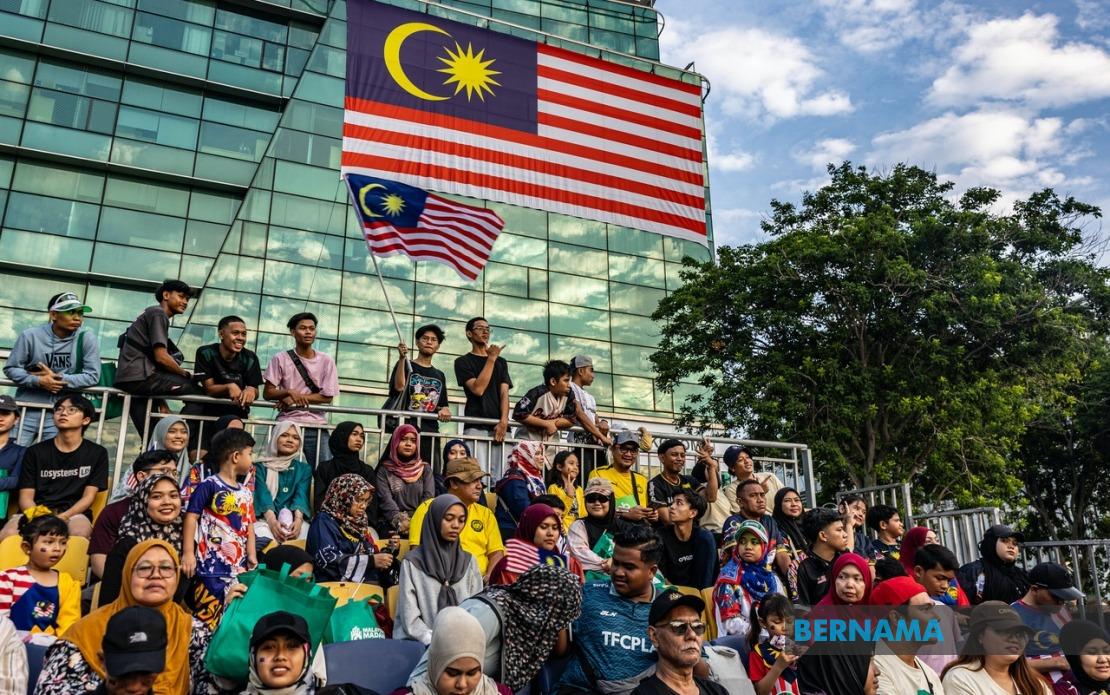
The 2026 National Day celebration in Putrajaya has delivered a resounding success, attracting more than 100,000 visitors on August 31st and significantly exceeding the government's initial projection of 80,000 attendees. Communications Minister Datuk Seri Fahmi Fadzil, who chairs the 2026 National Day and Malaysia Day Main Committee, confirmed that the 69th observance of the nation's independence unfolded without any major incidents despite the massive turnout, underscoring the effectiveness of months of meticulous planning and coordination.
The exceptional attendance figures underscore the enduring appeal of Malaysia's most important civic occasion and the willingness of citizens nationwide to travel considerable distances to participate in the festivities. Fahmi specifically acknowledged visitors from geographically distant corners of the country, including Sandakan in Sabah, Johor Bahru in the southern peninsula, and Jeli in Kedah, highlighting how the celebration functioned as a powerful unifying moment that transcended regional boundaries and brought Malaysians together regardless of where they resided.
The operational success of such a large-scale gathering depended critically on seamless cooperation among numerous government agencies operating behind the scenes. The Department of Environment, Malaysian Meteorological Department, and the National Disaster Management Agency played crucial roles in ensuring participant safety and comfort. Of particular significance, these organizations maintained readiness to implement cloud seeding procedures, demonstrating the sophisticated contingency planning that underpinned the event. The favourable weather conditions throughout the day—whether attributable to natural factors or cloud seeding efforts—proved instrumental in enabling the celebration to proceed smoothly without disruptions that could have diminished the experience for the massive crowd.
Beyond the formal parade component, organizers had choreographed an extensive ecosystem of complementary attractions designed to sustain visitor engagement throughout the day. The Anjung Floria precinct showcased an impressive array of national defence assets, providing civilians with rare opportunities to appreciate the capabilities of Malaysia's security forces. Simultaneously, the Riuh Merdeka festivities at Monumen Alaf Baru offered entertainment and interactive experiences, while numerous food vendors dotted the venue, transforming the celebration into a full-day leisure destination that encouraged families to linger and create memorable experiences together.
The parade itself represented a monumental coordinating achievement, involving 76 distinct contingents marching alongside 22 musical bands and 11 specially decorated vehicles. The parade incorporated 10,819 individual participants drawn from an expansive cross-section of Malaysian society—government personnel, military and police forces, uniformed civil protection bodies, employees of government-linked companies, secondary and tertiary students, and representatives from civil society organizations. This deliberate orchestration of diverse institutional participants served to communicate visually the interconnectedness of Malaysia's governance structures and civic fabric.
Notably, the 2026 celebration introduced several significant debuts that reflected evolving national priorities and regional commitments. The Royal Johor Military Force participated in a National Day parade for the first time, signifying enhanced integration of state-level security apparatus into federal celebrations. Equally symbolic was the inclusion of a dedicated contingent representing the SEA Games 2027, underscoring Malaysia's preparedness for and pride in hosting this major regional sporting festival. The Orange Economy Sustainability cluster contingent demonstrated government emphasis on creative industries and environmental responsibility as pillars of national development strategy.
The artistic and cultural dimensions of the celebration revealed ambitions to synthesize traditional Malaysian heritage with contemporary creative expression. The "Gema Inovasi MADANI" percussion performance featured 150 musicians wielding traditional instruments—Rebana Inovasi and Kompang Inovasi among them—supported by 1,500 human graphic performers arranged into living visual tableaux. This deliberate fusion of conventional cultural instruments with modern artistic techniques projected an image of Malaysia as a nation comfortable bridging tradition and innovation, capable of honouring its ancestral heritage while embracing contemporary possibilities.
The celebration explicitly anchored itself to the government's articulated development philosophy through its overarching theme, "Malaysia MADANI: Kesejahteraan Dinikmati" (Shared Prosperity Enjoyed). This framing positioned the National Day commemoration as more than ceremonial ritual; instead, it functioned as a public statement of government ideology emphasizing the delivery of tangible welfare improvements to Malaysian citizens across communal and demographic boundaries. By linking National Day observances to the MADANI framework, policymakers sought to reinforce messaging that national development constitutes an inclusive endeavour benefiting all residents irrespective of ethnic, religious, or socioeconomic background.
The celebration's concluding moments featured military aerial displays by Royal Malaysian Air Force fighter jets, transport aircraft, and helicopter squadrons—a traditional component of Malaysian National Day festivities that projects technological prowess and national defense capability. The programme concluded with the "Rentak MADANI, Paluan Tradisi" closing performance, which mobilized 2,350 participants in a grand finale designed to leave lasting impressions and emotional resonance with attendees. This strategic sequencing—from dawn parade through daytime entertainment to evening aerial displays and massive choreographed finale—reflected sophisticated understanding of crowd psychology and the importance of creating memorable emotional peaks throughout extended civic events.
For Malaysian readers and policymakers, the celebration's success carries several implications beyond simple statistics. The ability to attract over 100,000 attendees to Putrajaya demonstrates sustained public engagement with official national commemoration, countering occasional concerns about declining civic participation among younger demographics. The smooth operational execution, despite the massive scale, validates the institutional capacity of Malaysian government agencies to coordinate complex logistics—capability relevant to future major events, including the SEA Games and other international fixtures. The deliberate inclusion of new participants and contemporary thematic elements suggests that Malaysia's approach to National Day celebration remains adaptable, avoiding stagnation while maintaining essential ceremonial continuity.
Minister Fahmi's articulation of hopes that the celebration would "strengthen Malaysians' love for the country and homeland" encapsulates the deeper political objective animating such displays. Beyond pageantry, National Day celebrations serve instrumental purposes in nation-building, particularly in diverse societies where multiple identities and allegiances compete for citizen loyalty. The 2026 observance, by all administrative measures, achieved its core mission of assembling Malaysians in physical proximity to a national symbol and collective experience, temporarily suspending the centrifugal forces that characterize plural societies. Whether this translated into measurable attitudinal changes regarding national cohesion remains an empirical question, but the massive attendance and incident-free proceedings surely satisfied the government's primary operational objectives.

