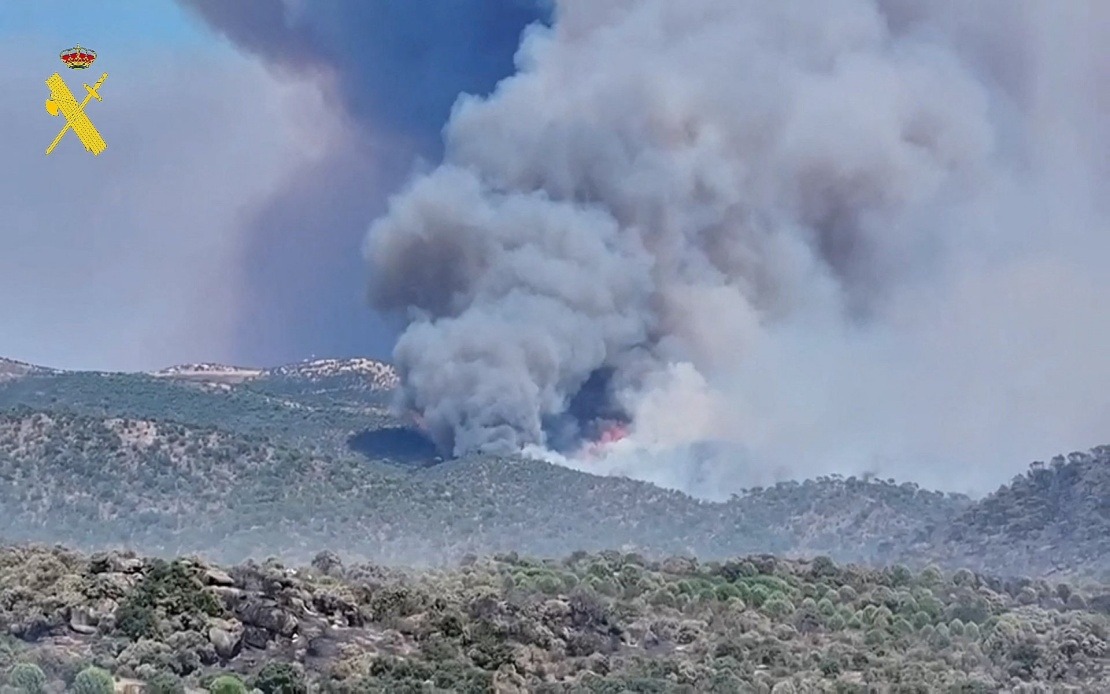
Spain's intensifying wildfire crisis reached a critical juncture on Friday when flames threatened the Madrid Deep Space Communications Complex, one of the world's most strategically important facilities for monitoring spacecraft and scientific probes in deep space. The facility, nestled in hills approximately 65 kilometres west of Madrid's city centre, was evacuated as the fast-moving fire advanced across the drought-stricken Iberian landscape, joining dozens of other blazes consuming vast swathes of the Spanish countryside during an exceptionally severe summer fire season.
The evacuation marked a significant disruption to NASA's global communications infrastructure, which relies on a three-station network to maintain uninterrupted contact with satellites and exploration vehicles operating millions of kilometres from Earth. This distributed architecture—with complexes in California, Australia, and Spain—ensures that as the planet rotates, at least one facility always maintains a direct line of sight to distant spacecraft, enabling real-time mission control and data reception from humanity's most ambitious scientific ventures.
The Spanish facility's temporary shutdown exposed the vulnerability of critical infrastructure to climate-driven natural disasters. While NASA prioritises staff safety above all operational considerations, the evacuation nevertheless illustrated how extreme weather patterns increasingly threaten the physical assets supporting modern space exploration. The agency's decision to relocate operations to its Goldstone facility in California prevented any lasting interruption to spacecraft communications, demonstrating the effectiveness of the redundant system architecture that NASA has built over decades.
For Southeast Asian nations with growing interests in space technology and satellite communications, the Madrid incident carries sobering implications. As Malaysia and regional neighbours expand their engagement with space programmes—whether through partnerships with international agencies or development of indigenous capabilities—the need for geographically dispersed, resilient infrastructure becomes apparent. Natural disasters can strike anywhere, and reliance on single-location facilities poses unacceptable risks for mission-critical operations.
The Deep Space Network itself represents an extraordinary achievement in international cooperation and scientific infrastructure. Managed jointly by NASA's Space Communications and Navigation programme and the Jet Propulsion Laboratory, the system enables humanity's most distant explorations, from Mars rovers to interstellar probes that have journeyed beyond the outer planets. Each of the three complexes operates sophisticated antenna arrays and communications equipment valued in the hundreds of millions of dollars, making their protection essential not only for NASA but for all space agencies whose missions depend on shared access to these facilities.
Spain's wildfire crisis reflects broader environmental challenges affecting southern Europe with increasing frequency and intensity. Climate scientists have warned that Mediterranean regions face escalating fire risk as temperatures rise and precipitation patterns shift, creating conditions where once-controlled burns can transform into catastrophic megafires. The Madrid facility's location, while chosen for its geographical benefits in providing complete global coverage, places it in a region increasingly vulnerable to these climate-driven threats.
The incident underscores the interconnected nature of modern scientific infrastructure, where a local emergency in Spain reverberates through NASA's global operations network. Unlike terrestrial communications systems where redundancy is widespread and relatively straightforward to implement, deep-space communications demands enormous capital investment in antenna systems, power supplies, and specialised equipment. This economic reality constrains NASA's ability to simply duplicate capabilities at additional locations, making the existing three-station model a carefully calculated balance between coverage, cost, and resilience.
For the families and communities surrounding the Madrid facility, the evacuation represented just one crisis among many during a summer of unprecedented fire activity. Spain's fire services were overwhelmed managing simultaneous wildfires across the country, highlighting how natural disasters of this magnitude stretch emergency response capabilities to breaking points. NASA's statement acknowledging the broader suffering of surrounding communities reflected the human dimension of infrastructure protection—a reminder that behind the technical systems and operational procedures are people whose homes and livelihoods face existential threats.
The seamless transition of operations to California demonstrated both the robustness of NASA's contingency planning and the remarkable sophistication of modern space communications technology. Controllers at Goldstone simply increased antenna time on their systems, redirecting their powerful arrays to maintain contact with distant spacecraft. This operational flexibility, built through decades of experience and investment, prevented what could have been a serious disruption to multiple space missions that depend on reliable data links to Earth.
Looking forward, the Madrid evacuation will likely prompt renewed discussion within NASA and the broader space community about infrastructure vulnerability and adaptation strategies. As climate change intensifies fire risk, drought, flooding, and other hazards in regions worldwide, space agencies must weigh the costs of additional redundancy against the risks of infrastructure loss. For emerging space nations in Southeast Asia, the lesson is clear: investing in resilient, geographically distributed capabilities must form part of any serious long-term commitment to space exploration and satellite operations.

