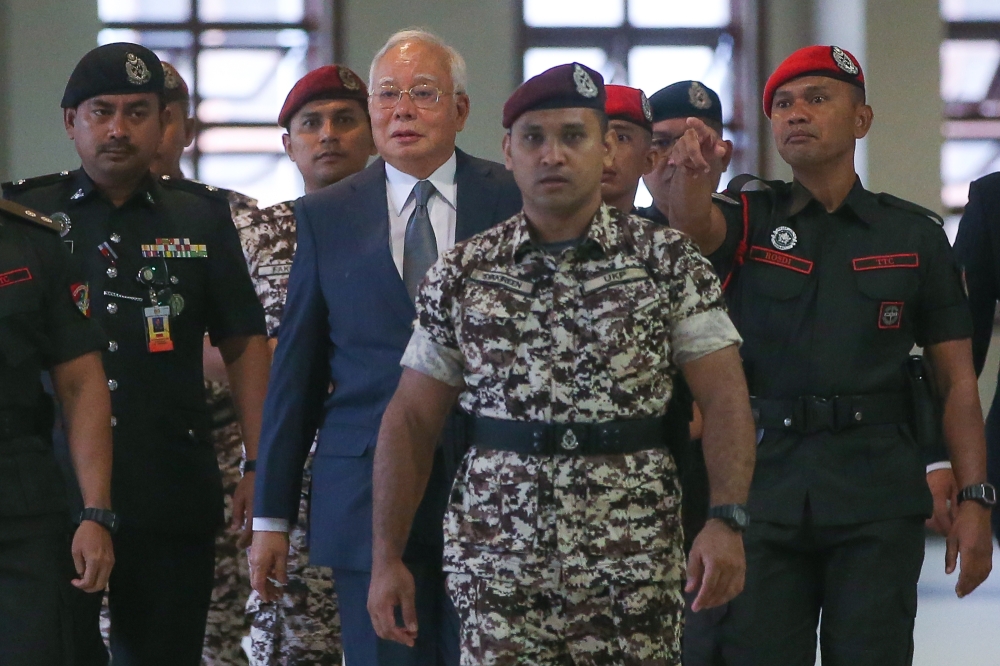
Former Prime Minister Datuk Seri Najib Tun Razak explained to the High Court in Kuala Lumpur that he repatriated US$620 million to overseas accounts immediately following the 2013 general election because maintaining possession of the sum made him deeply uneasy, according to testimony delivered in the proceedings against him.
The revelation emerged during cross-examination as Najib's legal team continues mounting a defence in what has become one of Malaysia's most closely watched financial crime cases. The figure represents a substantial portion of funds that had previously flowed through banking channels connected to him, and his account of why he chose to move the money sheds light on his perspective regarding the controversial transactions at the heart of the proceedings.
Najib's testimony reflects his broader narrative that he did not knowingly receive or benefit from misappropriated state funds. The 2013 general election, which Barisan Nasional retained control of with a reduced majority, occurred during the period when these financial movements took place. His explanation positions the decision to return capital as evidence of prudent financial management rather than an attempt to conceal improper conduct.
The context of this testimony is critical for understanding Malaysian politics during the early 2010s. During this period, 1Malaysia Development Berhad (1MDB) had been established as a strategic development fund, and substantial capital movements were occurring across multiple jurisdictions. The High Court proceedings have systematically examined these transactions, with prosecutors arguing they represented an elaborate scheme to siphon state wealth, while the defence maintains alternative explanations.
For Malaysian observers, the case represents a significant test of the judicial system's capacity to handle complex financial investigations involving senior political figures. The testimony comes amid ongoing reforms to Malaysia's institutions following the 2018 change of government that initially unseated Barisan Nasional. Courts have faced increasing scrutiny regarding their handling of politically sensitive cases, and this trial has become emblematic of broader questions about accountability and institutional independence.
The cross-examination approach employed by prosecutors seeks to establish inconsistencies in Najib's accounts of fund movements and his understanding of their origins. Each session in court has generated substantial public interest, reflecting widespread concern about governance standards and the proper stewardship of national resources. Malaysian citizens remain acutely aware that questions about financial propriety at the highest levels of government directly impact public confidence in state institutions.
The US$620 million figure assumes particular significance given Malaysia's ongoing fiscal challenges and the competing demands for government resources. Public expenditure on healthcare, education, and infrastructure has been constrained by budgetary limitations, making discussions of large-scale financial movements especially sensitive within the national discourse. The case implicitly raises questions about opportunity costs and what alternative uses could have been made of such substantial sums.
International dimensions add further complexity to the proceedings. The funds involved multiple jurisdictions and financial institutions across different countries, requiring coordination among Malaysian authorities and international partners. Financial regulators worldwide have become increasingly attuned to flows suggestive of money laundering or sanctions evasion, and Malaysia's handling of this investigation has implications for its reputation as a financial centre and its standing among international compliance frameworks.
Najib's defence strategy appears to emphasize his limited knowledge of the precise mechanics of fund transfers and his reliance upon advisors and subordinates for implementing financial decisions. This approach raises fundamental questions about accountability structures within government and whether senior officials can reasonably claim ignorance of major transactions occurring under their purview. The court's evaluation of these claims will likely influence perceptions of standards expected for high office in Malaysian governance.
The trial's progression has significant implications for Malaysia's political landscape beyond the immediate question of Najib's personal culpability. Political opposition parties have used the proceedings to criticize Barisan Nasional governance during the pre-2018 era, while government supporters have questioned the judicial handling of cases involving former leaders. The testimony therefore functions simultaneously as legal proceedings and political commentary.
Observers note that Malaysian courts have demonstrated capacity for methodical examination of complex financial evidence, though the highly politicized nature of the case presents inherent challenges to perceptions of impartiality. The High Court's ultimate findings will inevitably shape narratives about democratic accountability and institutional effectiveness in Malaysia for years to come, regardless of the verdict ultimately rendered.
As proceedings continue through 2024 and beyond, additional testimony from key figures involved in financial decision-making during the relevant period will likely emerge. The cumulative effect of these revelations continues reshaping public understanding of how financial systems operated under previous administrations and what safeguards may require strengthening to prevent similar situations occurring.

