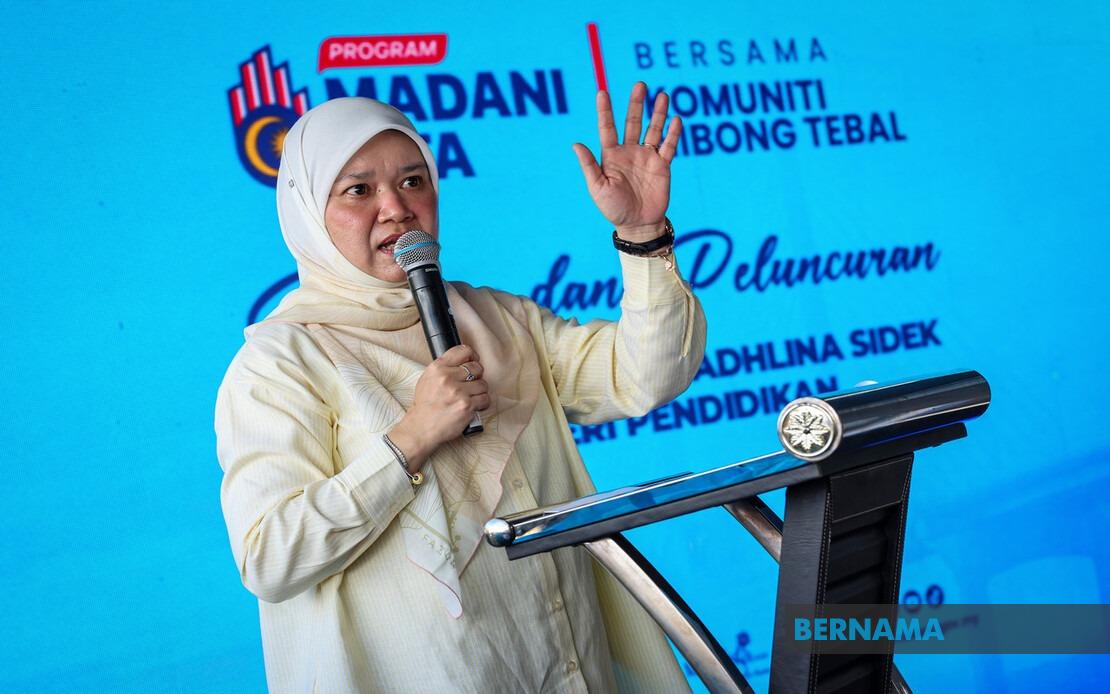
Education Minister Fadhlina Sidek has thrown her support behind the NADI Mahir school uniform initiative, describing it as a practical solution that simultaneously lightens the financial load on Malaysian households whilst generating entrepreneurial opportunities in communities nationwide. Speaking in Nibong Tebal on August 8, Fadhlina emphasised how the instalment-based purchasing model addresses a longstanding challenge for families navigating the costs associated with back-to-school preparations, particularly during economically uncertain times when even essential items can strain household budgets.
The NADI Mahir Jahit programme represents a deliberate convergence of social support and skills development, two critical pillars in Malaysia's push to build economic resilience at the grassroots level. By enabling parents to spread uniform costs across multiple payments rather than bearing one large expense upfront, the scheme reduces barriers that might otherwise prevent lower-income families from accessing quality school attire. This approach acknowledges a reality many Malaysian households face: education costs extend well beyond tuition fees, encompassing uniforms, textbooks, and equipment that accumulate rapidly at the school year's outset.
Crucially, the initiative channels its economic benefit directly to local communities by employing 120 alumni of the NADI Mahir Jahit skills training programme. These entrepreneurs, who completed their training through NADI's Pintar Services, now generate income by producing the uniforms sold under the scheme. This model creates a sustainable local supply chain rather than relying on imported goods or distant manufacturers, keeping money circulating within communities whilst building productive capacity among participants who might otherwise struggle to access consistent employment or business opportunities.
The Nibong Tebal event, which also featured participation from the Ministry of Communications and the Malaysian Communications and Multimedia Commission, signals the programme's positioning within broader government digital inclusion and community empowerment strategies. Fadhlina, who represents Nibong Tebal as Member of Parliament, presented the initiative as exemplifying the type of ground-level intervention that addresses citizen concerns whilst aligning with national development priorities. Her endorsement carries particular weight given her position overseeing educational policy and her direct accountability to constituents experiencing these financial pressures.
Beyond uniforms, NADI's portfolio of community-focused interventions demonstrates an expanding footprint across multiple social domains. The NADI Tuisyen Rakyat tutoring programme, which has enrolled over 42,000 students nationally with 73 participants from Nibong Tebal alone, extends free or subsidised academic coaching to students requiring additional learning support. The programme's track record appears solid: in the 2025 Sijil Pelajaran Malaysia examination, it produced 65 outstanding performers, suggesting that accessibility to quality tutoring correlates with improved academic outcomes when combined with student motivation and institutional support.
The government's investment in youth e-sports infrastructure through NADI E-Sukan indicates recognition that talent development pathways must diversify beyond traditional academic and vocational channels. Competitive gaming represents a legitimate skill domain with genuine economic potential, particularly as esports industries expand across Southeast Asia. Nibong Tebal's achievement in securing the national NADI E-Sukan MADANI Mobile Legends title whilst finishing second at state level demonstrates that participation translates into measurable competitive success, potentially opening career avenues in coaching, content creation, tournament organisation, and professional gaming itself.
Artisanal and culinary skills receive parallel emphasis within NADI's programming framework. The Cooking Star competition achievements in Penang indicate that the programme cultivates practical competencies applicable to hospitality, food entrepreneurship, and tourism sectors—industries where Malaysia possesses genuine comparative advantages regionally. These skill streams acknowledge that youth employment pathways increasingly diverge from conventional corporate trajectories, requiring government support across creative and service economies where small-scale entrepreneurs predominate.
The recent launch of the 1 NADI 1 Prompt Engineer initiative signals the government's determination to democratise access to emerging technologies, particularly artificial intelligence. That 11 participants in Nibong Tebal alone have engaged with AI literacy programming suggests genuine appetite for digital upskilling amongst community members. As AI capabilities reshape global labour markets, ensuring that Malaysian workers—particularly those in secondary cities and smaller towns—gain foundational competency before displacement pressures mount becomes strategically vital. This proactive stance contrasts sharply with passive approaches that might cede technological capacity entirely to urban centres or developed nations.
Implementing such multifaceted community programmes requires institutional coordination spanning education, communications, enterprise development, and skills training portfolios. The presence of multiple government agencies at the Nibong Tebal event underscores this interconnectedness: school uniform affordability connects to educational outcomes, which depend partly on student welfare and family financial stability, which in turn improves through local entrepreneurship opportunities. This systemic thinking suggests NADI operates as an integrated community development platform rather than a collection of discrete initiatives.
For Malaysian families facing compound cost pressures—inflation, rising school fees, and deteriorating real wages in certain sectors—innovations like NADI Mahir provide tangible relief. The instalment mechanism itself deserves closer examination: structured payment schedules lower upfront burden without necessarily increasing total costs, meaning families access essential goods more easily without subsidising their purchase through debt servicing. This approach differs fundamentally from credit-based solutions that saddle vulnerable households with interest obligations.
The Nibong Tebal announcement reflects broader policy currents within Malaysia's current education administration: recognition that educational outcomes depend not solely on classroom instruction but on removing socioeconomic barriers that impede student attendance, concentration, and engagement. When families exhaust resources purchasing uniforms, supplementary tutoring, and equipment, educational attainment inevitably suffers regardless of student aptitude. NADI's multipronged approach tacitly acknowledges this reality, attempting to address economic constraints whilst simultaneously cultivating skills and opportunities for the next generation.

