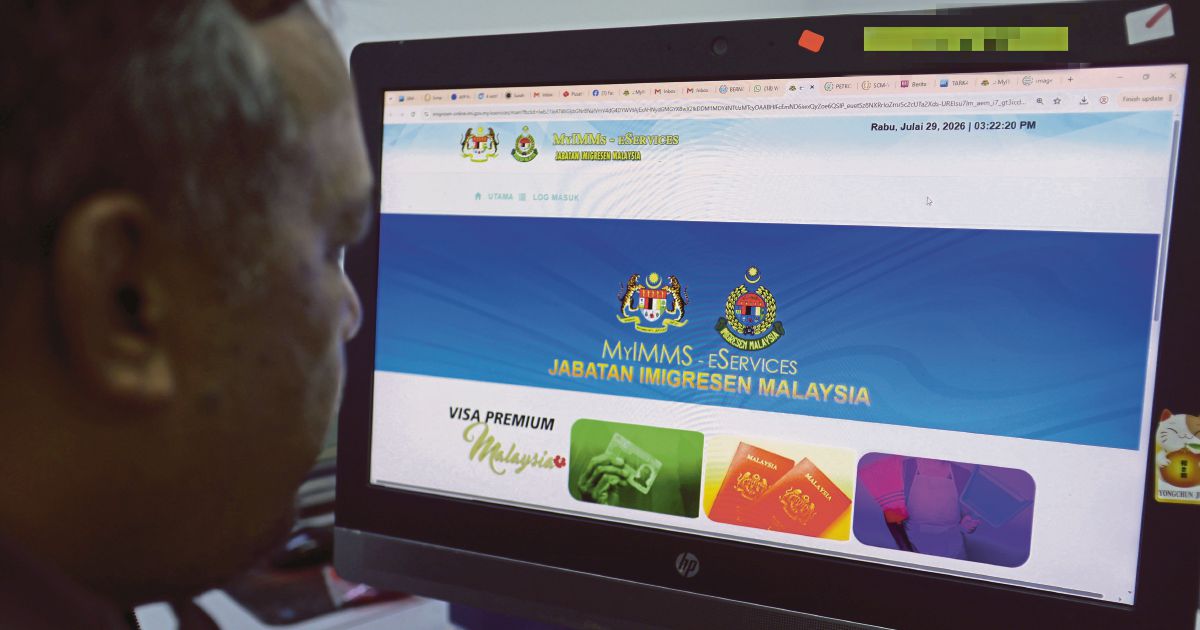
The suspected compromise of Malaysia's Immigration System (MyIMMs) should be viewed through a national security lens rather than confined to the categories of cybercrime or corruption, according to criminological analysis emerging from ongoing investigations. This distinction carries significant implications for how authorities respond to the incident and the scale of resources they deploy to address its consequences.
The MyIMMs platform serves as the primary interface for managing Malaysia's immigration operations, handling sensitive data on entry and exit records, visa applications, and traveller movements. A breach affecting this system therefore extends far beyond typical data theft or financial fraud. The architecture connecting Malaysia's border control mechanisms to international security frameworks means that compromised immigration data creates cascading vulnerabilities across multiple government agencies and international partnerships.
Treating the incident as primarily a cybercrime matter risks overlooking structural vulnerabilities in Malaysia's critical infrastructure. While cybercrime responses focus on identifying perpetrators and recovering data, national security frameworks compel deeper analysis of how attackers gained access, what institutional weaknesses enabled the breach, and whether hostile foreign actors or organised networks exploited Malaysia's borders. The distinction fundamentally alters investigative priorities and the scope of corrective measures required.
Malaysia's immigration systems interact directly with intelligence collection, law enforcement databases, and border security protocols. Manipulation or unauthorised access to this data could theoretically enable individuals to circumvent security screening, falsify travel records, or compromise the integrity of biographical data held by enforcement agencies. Such possibilities elevate the breach from data protection violations to potential threats against state sovereignty and public safety infrastructure.
The timing of intensive scrutiny on MyIMMs also intersects with broader regional security concerns. Southeast Asia faces persistent challenges from transnational criminal networks, human trafficking operations, and unauthorised border crossings. Immigration systems specifically designed to detect and prevent such activities become targets of choice for groups seeking to exploit regulatory gaps. A compromised MyIMMs platform could theoretically facilitate movement of individuals flagged for security concerns or enable creation of fraudulent documentation that defeats multi-layered screening mechanisms.
From an institutional perspective, framing the breach as a national security issue rather than isolated cybercrime empowers relevant government bodies to coordinate more comprehensively. Intelligence agencies, military cyber defence units, and border security authorities can be mobilised alongside immigration department investigators. This integrated approach allows authorities to assess whether the breach formed part of larger reconnaissance efforts targeting Malaysian infrastructure or represented targeting of specific individuals and their movement patterns.
The criminological argument also highlights that perpetrators and their motivations matter differently depending on the security lens applied. A financially motivated hacker seeking to sell credentials represents a different threat profile than state-sponsored actors seeking to map Malaysian border vulnerabilities or criminal enterprises attempting to create backdoors for smuggling operations. Each scenario demands distinct investigative techniques and protective responses, yet all fall outside traditional cybercrime investigation frameworks.
International cooperation dimensions also shift fundamentally when national security implications are acknowledged. Partner nations hosting Malaysians, ASEAN intelligence-sharing mechanisms, and international aviation security protocols all depend on confidence that immigration data remains secure and untampered. A breach treated as routine cybercrime may not trigger formal notification to allied governments, whereas national security incidents typically activate diplomatic and intelligence-sharing channels to prevent similar vulnerabilities elsewhere in the region.
The breach's potential impact on Malaysia's tourism and business sectors adds another layer of national significance. International travellers, investors, and business visitors form calculations about destination safety partly based on confidence in immigration system integrity. A security breach affecting this critical infrastructure could influence investment decisions and tourist arrivals at a scale far exceeding direct financial losses from the compromise itself. The reputational implications thus extend beyond cybersecurity concerns to economic competitiveness.
Treating MyIMMs as a national security matter also justifies examination of systemic vulnerabilities in how Malaysia's government agencies manage critical digital infrastructure. Cybercrime frameworks typically focus on incident response and recovery, whereas national security protocols compel comprehensive audits of institutional practices, personnel security, infrastructure redundancy, and succession planning. This broader evaluation may reveal endemic weaknesses requiring substantial policy and investment responses.
Moving forward, the distinction between cybercrime and national security classification will likely shape investigation timelines, evidence handling, public communication strategies, and accountability measures. Authorities must balance transparency regarding the breach's nature with operational security requirements that prevent potential actors from learning details about investigative directions. This balancing act proves considerably more complex within national security frameworks, where revealing investigation details could compromise intelligence sources or expose defensive vulnerabilities.
The criminologist's assessment ultimately reflects evolving understanding of how digitalisation has transformed conventional security threats. Systems once purely concerned with administrative efficiency now function as critical national infrastructure whose compromise extends beyond data protection into fundamental questions of state control over borders and security processes. MyIMMs exemplifies this evolution, requiring response frameworks that acknowledge both immediate cybersecurity dimensions and longer-term national security implications.

