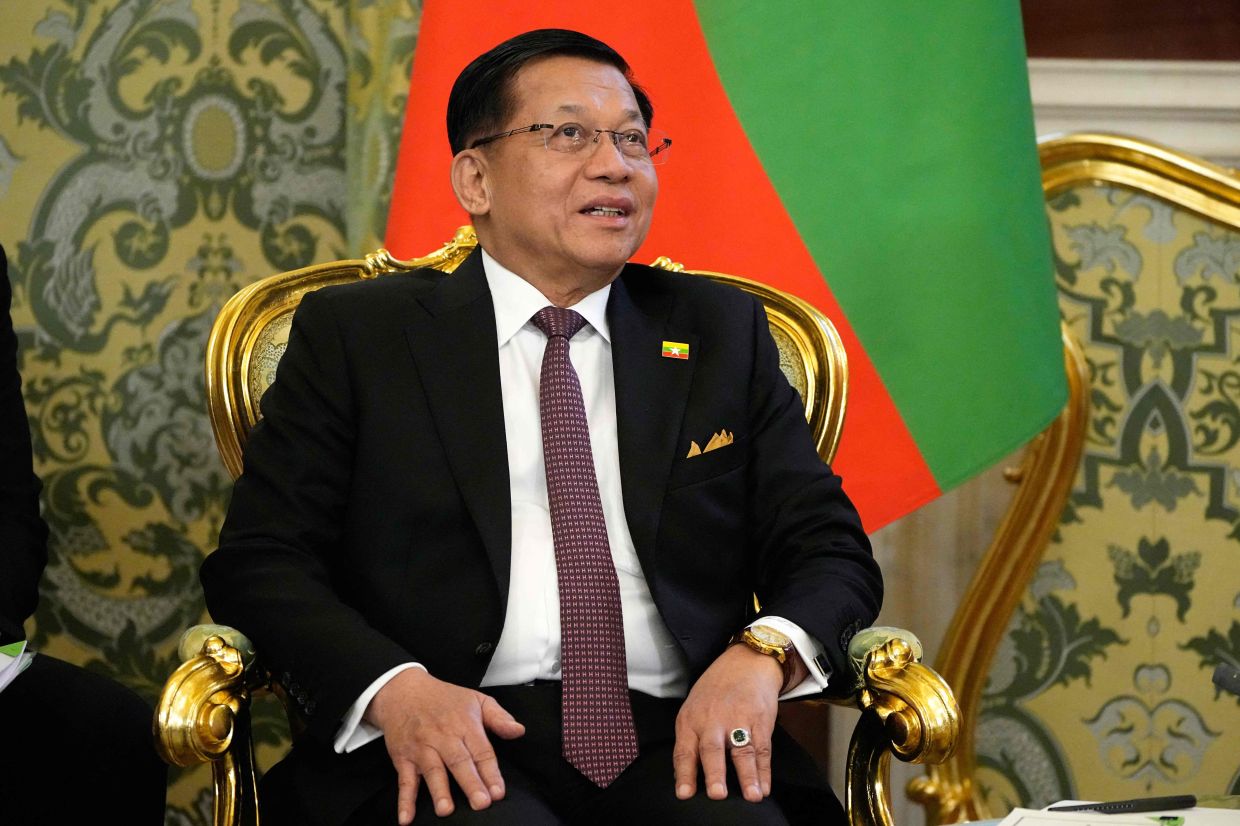
Myanmar leader Min Aung Hlaing is scheduled to undertake an official visit to Cambodia in early September, according to an announcement confirmed by the Cambodian Senate. The trip forms part of broader diplomatic outreach by the Myanmar junta chief, whose international travel itinerary has expanded significantly since his election as president in April, despite widespread assertions that the electoral process lacked democratic legitimacy. Officials have characterised the visit as an initiative to deepen cooperation between the two Southeast Asian neighbours, though observers view the journey through a more complex geopolitical lens.
Cambodian authorities have begun practical preparations for the visit, with Kuy Sophal, Minister of the Royal Palace, and Chin Ketna, permanent deputy chairman and secretary-general of the National Committee for Organising National and International Festivals, touring potential venues to accommodate the Myanmar delegation. Chea Thyrith, spokesperson for the Senate president, emphasised the bilateral dimension, describing the engagement as instrumental in reinforcing friendship and advancing mutually advantageous cooperation between the two nations. The framing reflects Cambodia's role as a bridge-builder within regional structures, though the statement offers little substantive detail regarding specific areas of collaboration.
The Cambodia visit represents Min Aung Hlaing's sixth international journey since his April presidential election, following trips to India, China, Laos, Thailand and Russia. The frequency and scope of these travels have not escaped the notice of international observers, particularly those monitoring developments in Myanmar's political transition. Human rights organisations and democracy advocates have consistently characterised these diplomatic missions as calculated efforts to construct a veneer of international legitimacy around a leader whose rise to power and subsequent governance have generated severe international controversy.
At the core of this criticism lies Myanmar's human rights record under Min Aung Hlaing's military administration. Since the February 2021 coup that removed democratically elected leader Aung San Suu Kyi from office, Myanmar has witnessed documented patterns of systematic abuse, including mass detention of political opponents, activists and ordinary civilians perceived as dissenting voices. The arbitrary imprisonment of Aung San Suu Kyi herself became emblematic of the junta's disregard for due process and democratic norms. These developments prompted the Association of Southeast Asian Nations to suspend Myanmar's participation in ministerial and summit-level meetings, a sanction that remains in force, underscoring regional displeasure at the military regime.
Min Aung Hlaing's April election, conducted within Myanmar's military-drafted electoral framework, has drawn widespread criticism as fundamentally compromised. International observers and analysts have characterised the contest as methodically designed to confer a civilian veneer on military rule while constraining genuine political competition. The absence of authentic multiparty democratic participation, combined with restrictions on opposition movements and media freedom, rendered the election mechanism incapable of producing a result with meaningful democratic legitimacy. Despite these widespread reservations, Min Aung Hlaing's campaign of international visits appears designed to normalise his presidency within global and regional diplomatic circles.
Cambodia's willingness to host the Myanmar leader reflects the Kingdom's pragmatic approach to regional diplomacy, grounded partly in its own historical experience navigating internal conflict and international pressure. Kin Phea, president of the International Relations Institute of Cambodia, offered nuanced analysis of the visit's significance, suggesting it represented mutual benefit rather than one-directional accommodation. He noted that Cambodia's 2022 Asean chairmanship had witnessed its diplomatic efforts to facilitate dialogue on Myanmar's political crisis, establishing a foundation for continued engagement as relationships normalise.
Peah further observed that Cambodia might share its own experience in reconciliation, national unity and peace-building processes with Myanmar counterparts, acknowledging implicitly that external diplomatic engagement carries intrinsic limitations. While Cambodia can model institutional frameworks and negotiation approaches developed through its own transition from conflict to relative stability, fundamental resolution of Myanmar's political impasse depends ultimately upon decisions made by actors within Myanmar itself. External pressure and diplomatic recognition, Pheah suggested, cannot substitute for internal political transformation and genuine commitment to democratic principles among Myanmar's decision-making elites.
The distinction between bilateral state visits and Myanmar's broader position within Asean structures remains critically important for understanding the visit's actual significance. Pheah highlighted that whether Cambodia formally designates Min Aung Hlaing's visit as an official state visit operates separately from Myanmar's status within regional forums. Asean's five-point consensus, established to guide Myanmar's political transition toward democratic restoration, establishes specific benchmarks that determine whether Myanmar will regain participation rights in Asean summits and ministerial meetings. Implementation of these agreed principles—rather than individual nations' diplomatic decisions—constitutes the operative mechanism determining Myanmar's reintegration into regional structures.
For Malaysian and broader Southeast Asian observers, Min Aung Hlaing's Cambodia visit represents a wider pattern of deliberate diplomatic sequencing designed to construct perceived international normalcy around Myanmar's contested political arrangements. The contrast between sustained Asean institutional restrictions and individual members' willingness to receive the Myanmar leader highlights tensions within the regional organisation's consensus-based decision-making framework. Malaysia, as an Asean member and fellow stakeholder in regional stability, remains positioned to monitor whether individual diplomatic engagement by neighbouring states signals potential movement toward reconsidering Myanmar's suspension from collective forums, or represents tactical accommodation without substantive commitment to Myanmar's democratic transition.
The accumulating record of Min Aung Hlaing's international travels suggests a deliberate strategy to establish de facto recognition and engagement despite formal Asean reservations. Each additional bilateral visit by a regional or international actor, particularly one characterised as strengthening relations and cooperation, incrementally normalises Min Aung Hlaing's position and creates diplomatic space that potentially undermines collective Asean positions regarding Myanmar's political requirements. Cambodia's hospitality toward the Myanmar leader thus warrants careful observation as an indicator of potential broader shifts in how individual Asean members balance their commitment to the organisation's consensus stance against bilateral interests and relationship maintenance with Myanmar's military administration.

