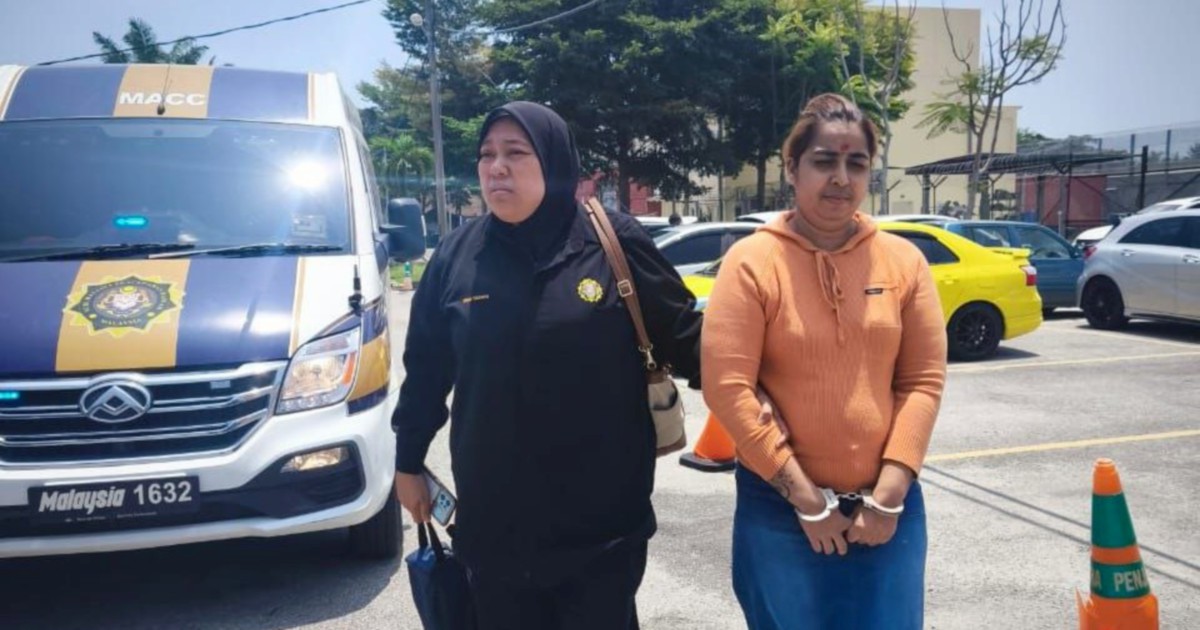
A Myanmar national working as a domestic cleaner in Kelantan appeared before the Sessions Court in Kota Baru today to face charges of bribery in connection with an alleged immigration offence. The woman is accused of attempting to offer RM1,400 to a police officer to persuade him to drop or delay enforcement action against her, an incident that reportedly took place in April of this year.
Corruption charges involving foreign workers have become increasingly common in Malaysian courts, reflecting both the scale of immigration enforcement activities and the desperation some workers face when confronted with legal difficulties. The relatively modest sum involved in this case—RM1,400—suggests the woman may have been attempting to settle what she viewed as an administrative problem through informal means, a practice that remains endemic in some parts of the region despite years of anti-corruption campaigns.
The charge of bribery carries serious legal consequences under Malaysian law. Beyond the immediate penalties, a conviction can result in deportation proceedings and a permanent ban from re-entering the country, effectively ending any possibility of legal employment in Malaysia. For foreign domestic workers, many of whom are already vulnerable to exploitation, such outcomes can have devastating consequences for both the individual and their families who may depend on remittances from Malaysia.
Policing and enforcement of immigration regulations in the northern states has intensified considerably over the past decade. Kelantan, as a border state adjacent to Thailand, has become a focal point for immigration authorities seeking to document and regularize the status of foreign nationals working within its jurisdiction. This heightened enforcement environment means that workers who find themselves in irregular situations face mounting pressure and may be more likely to attempt informal settlement mechanisms.
The case reflects broader challenges in managing labour mobility in Southeast Asia. Myanmar citizens constitute a significant portion of Malaysia's migrant workforce, particularly in domestic service, construction, and plantation sectors. Many arrive through formal channels but subsequently lose documentation or overstay their permits due to employment disputes, health issues, or inability to afford renewal fees. The resulting precarious legal status creates opportunities for exploitation both by employers and, in cases like this, by workers attempting to navigate complex bureaucratic processes.
Attempts to bribe enforcement officials, though illegal, often stem from a fundamental misunderstanding of Malaysian legal systems among workers with limited education and access to proper legal advice. A Myanmar cleaner earning modest wages may genuinely believe that a cash payment represents a viable alternative to formal prosecution, a misperception that can be reinforced by experiences in their country of origin where informal settlement of matters with officials is commonplace.
The involvement of police in immigration enforcement creates particular tension in these scenarios. While the police have legitimate responsibilities in immigration matters, their presence during enforcement operations can lead to uncomfortable situations where workers attempt to negotiate directly with officers rather than engaging formal legal processes. The criminalization of such attempts—as in this case—serves as a deterrent but may also reflect the structural pressures that lead desperate individuals to contemplate such actions.
Malaysia's anti-corruption framework has strengthened considerably in recent years, with greater emphasis on investigating and prosecuting bribery involving all government officials. The charges brought against this woman demonstrate that authorities are taking such offences seriously regardless of the modest amounts involved or the circumstances surrounding them. This consistency in enforcement is essential for maintaining public integrity, even if it places significant burdens on vulnerable foreign workers.
The case also highlights the need for better access to legal information and representation for migrant workers in Malaysia. Many face immigration difficulties without understanding their rights or the proper channels for addressing legal issues. NGOs and worker advocacy groups have repeatedly called for improved orientation programmes and multilingual legal support services, yet resource constraints continue to limit such initiatives.
Looking forward, the outcome of this prosecution may serve as a cautionary example for other migrant workers contemplating irregular payments to officials. However, addressing the underlying drivers of such behaviour—inadequate legal awareness, economic desperation, and limited access to proper counsel—requires systemic interventions beyond criminal prosecution alone. Without such broader measures, similar cases will likely continue appearing before Malaysian courts, particularly in states with significant migrant worker populations.

