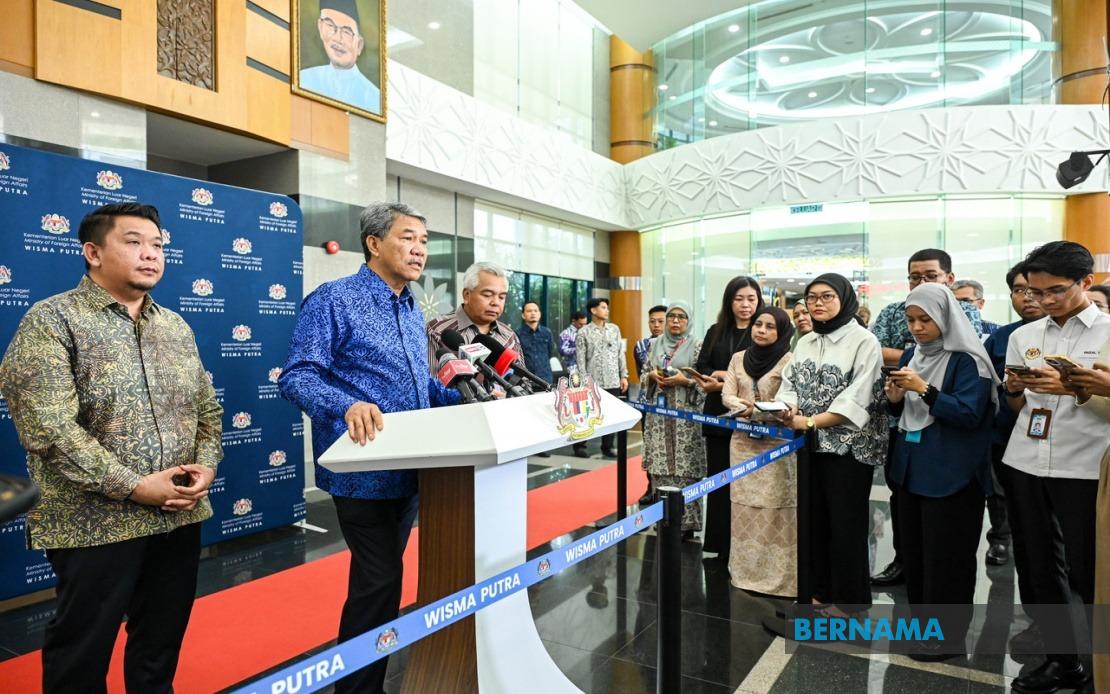
Myanmar has signalled its willingness to bring back 5,000 of its refugees currently in Malaysia through maritime transport, according to Foreign Minister Datuk Seri Mohamad Hasan. The commitment emerged from discussions between Mohamad and his Myanmar counterpart Tin Maung Swe, though both nations remain focused on guaranteeing the safety and security of those destined for return. Speaking after the 59th ASEAN Day celebration in Putrajaya on Monday, Mohamad underscored that while the neighbouring country has demonstrated readiness for the operation, critical questions about the welfare of returnees demand careful consideration before any logistics are finalised.
The Malaysian Foreign Minister acknowledged that authorities have already registered and identified all 5,000 individuals slated for repatriation, marking a significant administrative milestone in managing one of Southeast Asia's most pressing displacement crises. Despite this preparatory groundwork, he indicated that no concrete timeline has yet been established for the operation, though he emphasised the importance of moving the process forward with appropriate urgency. The deliberate pace reflects Malaysia's determination to avoid repeating maritime tragedies that have characterised irregular refugee movements across the region in recent years.
Mohamad's remarks carry particular weight given Malaysia's dual burden as both a transit point and temporary home for hundreds of thousands of displaced persons from Myanmar. The country hosts communities facing persecution ranging from the widely publicised Rohingya crisis to less internationally visible but equally vulnerable populations, including members of the Chin and Karen ethnic groups. This diversified refugee composition complicates policy responses, as each community carries distinct historical grievances, protection needs, and prospects for safe return. The Malaysian government's approach signals recognition that the Myanmar crisis extends well beyond the singular narrative of Rohingya displacement that has dominated international discourse.
Asian regional solidarity around the Myanmar question remains anchored to the Five-Point Consensus, a framework agreed collectively by ASEAN member states and Myanmar's military leadership during the 2021 coup crisis. Mohamad stressed that this mechanism should serve as the foundation for all multilateral efforts to address Myanmar's internal instability and its humanitarian consequences. The Five-Point framework encompasses calls for non-interference in Myanmar's affairs, halting violence, dialogue and mediation, humanitarian aid delivery, and ASEAN envoy initiatives—a delicate balance attempting to maintain regional unity while pressing for improvements in Myanmar's governance trajectory.
The stability of this consensus framework has come under strain as Myanmar's political situation remains fractured and its repatriation capacity questionable. Mohamad made explicit that any modifications to the Five-Point framework must be formally negotiated and approved by all ASEAN leaders rather than unilaterally adjusted by individual states or Myanmar's military government. This insistence reflects deeper anxieties within ASEAN about maintaining institutional cohesion and preventing the bloc from fracturing into contradictory national positions on Myanmar—a concern particularly acute given competing geopolitical interests among member states.
The repatriation proposal must navigate genuine logistical and humanitarian challenges beyond diplomatic agreements. Maritime transport of large refugee populations requires coordination across multiple agencies, including port authorities, coastguards, and health services on both Malaysian and Myanmar shores. Safety protocols must address potential maritime hazards, medical emergencies, documentation verification, and reception arrangements in Myanmar, where returnees may face uncertain circumstances depending on their ethnicity, religion, or perceived political sympathies. These operational complexities explain why Mohamad's cautious tone regarding specific timelines likely reflects realistic assessment rather than administrative hesitation.
Malaysia's position as host nation also carries domestic political dimensions. The country already manages competing demands for resources, employment, and social services from both its own population and the significant refugee communities integrated into Malaysian society. Public and parliamentary sentiment regarding refugee presence varies considerably, with some constituencies viewing repatriation as essential to managing public resources and others emphasising humanitarian responsibilities. Mohamad's emphasis on safety—rather than speed—may partly reflect awareness that any maritime tragedy or reportage of mistreatment following return would intensify domestic criticism.
The broader context includes Myanmar's persistent instability following the February 2021 military coup and subsequent civil conflict. Large portions of Myanmar remain under contested control, with armed resistance movements operating across multiple regions. Whether returning refugees would encounter genuine safety or fresh displacement remains speculative until on-ground conditions stabilise considerably. This uncertainty partly explains international hesitation about large-scale, rapid repatriation schemes; premature return of vulnerable populations to conflict zones can constitute forced displacement in different form.
Malaysia's diplomatic approach reflects its aspiration to lead constructive regional problem-solving while maintaining ASEAN's foundational commitment to sovereignty and non-interference. By working through collective mechanisms and maintaining dialogue with Myanmar's military leadership, Malaysia attempts to thread a difficult needle—addressing humanitarian imperatives while respecting the bloc's established principles. The repatriation proposal, if ultimately implemented, would represent tangible progress on one of ASEAN's most intractable challenges, though success hinges on safety guarantees that remain difficult to provide in Myanmar's current environment.

