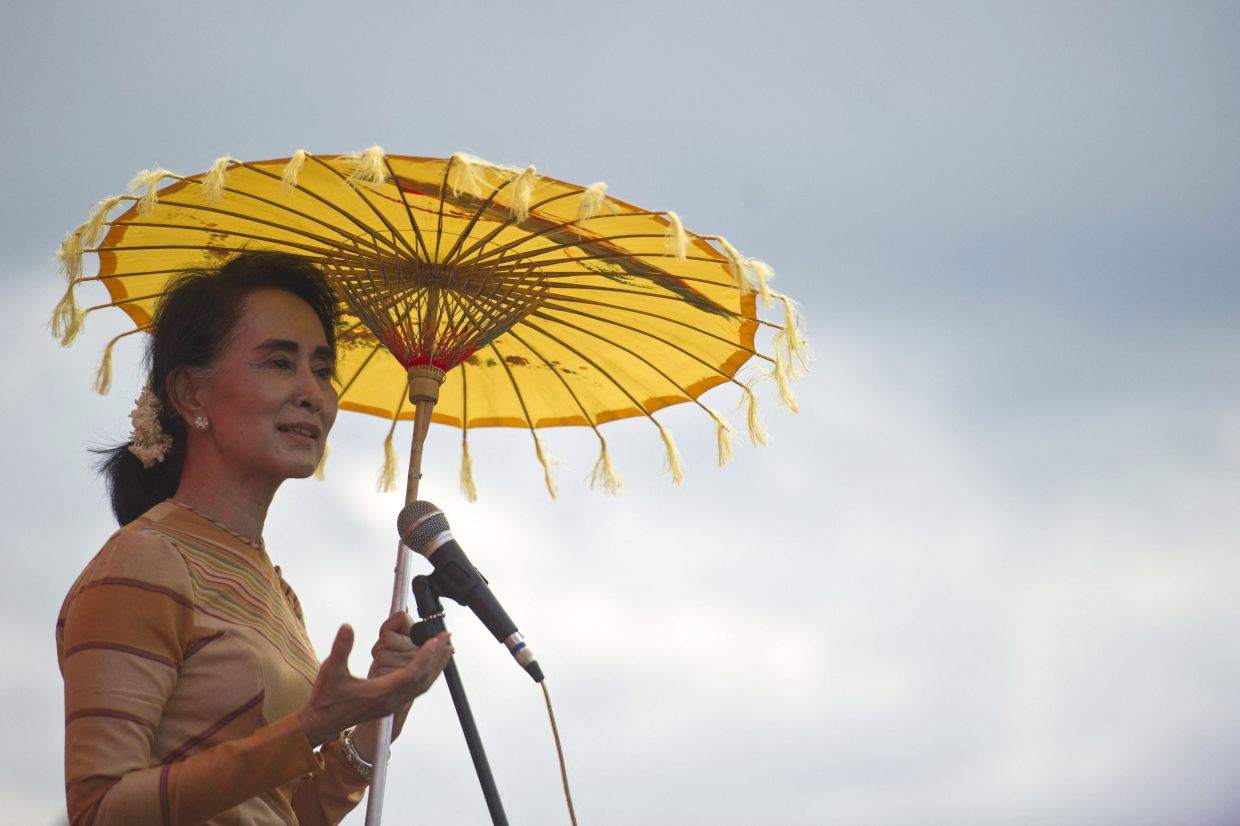
Myanmar's military regime has once again rebuffed efforts by Asean to access the country's deposed leader, Aung San Suu Kyi, in a move analysts view as a calculated assertion of defiance against the regional grouping. As the 81-year-old Nobel laureate marked another birthday in captivity since the coup three years ago, repeated diplomatic overtures from Asean member states have been summarily dismissed, with the regime's spokesperson Khaing Khaing Soe stating plainly in late June that Suu Kyi, as a convicted prisoner, would not be permitted to meet international representatives. The latest rejection came when Philippines Foreign Secretary Maria Theresa Lazaro, representing the current Asean chair, was unable to secure an audience with Suu Kyi during her visit to the capital Naypyitaw—marking the second failed attempt by Manila to facilitate such a meeting.
The Myanmar junta's consistent stonewalling sends a deliberate message about the balance of power within Southeast Asia's premier diplomatic organisation. Analysts from major research institutions have noted that the military leadership under Min Aung Hlaing operates from a position of calculated confidence, viewing Asean as a bloc that needs Myanmar more than the reverse. Hunter Marston, director of the South-East Asia programme at the Lowy Institute, characterises the regime's behaviour as a demonstration of political control and an assertion that it alone determines the parameters of international engagement on Myanmar's domestic affairs. The symbolic importance of limiting Suu Kyi's visitors cannot be overstated—by controlling who meets the country's most prominent political figure, the junta reinforces its monopoly over Myanmar's political narrative.
Perhaps most revealing is the selective access the regime has permitted to a handful of foreign dignitaries. Former Thai foreign minister Don Pramudwinai managed to meet Suu Kyi during a visit to Naypyitaw in July 2023, while Chinese Foreign Minister Wang Yi reportedly secured an audience in April 2024. These exceptions illuminate the junta's true hierarchy of international relationships. That only Thailand and China have achieved meaningful access to Myanmar's most celebrated opposition figure underscores the regime's strategic orientation and raises questions about the nature of those countries' behind-the-scenes diplomatic influence. For Asean as a collective body, this selectivity is deeply humiliating, suggesting that the bloc's consensus-based approach and formal protocols carry considerably less weight than bilateral relationships with key powers.
Suu Kyi herself remains largely isolated from independent verification of her wellbeing. Currently serving an effective sentence of approximately 18 years—substantially reduced from her original 33-year conviction—she faces charges including violations of Myanmar's Official Secrets Act and corruption allegations that international observers and human rights organisations have widely characterised as politically motivated prosecutions. Since April, credible reports indicate she has been placed under house arrest, removing her even from the limited prison visibility she previously enjoyed. Her son, Kim Aris, has expressed deep frustration at being denied contact with his mother for five consecutive years, a period during which the regime has repeatedly claimed she remains in good health without substantiating such assertions through independent means.
The junta's intransigence on this issue directly violates the spirit of Asean's Five-Point Consensus, the peace framework established by the regional organisation immediately following the February 2021 coup. That agreement explicitly called for dialogue between the military leadership and all parties concerned—a provision broadly interpreted to include Suu Kyi, who remains the symbolic head of pre-coup Myanmar's democratic movement. The regime's systematic refusal to implement this consensus, coupled with its rejection of mediation attempts, demonstrates contempt for Asean's institutional framework. Analysts suggest the military views granting access to Suu Kyi as implicitly accepting Asean's supervisory role over Myanmar's internal political settlement, a concession the junta refuses to make regardless of diplomatic cost.
The human toll of Myanmar's political deadlock has become staggering. According to Armed Conflict Location & Event Data, an independent global conflict monitor, at least 100,000 people have died since the coup, reflecting the scale of violence that has engulfed the country. The Five-Point Consensus included provisions for humanitarian access and cessation of violence, neither of which the regime has prioritised. Min Aung Hlaing, who relinquished his military chief position in April to assume the presidency while maintaining ultimate control, has shown little interest in fulfilling international obligations. His orchestration of a widely-dismissed election earlier in 2024 proceeded without meaningful political settlement, further entrenching his grip on power while marginalising any potential democratic transition.
From the junta's perspective, Asean's criticism lacks coherence and enforceability. Military strategists in Naypyitaw note that the regional organisation has failed to intervene in other serious territorial and political disputes among member states, notably the long-standing Thailand-Cambodia border disagreement. This selective application of pressure, the junta argues, renders Asean's demands on Myanmar hypocritical and driven by political prejudice rather than principled multilateralism. Amara Thiha, a fellow at the Stimson Centre, has observed that the regime perceives the Asean chair's demands as fundamentally unfair, creating incentives for non-compliance rather than encouraging implementation of the peace plan. The junta essentially claims that Myanmar should enjoy the same latitude afforded to other member states in managing internal political affairs.
The implications for Asean's broader institutional credibility are substantial. The organisation prides itself on the principle of non-interference in member states' internal affairs, yet this foundational doctrine increasingly conflicts with its stated commitment to conflict resolution and regional stability. Myanmar represents a test case of whether Asean can enforce its own frameworks or whether the bloc is indeed, as critics suggest, a toothless talking shop. The sustained diplomatic isolation of Min Aung Hlaing—he has been barred from attending leaders' summits for over five years—has not yielded compliance with peace conditions. Instead, it appears to have hardened the junta's resolve to pursue its own political trajectory independent of regional approbation.
For Malaysia and other Southeast Asian democracies, the Myanmar situation presents uncomfortable questions about Asean's future. The bloc's traditional emphasis on consensus and non-interference has historically protected all member states from external pressure, but it also enables the most recalcitrant actors to defy collective will without meaningful consequences. The continued imprisonment and isolation of Suu Kyi, coupled with the junta's brazen disregard for Asean's institutional positions, suggests a fundamental shift in the organisation's capacity to influence its own members. Whether this represents merely a temporary aberration or a structural weakness in Asean's diplomatic architecture remains one of Southeast Asia's most pressing questions.
The tragedy of Suu Kyi's predicament extends beyond her personal suffering. She has become a symbol of Asean's limitations, a living reminder that the organisation can articulate principles and frameworks without possessing the political will or institutional mechanisms to enforce them. The junta's calculation appears straightforward: the costs of non-compliance with Asean directives remain lower than the costs of relinquishing power and subjecting itself to international scrutiny. Until that equation changes fundamentally, either through sustained external pressure or internal political shifts, Myanmar's military leadership will continue to ignore the regional bloc's requests while maintaining selective diplomatic engagement with favoured partners. The fate of Aung San Suu Kyi, for now, remains hostage to this fundamental asymmetry of power within Southeast Asia's regional system.

