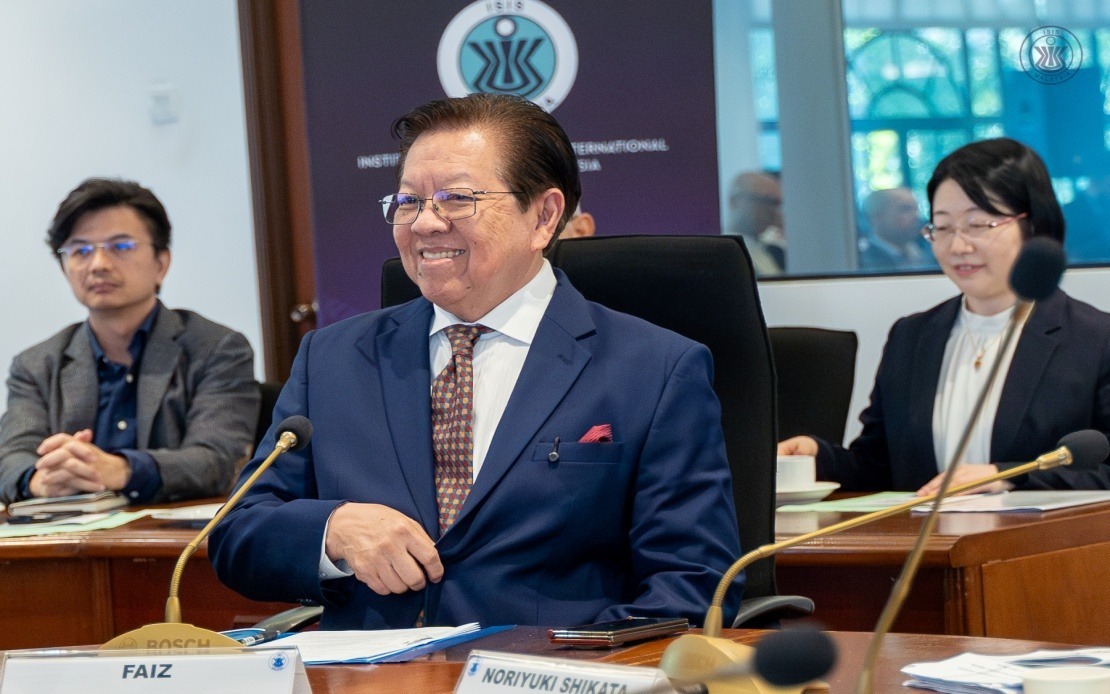
The Myanmar political crisis will receive sustained and unfiltered attention at the 39th Asia-Pacific Roundtable (APR) beginning Tuesday in Kuala Lumpur, with organisers establishing a dedicated caucus specifically to examine the country's deteriorating situation. The initiative reflects recognition that official ASEAN statements on Myanmar lack the rigour and candour needed to grapple with the complexity facing the region's troubled neighbour. Datuk Prof Dr Mohd Faiz Abdullah, executive chairman of the Institute of Strategic and International Studies (ISIS) Malaysia, explained that the recent ASEAN Summit in Cebu, Philippines, treated Myanmar matters with diplomatic restraint, adhering to carefully prepared government positions that often obscure harder truths.
The scheduled three-day forum, running through July 2, represents one of Asia-Pacific's most influential unofficial policy discussions, bringing together academics, strategists, retired officials, and senior analysts to address challenges confronting the region. By carving out dedicated space for Myanmar deliberations, the APR organisers signal that the nation's political implosion—triggered by the February 2021 military coup and subsequent resistance movements—demands examination beyond what public diplomacy permits. The dedicated caucus will enable practitioners, think-tank specialists, and Myanmar experts to probe dimensions of the crisis that typically remain unspoken in formal ASEAN venues, where consensus-building and non-interference principles often constrain critical analysis.
The breadth of this year's gathering underscores the APR's expanded influence within Asia-Pacific strategic circles. Approximately 400 participants from 30 countries will participate, a dramatic expansion from the forum's modest beginnings nearly four decades ago when merely 30 to 40 scholars attended. This growth trajectory reflects the roundtable's enduring relevance as geopolitical competition intensifies across the region and traditional multilateral institutions struggle to accommodate frank discussion of sensitive bilateral and multilateral tensions. The APR's evolution demonstrates that Track 2 diplomacy—informal dialogue among non-governmental elites—fills vital space where official channels become too constrained by protocol and political considerations.
Beyond Myanmar, the 39th APR agenda encompasses several defining regional security preoccupations. The South China Sea's maritime disputes, involving competing territorial claims by multiple ASEAN members alongside China, will feature prominently in sessions examining how regional states can exercise greater agency in protecting their interests. West Asian developments—encompassing conflicts in Gaza, Syria, Iraq, and the broader Persian Gulf—will receive attention given implications for regional stability and the Muslim world's geopolitical alignments. Energy security concerns, particularly as nations transition away from fossil fuels and competition for renewables intensifies, will occupy considerable discussion space, especially relevant for Southeast Asian economies dependent on stable energy imports and increasingly interested in becoming regional clean energy hubs.
Artificial intelligence emerges as an unexpected but strategically consequential inclusion in this year's deliberations. The rapid proliferation of generative AI technologies and their security implications—from military applications to information warfare and economic disruption—represents a frontier issue that demands serious strategic analysis among regional policymakers. The inclusion reflects growing recognition across Asia-Pacific governments and think-tanks that AI development will substantially reshape military capabilities, economic competitiveness, and societies' vulnerability to manipulation. Tariff regimes and trade friction, particularly surrounding great-power competition and regional supply-chain reorganisation, will also feature as participants assess the economic foundations of regional stability amid shifting global commerce patterns.
This year's thematic focus—"Accelerating agency and action"—signals the forum's ambition to move beyond passive analysis toward identifying how regional actors can exercise greater strategic autonomy. The theme builds deliberately on previous APR iterations that emphasised "interregnum" and "recalibration," acknowledging that the Asia-Pacific region inhabits an uncertain geopolitical moment characterised by weakening American security dominance, Chinese assertiveness, and fragmented multilateral responses. By pivoting toward agency and action, organisers challenge participants to move from describing problems toward proposing solutions and identifying which regional actors—whether ASEAN collectively, individual member states, or non-state actors—possess sufficient capacity and political will to drive meaningful change.
The APR holds distinct significance within Asia-Pacific strategic architecture precisely because it operates outside formal governmental channels. Convened by ISIS Malaysia on behalf of ASEAN-ISIS, a network of Southeast Asia's leading policy research institutions, the roundtable maintains sufficient independence to facilitate conversations that official ASEAN mechanisms often cannot. ASEAN's consensus-based decision-making processes, while valuable for preserving member-state unity, frequently constrain discussion of contentious issues where members hold divergent interests. The APR provides space for these differences to surface, enabling participants to explore common ground and competing perspectives without the diplomatic constraint that accompanies official statements.
Ranking among the world's top 20 strategic-security-focused conferences, the APR attracts practitioners and thinkers whose influence extends well beyond academic circles. Many participants occupy advisory roles to their respective governments or hold prominence in policy circles, lending APR discussions resonance within national decision-making establishments. The forum's reputation for facilitating frank, constructive engagement on divisive issues makes it an essential venue where regional elites build shared understanding of emerging threats and potential cooperative responses. This combination of prestige, institutional credibility, and informal operating space explains why governments throughout Asia-Pacific regard APR participation as strategically important despite—or perhaps because of—its lack of formal authority.
The Myanmar caucus specifically addresses a governance crisis that has festered beyond acceptable levels even by regional standards. The military junta's violent suppression of opposition movements, coupled with civil war conditions in multiple regions and widespread humanitarian catastrophe, has created destabilisation that threatens not merely Myanmar but its neighbours, including Malaysia. Refugee flows, transnational militant recruitment, weapons smuggling, and regional economic disruption all flow from Myanmar's collapse. Yet ASEAN's traditional approach—engaging Myanmar's military leadership while hoping for gradual reform—has manifestly failed. The dedicated caucus provides space for participants to debate alternatives that official ASEAN channels cannot, potentially generating ideas that influence member-state positions in subsequent formal meetings.
For Malaysian observers and policymakers, the APR's Myanmar focus carries particular relevance. Malaysia shares a maritime border with Myanmar and hosts significant refugee populations fleeing the political violence. The stability of Southeast Asia's northwestern region directly affects Malaysian security interests, while the humanitarian dimensions of Myanmar's crisis align with Malaysia's stated commitment to ASEAN solidarity and regional responsibility. The APR's elevated examination of Myanmar dynamics may generate strategic insights that eventually inform Malaysia's bilateral approach toward its troubled neighbour and its positions within ASEAN forums addressing Myanmar policy.
The broader implications extend to how Asia-Pacific governments and societies grapple with complexity that formal diplomatic institutions struggle to encompass. The APR's continued expansion and relevance suggest that Track 2 mechanisms will become increasingly central to regional strategic management. As geopolitical competition intensifies and bilateral tensions multiply, the space for informal, intellectually rigorous dialogue grows more valuable. The 39th APR's focus on accelerating agency and action reflects conviction that passive observation of regional deterioration serves no constructive purpose; instead, thoughtful analysis must translate into advocacy for policies and practices that strengthen regional stability, prosperity, and the protection of smaller states' sovereign interests amid great-power competition.

