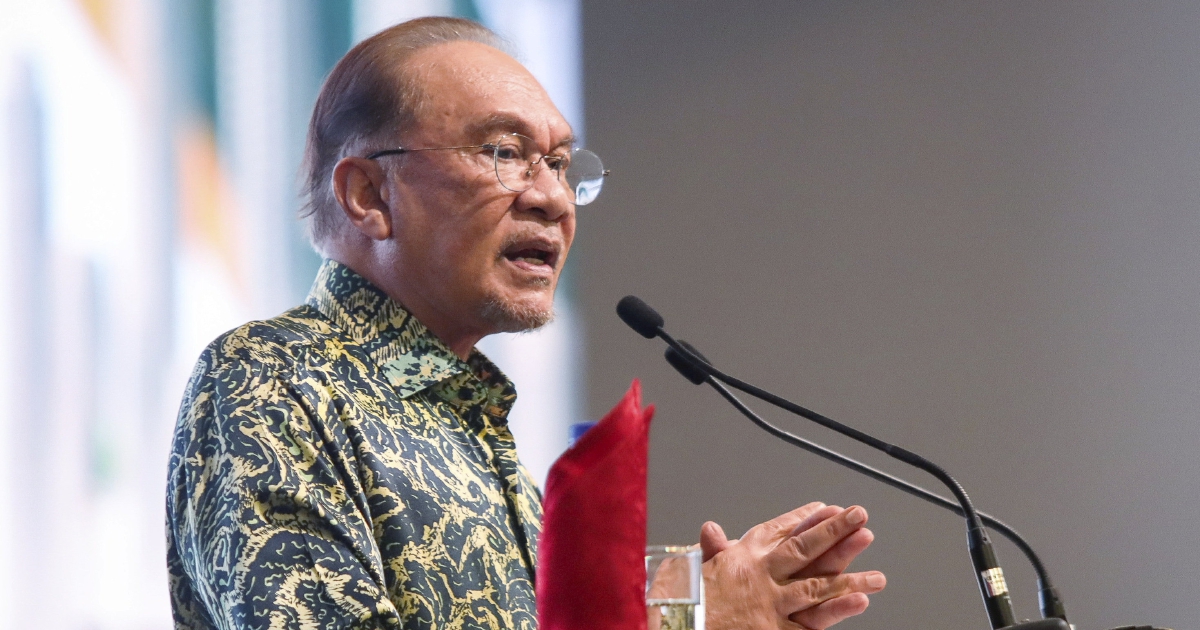
Prime Minister Datuk Seri Anwar Ibrahim announced in Jelebu that Myanmar has committed to receiving an initial cohort of 5,000 Rohingya refugees presently residing in Malaysia. The announcement follows bilateral diplomatic talks between the two governments and represents a significant step in addressing the prolonged humanitarian challenge that Malaysia has grappled with for nearly a decade as a frontline destination for displaced Rohingya fleeing persecution in Myanmar's Rakhine State.
The Rohingya crisis, which intensified following Myanmar's military crackdown in 2017, has seen hundreds of thousands of members of this stateless Muslim minority flee across borders. Malaysia, never officially a signatory to the 1951 Refugee Convention, has nonetheless borne substantial responsibility in hosting approximately 180,000 registered Rohingya alongside many undocumented arrivals. This population burden has placed considerable strain on the nation's social services, healthcare systems, and urban infrastructure, particularly in Kuala Lumpur and Selangor where large settlements exist.
The repatriation agreement reflects a diplomatic shift in Myanmar's stance, which had previously maintained that the humanitarian situation in Rakhine State was manageable and that large-scale returnees would be accommodated. International observers have long scrutinised Myanmar's capacity and willingness to ensure safe, dignified, and voluntary returns. The agreement's specificity—naming 5,000 as an initial figure—suggests structured phasing rather than a one-time arrangement, potentially laying groundwork for subsequent tranches if implementation proceeds smoothly.
For Malaysia, this development offers partial relief from hosting one of the world's largest Rohingya populations outside the sprawling camps in Cox's Bazar, Bangladesh. The Malaysian government has repeatedly stressed that as a developing nation with its own developmental pressures, the country cannot indefinitely serve as a primary sanctuary for displaced populations. Policymakers have voiced concerns about integration challenges, resource competition, and security considerations, making repatriation an increasingly urgent priority within Putrajaya's humanitarian and national interest frameworks.
The pathway to this agreement underscores the importance of sustained diplomatic engagement. Government-to-government dialogue has typically proven more effective than international pressure in producing concrete outcomes on Myanmar's refugee policies. Malaysia's approach—balancing its moral obligations as a regional actor with pragmatic national interests—reflects the complex position occupied by many Southeast Asian nations that are neither wealthy resettlement destinations nor the conflict zones from which refugees originate, yet bear disproportionate hosting responsibilities.
However, significant uncertainties cloud implementation prospects. Myanmar's commitment must translate into functional capacity on the ground. Infrastructure in Rakhine State remains limited, and questions persist regarding housing, livelihood opportunities, and security guarantees for returning populations. Past voluntary repatriation attempts, including those organised by the United Nations High Commissioner for Refugees (UNHCR) in partnership with Bangladesh and Myanmar, have encountered substantial obstacles. Local communities in Rakhine have expressed resistance to large-scale returns, and interethnic tensions remain unresolved fundamentally.
The voluntary nature of any repatriation programme becomes critically important given historical narratives of coercion and involuntary displacement that define the Rohingya experience. International humanitarian standards mandate that returns must be genuinely consensual, informed, and undertaken with certainty regarding safe passage, legal status recognition, and property restitution. Malaysian authorities will need to ensure transparent communication with Rohingya communities about terms and conditions, allowing individuals genuine choice rather than manufacturing consent through resource constraints or administrative pressure.
Regionally, this agreement positions Malaysia as a constructive interlocutor in Myanmar affairs at a time when international engagement with the country remains fractious. Myanmar's military establishment, which has dominated governance since the 2021 coup, views bilateral relationships with ASEAN neighbours through a strategic lens. Malaysia's willingness to work directly with Naypyidaw on repatriation demonstrates the pragmatism increasingly characteristic of ASEAN's approach to Myanmar, prioritising concrete outcomes over rhetorical commitments to democracy or human rights.
The broader implications for Southeast Asia's refugee architecture merit consideration. If Myanmar honours this commitment successfully, it may establish precedent encouraging other source countries to consider accepting displaced populations. Conversely, failed implementation could further discredit repatriation as a durable solution and entrench permanent displacement as the de facto reality for Rohingya populations across the region. Thailand, Bangladesh, and Indonesia all host significant Rohingya populations and watch Malaysian developments closely as bellwethers for diplomatic possibilities.
Implementation timelines remain undefined in the public announcement, creating uncertainty for Rohingya communities and policymakers alike. Malaysia will need to coordinate with UNHCR, though diplomatic tensions between Kuala Lumpur and the international body have complicated past operations. Verification mechanisms to ensure returnees reach destinations safely, re-establish documentation, and secure livelihood access will be essential components absent from the initial announcement.
The 5,000 figure, while representing meaningful progress, underscores the scale of remaining displacement. With Malaysian authorities recognising far larger populations than officially registered, many Rohingya face prolonged uncertainty regarding their ultimate status and future prospects. This agreement opens a door but does not resolve the fundamental question of how Myanmar will ultimately accommodate hundreds of thousands of displaced persons across a region that has neither the resources nor clearly demonstrated political will for comprehensive solutions.
For Malaysian policymakers, this announcement signals progress on a persistent challenge that intersects humanitarian, security, and developmental concerns. Success will require sustained engagement, transparent oversight, and flexibility to adapt as circumstances evolve—underscoring that repatriation, even when achieved diplomatically, remains only the beginning of complex processes toward genuine restoration and reconciliation.

