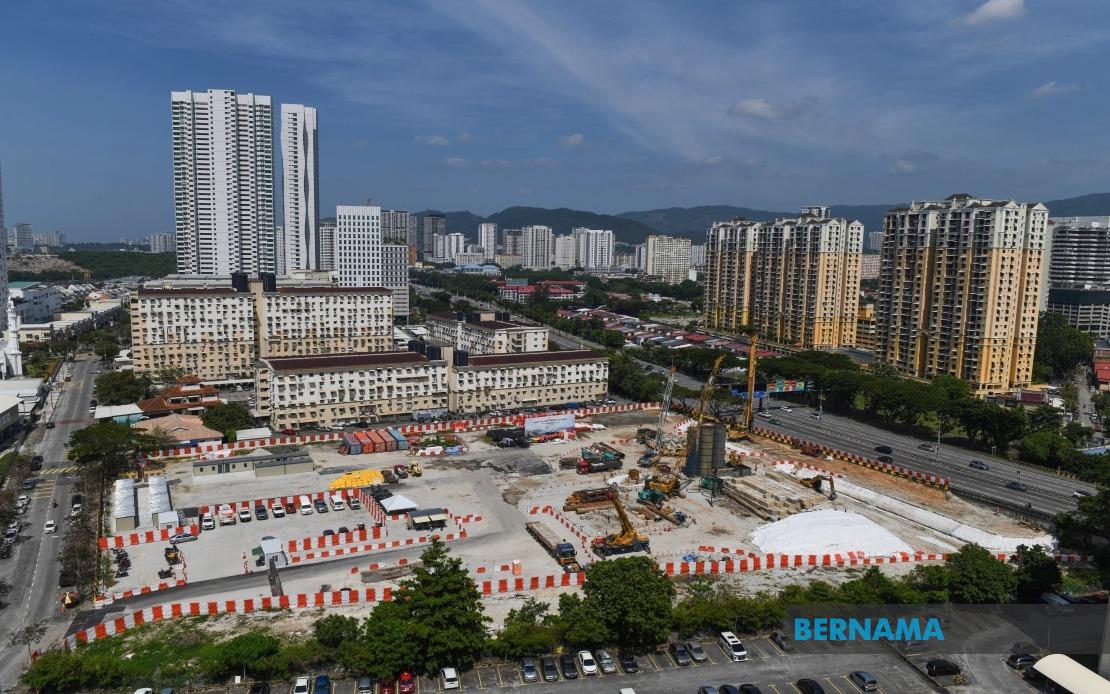
Penang's ambitious Mutiara Line Light Rail Transit project has moved into a critical phase with Malaysia Rapid Transit Corporation Sdn Bhd (MRT Corp) announcing the award of a RM3.028 billion System Turnkey Contract to the Malaysian Resources Corporation Berhad (MRCB) and Theta Edge Berhad Joint Venture. This milestone represents a significant acceleration in the project's development timeline, enabling parallel advancement of both detailed railway systems design and the existing civil construction programme—a scheduling strategy designed to maintain project coherence and minimise delays that often plague large-scale transit infrastructure initiatives across Southeast Asia.
The comprehensive systems contract encompasses an extensive array of critical infrastructure components essential to modern rail operations. These include the design, supply, and installation of electric trains alongside associated depot equipment and facilities; sophisticated signalling and train control systems paired with automatic platform gate technology; the complete trackwork, conductor rail systems, and specialised maintenance vehicles required for ongoing operations. Beyond these core mechanical elements, the contract covers power supply and distribution infrastructure, railway supervisory control and data acquisition (SCADA) systems, computerised maintenance management platforms, telecommunications and information technology networks, and automatic fare collection mechanisms—collectively forming the technological backbone that distinguishes modern LRT systems from conventional rail services.
The parallel advancement strategy adopted by MRT Corp addresses a persistent challenge in Malaysian infrastructure development. By allowing construction teams to proceed with station builds and related works while engineering consultants finalise detailed designs, the project reduces the idle periods that typically emerge when civil contractors must await design completion. This approach has already yielded tangible progress across the Silicon Island to Komtar alignment under Civil Main Contract 1 (CMC1), where construction activities now span 14 of the planned 19 sections. Workers have completed 45 pile caps and 32 pier columns, demonstrating the accelerated pace that becomes possible when civil and systems planning proceed concurrently rather than sequentially.
Land acquisition, a perennial bottleneck in Malaysian infrastructure projects, has progressed substantially. MRT Corp reports that 93 per cent of the total land required for the CMC1 package is now available, reflecting coordinated efforts between the Federal Government, Penang State Government, and relevant agencies. This achievement carries particular significance for Malaysian observers accustomed to land-acquisition disputes that have delayed other major projects. The close coordination indicates that lessons from previous infrastructure undertakings—where land compensation and relocation procedures extended timelines—have been incorporated into the Mutiara Line's planning protocols.
The extension phase from Komtar to Penang Sentral, encompassing the Civil Main Contract 2 (CMC2) package, is advancing through tender evaluation with contract award targeted for November 2026. This timeline suggests a deliberate staging approach where the foundation sections achieve completion before major contract awards for extension components, allowing funding certainty and design refinement based on initial construction experiences. For Malaysian taxpayers and infrastructure enthusiasts, this phased methodology distributes financial commitments across multiple contract cycles, potentially providing greater budget flexibility than committing the entire project value simultaneously.
Bumiputera participation in the CMC1 package has exceeded 20 per cent of total contract value, reflecting the project's commitment to local industry development and wealth creation. This threshold holds significance beyond mere compliance with national policies—it signals MRT Corp's engagement with Malaysia's aspirations to build indigenous capability in complex infrastructure delivery. The construction sector, traditionally reliant on foreign contractors for megaprojects, stands to develop expertise through participation in Penang's largest single infrastructure investment in recent memory. Such experience accumulation becomes particularly valuable as other Southeast Asian nations expand their transit networks and Malaysian firms potentially bid for regional opportunities.
At Silicon Island, soil investigation works have commenced in preparation for the project's future depot facility. This component addresses a critical operational requirement often overlooked in public discussions of transit systems—the maintenance and storage infrastructure supporting daily fleet operations. The depot facility essentially forms the logistical heart enabling safe train operations, housing washing stations, repair bays, and stabling tracks. MRT Corp's early attention to site investigation and preparation demonstrates anticipatory project management, ensuring that depot construction can commence expeditiously once civil main contractors complete the primary alignment works.
The Tapak Pesta site handover by the Penang State Government in April 2026 marked another procedural milestone. MRT Corp has completed demolition of existing structures and site preparation works, positioning the facility for imminent construction commencement. This particular site rehabilitation phase exemplifies the logistical complexity underlying seemingly straightforward infrastructure projects—the removal of legacy structures, assessment of existing utilities, and environmental remediation must all precede modern construction activities. The timely completion of these preparatory tasks indicates effective project governance and coordination between state authorities and transit authorities.
The Mutiara Line represents Penang's response to intensifying urban congestion as the state continues attracting manufacturing investments, technology sectors, and tourism activities. Unlike Kuala Lumpur and Selangor, which have benefited from multiple transit lines over decades, Penang has operated with limited rapid transit infrastructure despite comparable urbanisation pressures. The Mutiara Line's completion will fundamentally reshape transportation patterns across the northern corridor, potentially reducing vehicle dependency and supporting sustainable urban development principles increasingly prioritised by Malaysian state governments.
For Malaysian investors and businesses, the project's advancement creates emerging opportunities within the construction, engineering, and technology supply chains. The awarded system contracts will flow funds to MRCB and Theta Edge for further subcontracting and specialist procurement. Local suppliers of materials, components, and professional services positioned within the project's value chain stand to benefit from increased economic activity. Additionally, the eventual fare-paying ridership base will generate operational revenue streams, potentially creating investment opportunities in operating concessions or service contracts once the line achieves commercial operations.
The project's phased delivery approach also carries implications for Malaysian infrastructure financing models. By staging contract awards and distributing costs across multiple fiscal years, the project distributes financial burden in ways that individual state budgets and federal allocation mechanisms can more readily accommodate. This model may serve as a template for other ambitious provincial infrastructure initiatives across Malaysia, particularly for smaller states lacking Penang's commercial base or tourism revenue.
As the Mutiara Line progresses toward its eventual inauguration, the project exemplifies contemporary Malaysian infrastructure ambitions tempered by pragmatic delivery methodologies. The integration of detailed systems design with concurrent civil construction, the achievement of substantial land acquisition percentages, and the demonstrated commitment to local industry participation collectively suggest a project managed with attention to lessons from both domestic and international transit developments. For Malaysian observers monitoring the nation's infrastructure trajectory, the Mutiara Line's advancement represents tangible evidence that large-scale, complex projects remain achievable within Malaysian planning and execution frameworks.

