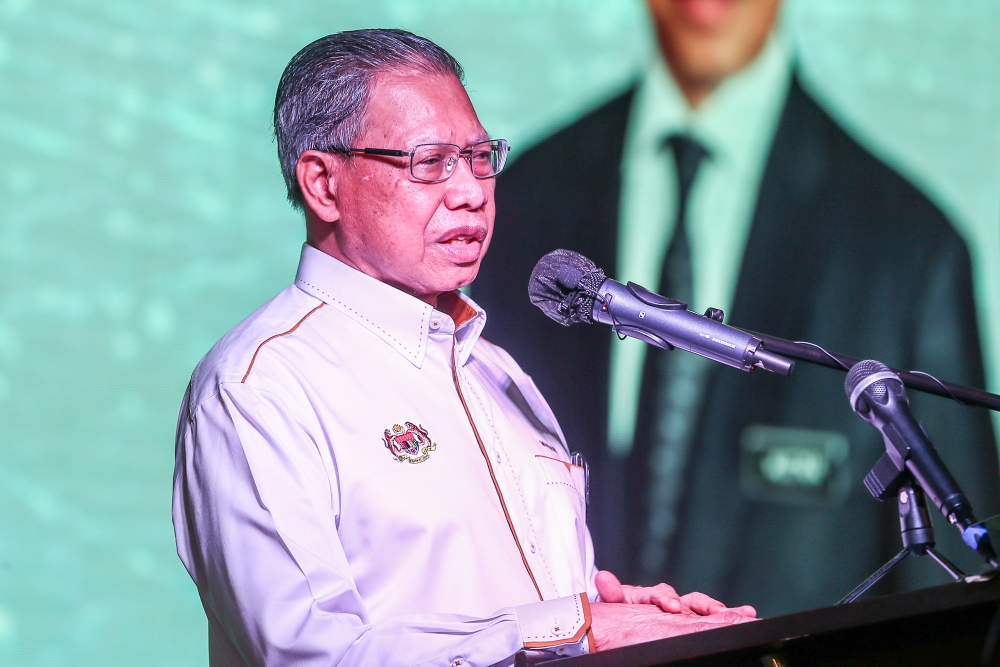
Datuk Seri Mustapa Mohamed, the 76-year-old former Member of Parliament for Jeli, has drawn a final line under his electoral ambitions, declaring categorically that he will not be returning to contest in the upcoming general election. Speaking in Pasir Mas, the veteran politician signalled that his active participation in parliamentary contests has reached its conclusion, marking a symbolic moment in Malaysian politics as one of the country's experienced political figures formally steps aside from the electoral arena.
The former Jeli MP's announcement reflects a broader generational shift occurring within the Malaysian political establishment. As older statesmen progressively withdraw from frontline politics, questions mount regarding the readiness and capacity of emerging leaders to fill the void left behind. Mustapa's declaration is therefore not merely a personal decision but rather a statement about succession planning—or the lack thereof—in a political system where seniority and longevity have traditionally commanded considerable influence.
Mustapa's insistence that the next generation should assume the helm represents a conscious effort to reshape political discourse around succession and rejuvenation. His call carries particular weight given his extensive background in Malaysian governance and his standing within the party structure. By explicitly endorsing younger politicians, he tacitly acknowledges that prolonging the tenure of ageing political figures may hinder rather than help national progress, a perspective that challenges the entrenched culture of political longevity in the country.
The implications of this generational transition extend across Malaysia's political landscape. Both the ruling coalition and opposition parties face mounting pressure to identify, develop, and elevate capable younger politicians who can articulate coherent policy positions and connect with voters beyond the traditional party faithful. The vacuum created by veteran politicians stepping back will inevitably reshape party dynamics, factional alignments, and ideological directions within political organisations.
For the Democratic Action Party, Pakatan Harapan, Barisan Nasional, and other major political entities, Mustapa's withdrawal signals the urgency of constructing viable leadership pipelines. Youth-oriented policies and opportunities for younger members to assume substantive roles—rather than merely ceremonial positions—have become essential for party viability. The electorate, particularly younger voters, increasingly demand that political parties demonstrate genuine commitment to change and renewal rather than recycling familiar faces.
The timing of Mustapa's statement also warrants consideration within the context of Malaysian electoral cycles. With the next general election constitutionally due by 2026, political parties are beginning their preliminary calculations regarding candidacy, seat allocation, and campaign strategies. His unambiguous statement eliminates speculation about potential comebacks and allows his party to focus allocation of resources and candidacy slots toward fresh talent without the distraction of negotiating the participation of senior figures.
Moreover, Mustapa's emphasis on younger leadership touches upon a fundamental challenge confronting Southeast Asian democracies more broadly. Nations across the region continue grappling with the balance between respecting experienced politicians' contributions and fostering genuine democratic renewal through generational change. Thailand, Indonesia, and other regional counterparts face analogous questions about whether entrenched political establishments will willingly cede power to emerging leaders or whether renewal will require more disruptive political transitions.
The Malaysian context presents particular complexity given the constitutional role of constitutional monarchies, the federal structure accommodating both national and state-level political competition, and the multiethnic character requiring coalition-building across communal lines. Within this framework, younger politicians must not only demonstrate policy competence but also navigate intricate ethnic, religious, and regional considerations that have historically defined Malaysian politics. Whether the current crop of emerging leaders possesses sufficient experience and gravitas to manage these complexities remains an open question.
Mustapa's withdrawal from electoral politics also reflects the physical demands of sustained political engagement at the highest levels. At 76, he joins numerous contemporaries who have similarly stepped back, recognising that contemporary politics demands energy, stamina, and the capacity to engage with increasingly sophisticated digital campaigning and voter engagement strategies. Younger politicians, typically more conversant with social media platforms and contemporary communication modes, may therefore prove more effective mobilisers in future electoral contests.
The former Jeli MP's statement additionally carries symbolic significance for political accountability and the peaceful transfer of power. In contrast to entrenched autocratic systems where aging leaders cling indefinitely to political office, Mustapa's graceful exit—however framed—demonstrates that Malaysian democracy, despite imperfections, retains mechanisms enabling generational transition. His explicit endorsement of younger successors provides political legitimacy to such transitions, potentially easing factional tensions that might otherwise accompany leadership changes within party structures.
Looking forward, the real test will involve whether younger politicians emerging to fill vacancies created by retiring senior figures can command both party loyalty and public confidence. They must establish independent political bases rather than merely inheriting constituencies through senior endorsement. Additionally, they must articulate policy platforms addressing contemporary challenges—economic inequality, climate change, digital transformation, and evolving social values—that differ substantially from the concerns dominating previous electoral cycles.
Mustapa's reaffirmation that he will not contest in the next general election ultimately represents both an ending and a beginning. His departure signals the conclusion of an extensive political career while simultaneously challenging Malaysia's political parties to accelerate their investment in identifying, developing, and empowering the leaders who will navigate the nation through the complexities of the coming decade.

