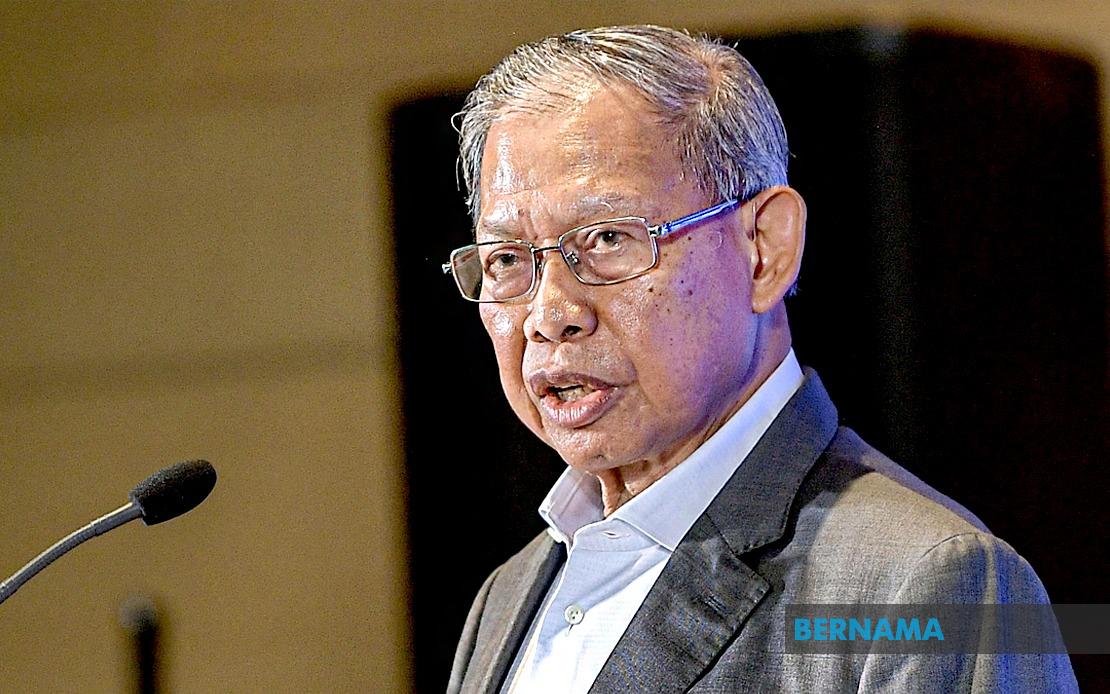
Datuk Seri Mustapa Mohamed has firmly closed the door on any political comeback, declaring at a gathering in his Pasir Mas constituency that he will not contest in the 16th General Election and believes the time has come for younger leaders to take centre stage in Malaysian politics. The former Jeli Member of Parliament made his position clear during a "Welcome Home" event held in his honour alongside Independence Month celebrations organised by the Council of Former Kelantan Elected Representatives, signalling a definitive end to speculation about his electoral future.
At 76 years old, Mustapa acknowledged the physical limitations that come with advancing age, noting that his mobility is no longer what it once was. This practical recognition of his circumstances underpins his decision to step aside from electoral politics, framing his withdrawal not as reluctant retirement but as a conscious choice rooted in fairness to his party and the broader democratic process. He articulated a conviction that parties have a responsibility to recognise the potential of emerging leaders rather than relying on familiar faces from previous generations, a philosophy that carries particular resonance in Malaysian politics where generational transitions have often proven contentious.
Mustapa's statement represents a significant moment for UMNO, which has grappled in recent years with questions about leadership renewal and the integration of younger cadres into senior decision-making positions. His explicit endorsement of younger colleagues moving forward serves as an elder statesman's blessing for the party's generational shift, potentially easing factional tensions that sometimes arise when senior figures remain politically active and retain influence within party structures. The timing of his announcement, made publicly and unambiguously, suggests a desire to eliminate any future uncertainty about his intentions.
The former Minister of International Trade and Industry has framed his transition from electoral politics in constructive rather than diminishing terms. While stepping back from candidate lists, he maintains his commitment to UMNO through alternative channels, positioning himself as an institutional resource for strategic guidance and mentorship. This model of engagement—leveraging experience without occupying front-line political positions—offers a potential template for other senior figures navigating the balance between graceful exit and continued contribution to their respective organisations.
Mustapa's renewed commitment to sharing insights and strategic wisdom within UMNO reflects an understanding that institutional knowledge and strategic acumen remain valuable even outside formal electoral competition. He envisions a role centred on supporting younger colleagues through guidance, encouragement, and the distillation of lessons learned across a lengthy political career spanning multiple ministerial portfolios and party affiliations. This approach recognises that generational transition need not entail complete severance from institutional structures.
Beyond party politics, Mustapa has identified academia as another platform for his continued engagement with public discourse. His intention to contribute to higher education institutions—both public and private—signals a recognition that political experience holds relevance in educational settings where students grapple with questions of governance, international relations, and economic policy. This diversification of his contribution avoids the trap of remaining solely dependent on party structures for continued relevance and influence.
Mustapa's political journey itself carries instructive significance for Malaysian readers. His September 2018 departure from UMNO to join Bersatu represented a significant moment during the party's post-2018 electoral losses, when several prominent figures migrated to other political vehicles. His return to UMNO in June of this year completes a notable arc, demonstrating that political migrations, while dramatic at the moment of occurrence, can be reversed and reconstituted. His reintegration into UMNO after years in Bersatu provides a framework for understanding party loyalty as contextual and reversible rather than absolute and permanent.
The regional implications of his statement extend beyond UMNO's immediate organisational concerns. Across Southeast Asia, questions about political succession and the transition from post-independence leadership cohorts to younger generations remain pressing. Malaysia's experience with this transition, as exemplified by figures like Mustapa accepting generational change, offers lessons for neighbouring countries wrestling with similar demographic shifts in political leadership. His explicit rejection of elder persistence in electoral politics counters regional trends where senior figures sometimes resist stepping aside.
Mustapa's emphasis on fairness to younger leaders strikes a chord that resonates beyond partisan lines. The principle that entrenched senior figures should recognise the claims of emerging politicians on limited candidacy slots and electoral opportunities touches fundamental questions about democratic renewal and opportunity distribution. In Malaysian politics, where seats are finite resources and competition for nominations can be fierce, his articulation of an elder statesman's obligation to younger colleagues addresses a recurrent source of friction within parties.
The sustainability of his commitment to non-electoral contribution will likely be tested over time. Historical experience suggests that senior politicians sometimes find maintaining influence outside formal office more challenging than anticipated, potentially leading to either renewed candidacy attempts or gradual withdrawal from public engagement altogether. Mustapa's demonstrated capacity for adaptation—evident in his multiple party affiliations and ministerial transitions—suggests he possesses the flexibility to sustain meaningful engagement beyond electoral politics, though circumstances may evolve.
For UMNO specifically, Mustapa's stance provides political cover for promotional decisions favouring younger candidates in upcoming elections. His public endorsement of generational transition creates legitimacy for party mechanisms that might otherwise face resistance from traditional factions preferring established figures. This blessing from a senior figure of Mustapa's standing—a former trade minister with substantial international experience—carries weight within UMNO's internal deliberations about candidate selection.
The broader message emerging from Mustapa's declaration extends beyond personal political calculation to encompass a philosophy of institutional responsibility. His positioning suggests that political maturity involves recognising when one's continued electoral participation becomes a constraint rather than an asset to one's organisation. This framing of withdrawal as contribution rather than diminishment offers a constructive narrative for other senior figures contemplating their own political futures, suggesting that continued relevance need not depend on maintaining electoral candidacy or ministerial appointment.

