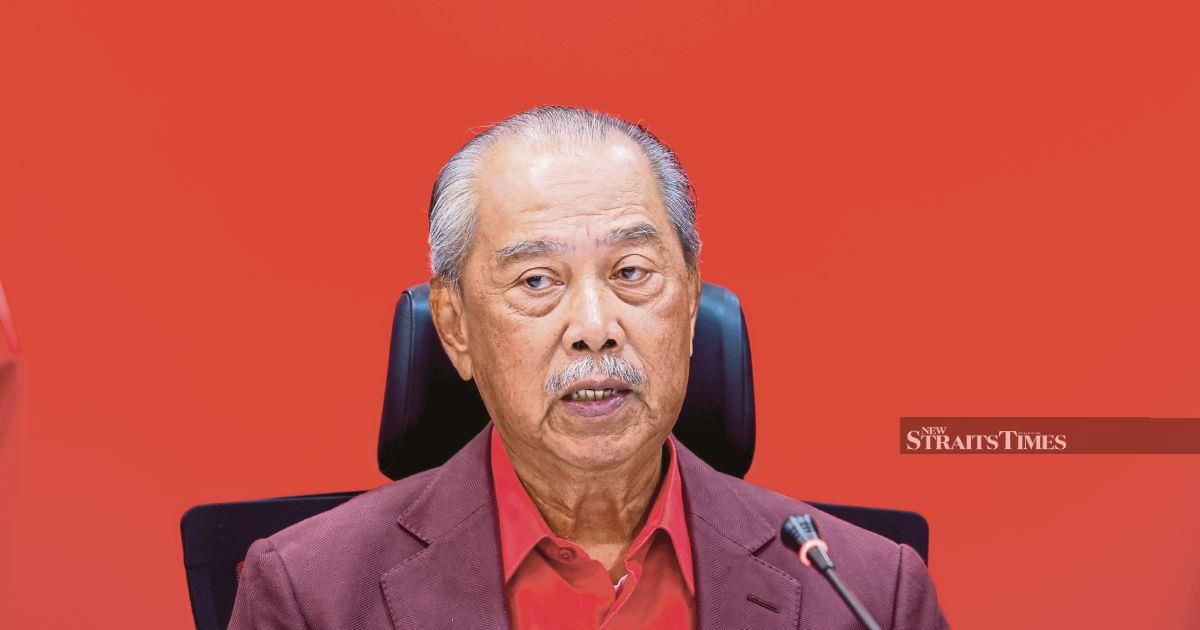
Bersatu president Tan Sri Muhyiddin Yassin has levelled fresh accusations against Umno, asserting that the dominant Malay-Muslim party is orchestrating a campaign to dismantle the unity government established in partnership with Pakatan Harapan. The allegation, made during political commentary in Kuala Lumpur, represents an escalation in tensions within Malaysia's delicate power-sharing arrangement that has governed since late 2022, highlighting the persistent fragility of the coalition despite its broad parliamentary majority.
Muhyiddin's warning carries weight given his personal history with political coalition collapse. During his tenure as Prime Minister leading the Perikatan Nasional government in 2020, his administration unravelled following defections and strategic withdrawals of support from key coalition partners, ultimately forcing his resignation. The former Bersatu leader appears to be drawing parallels between those circumstances and what he perceives as current threats to the present administration's stability, suggesting that historical patterns may be repeating themselves within Malaysia's volatile political landscape.
The friction between Bersatu and Umno reflects deeper structural problems within Malaysian coalition politics. While both parties claim alignment with Malay-Muslim interests and Bumiputera principles, they compete vigorously for electoral dominance and patronage networks. Umno, despite suffering significant electoral losses in 2018 and further decline in 2022, remains Malaysia's single largest Malay party with extensive grassroots machinery. Bersatu, conversely, emerged as a splinter faction but leveraged anti-establishment sentiment to gain parliamentary significance, though its membership remains comparatively modest.
The unity government itself represents an extraordinary political convergence, uniting ideologically disparate blocs: Pakatan Harapan, which champions democratic reform and contested Umno's decades-long rule, now governs alongside Umno and its traditional allies in the Malay-centric coalition. Bersatu occupies an ambiguous position within this arrangement, holding sufficient parliamentary seats to be essential to government stability but potentially vulnerable to pressure from both larger coalition partners. This precarious balance creates perpetual opportunity for coalition fracturing.
Umno's strategic positioning warrants examination. The party has oscillated between supporting and opposing the current government, particularly regarding contentious policies and leadership matters. Party president Ahmad Zahid Hamidi has navigated considerable internal pressure, managing conservative factions while responding to broader regional political currents. If Umno were to significantly shift its stance or reduce its parliamentary commitment, the mathematics of government support would immediately become tenuous, potentially triggering the collapse scenario Muhyiddin anticipates.
Muhyiddin's public articulation of these concerns likely serves multiple purposes within Malaysian political discourse. Beyond the immediate warning function, his statements may be positioning Bersatu as a vigilant guardian of coalition stability, potentially strengthening the party's bargaining position for ministerial portfolios, development funding for constituencies, and influence over legislative priorities. In Malaysian coalition politics, publicly flagging threats often functions as both genuine alarm and strategic positioning.
The implications for Malaysian governance extend beyond factional squabbling between coalition members. A government collapse would trigger constitutional uncertainty regarding whether a fresh mandate requires parliamentary dissolution or alternative coalition formations. The electorate voted in late 2022 with expectation of five-year governance stability; premature government disruption would test public patience and potentially trigger another election cycle, exhausting both administrative capacity and public confidence in institutional coherence. For investors and international observers assessing Malaysia's political stability, any serious coalition fragmentation poses concerning signals about the sustainability of policy implementation and long-term governance direction.
Regional dynamics add further complexity. Malaysia's position within ASEAN depends partly on consistent government presence and policy continuity. Frequent political turbulence constrains the country's diplomatic engagement, development initiatives, and capacity to project influence within regional forums. Neighbouring countries, particularly Singapore, Thailand, and Indonesia, benefit from Malaysian political stability and have interests in avoiding vacuum-like situations that might destabilise subregional relations.
For Malaysian business communities, unity government stability directly affects confidence regarding regulatory consistency, contract security, and long-term investment climate. Corporate planning requires reasonable assurance that government policies will persist beyond immediate political cycles. Coalition instability introduces precisely the unpredictability that market participants find most destabilising, potentially dampening foreign direct investment flows and domestic entrepreneurial confidence.
The timing of Muhyiddin's allegations merits consideration within the broader parliamentary calendar and policy debates underway. Whether these statements emerge during specific legislative negotiations, budget deliberations, or broader political recalibration remains contextually significant. Malaysian politics operates with considerable opacity regarding behind-the-scenes negotiations, and public accusations frequently signal that private negotiations have reached impasse or breakdown points.
Historically, Malaysian coalition governments have demonstrated surprising resilience despite frequent public recriminations and threat-based rhetoric. However, the structural pressures facing the current unity government—managing Pakatan Harapan's demands for institutional reform, Umno's desire for status restoration, Bersatu's need for relevance, and smaller coalition partners' insistence on recognition—create genuine instability risks that transcend mere political theatre. Muhyiddin's warning, whether primarily strategic positioning or substantive concern, underscores the persistent fragility of Malaysian governance architecture.

