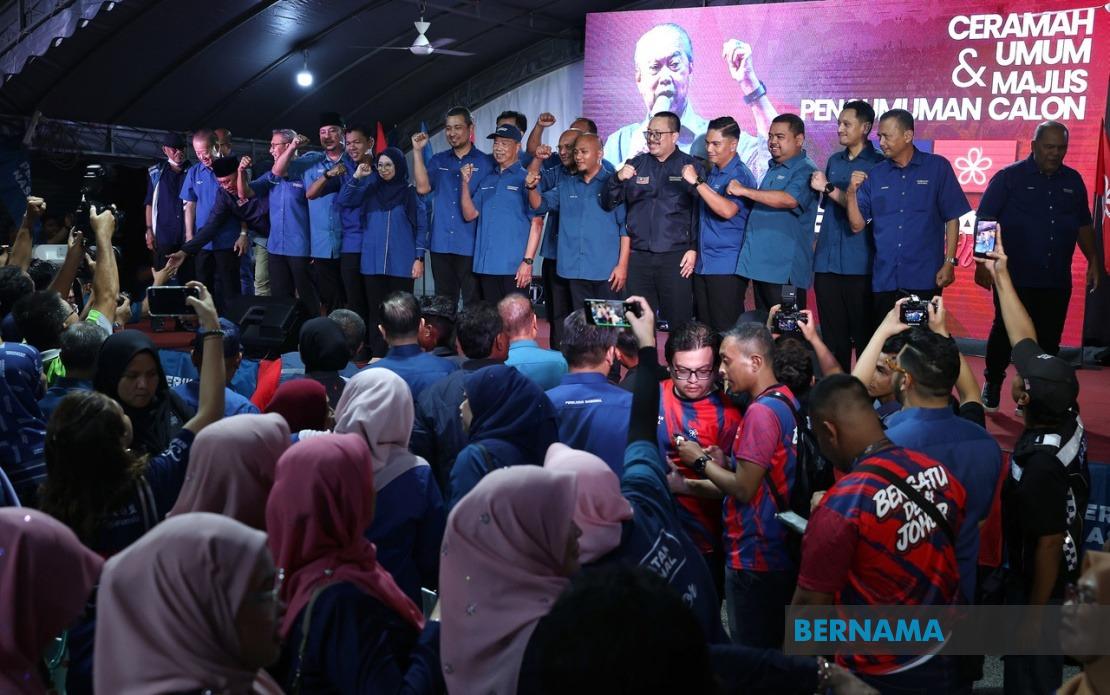
Tan Sri Muhyiddin Yassin, president of Parti Pribumi Bersatu Malaysia, formally announced the party's 16 candidates for the Johor State Election at an event in Muar on June 25, marking a crucial milestone in Bersatu's preparations for what promises to be a fiercely contested state poll. The announcement came during a candidates declaration and public ceramah held at the Pagoh Parliamentary Service Centre in Taman Pagoh Jaya, signalling the party's readiness to campaign across the state's legislative districts.
The timing of Bersatu's candidate reveal reflects the compressed electoral calendar established by the Johor State Government. The Johor State Assembly was dissolved on June 1, setting in motion a sequence of political events that will culminate in polling day on July 11. The Election Commission designated June 27 as nomination day, granting candidates just over three weeks to campaign intensively before voters head to the polls. This compressed timeline means all contesting parties must move swiftly to mobilise their grassroots machinery and communicate their electoral messages.
Bersatu's slate of 16 candidates represents the party's commitment to contesting across multiple constituencies in Johor, one of Malaysia's largest and most politically significant states. The announcement of specific candidates, including Mohd Idzharruddin Mohd Nasirruddin for the N8 Bukit Pasir seat, demonstrates the party's strategic positioning in different parts of the state. For Malaysian readers, understanding which constituencies each party contests is essential context for predicting the eventual composition of the Johor State Assembly and the formation of any coalition government.
The decision to hold a public ceramah alongside the candidate announcement reflects modern campaigning practices in Malaysia, where political parties use such events to energise supporters and outline their vision. By combining the formal unveiling of candidates with public engagement, Bersatu sought to generate momentum among the party faithful and communicate its policy positions to the broader electorate. This dual-purpose event allowed the party to control the narrative around its electoral campaign from day one.
Johor's state elections carry particular weight within Malaysian politics. As the second-largest state by population and a traditionally competitive political battleground, the outcomes in Johor often provide early signals about broader trends affecting Malaysian electoral politics. The performance of Bersatu specifically will be closely watched by political analysts, given the party's position within the broader political coalition architecture at the national level. Any significant setbacks or gains in Johor could influence perceptions of the party's viability heading into future electoral contests.
For Bersatu, the Johor election represents an opportunity to demonstrate political relevance in a state where it faces competition from established political machinery, including the Democratic Action Party, Umno, and other coalition partners. The party's candidate selection process reveals internal strategic calculations about where it believes it can achieve electoral success. In constituencies where Bersatu fields candidates, it signals confidence in local organisational capacity and the electability of specific individuals, though success ultimately depends on voter response and campaign effectiveness.
The three-week campaign period between nomination and polling day will be intensive. All parties must deploy their resources efficiently, knowing that persuasion work must happen quickly and across multiple platforms. In Johor, where urban and rural constituencies present different demographic and political challenges, campaign strategies will likely vary significantly. Bersatu's approach in predominantly Chinese urban areas may differ markedly from its messaging in Malay-majority rural districts, requiring sophisticated ground-level coordination.
From a Southeast Asian perspective, Johor's election reflects broader patterns of political competition and coalition-building observable across the region. Malaysia's experience with multi-party, multi-ethnic democratic politics offers comparative lessons about how political parties navigate complex electoral landscapes and manage coalition relationships. Bersatu's performance will contribute to ongoing academic and political discussion about party systems, coalition dynamics, and the consolidation of democracy in mature Southeast Asian democracies.
The announcements made on June 25 set the stage for what promises to be a consequential campaign. Voters across Johor will now begin evaluating the candidates fielded by Bersatu and other contesting parties, assessing their qualifications, track records, and vision for the state. The three-week countdown to July 11 will see intensified political activity, with candidates attempting to convince constituencies that their parties represent the best choice for Johor's future direction and governance priorities.

