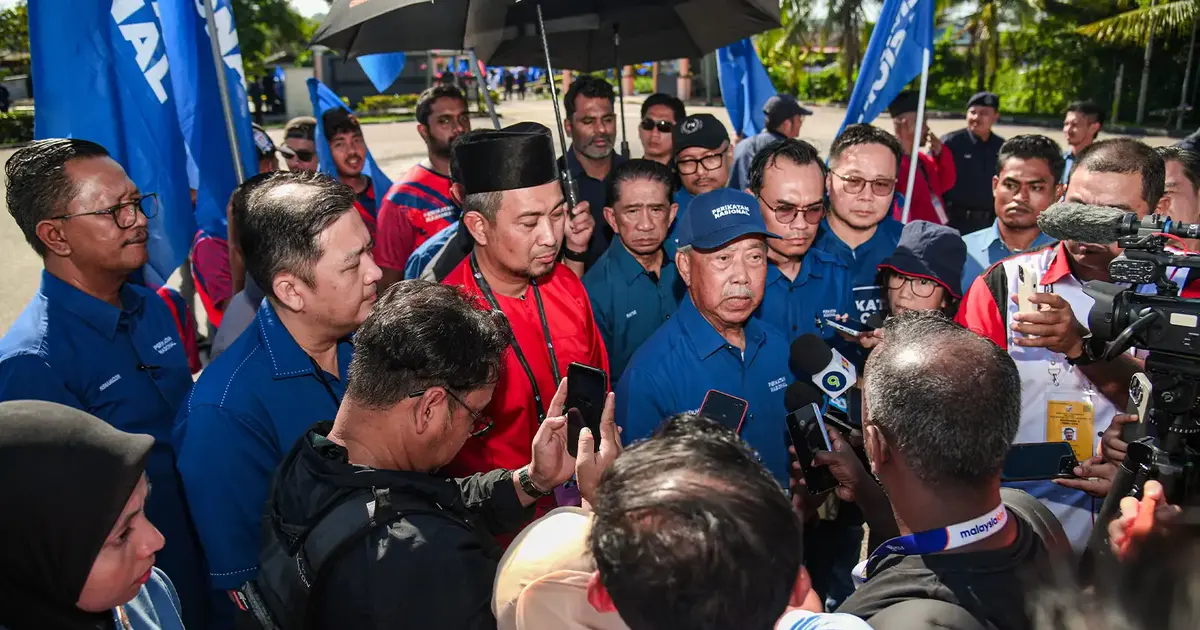
Perikatan Nasional is well-positioned to take the helm of the next state government, according to Bersatu president Muhyiddin Yassin, who underscored the coalition's expanding political reach and capacity to command legislative majorities. Speaking with measured optimism about the coalition's electoral prospects, Muhyiddin highlighted the strategic value of alliances extending beyond PN's formal membership, a calculation that could prove decisive in state-level contests where narrow parliamentary margins frequently determine control of executive power.
The Bersatu leadership's confidence reflects a deliberate strategy of cultivating partnerships with independent political actors and smaller parties that operate outside the coalition's structural framework. This approach acknowledges the fragmented nature of Malaysian politics at the state level, where single parties rarely secure outright majorities and coalition-building becomes essential to translating electoral support into governmental control. By emphasising PN's ability to attract supportive parties, Muhyiddin signals that the coalition need not win overwhelming vote shares to achieve its governing objectives.
Among the parties cited as potential allies, Muda represents a significant political force, particularly among younger voters and urban constituencies where traditional party machines have lost influence. The party's willingness to work with PN on an ad hoc basis without formal merger reflects the pragmatic nature of contemporary Malaysian politics, where ideological compatibility matters less than shared opposition to incumbent administrations. For Muda, collaboration with PN offers opportunities to influence state-level policy while maintaining the independence that appeals to its core supporters.
PN's existing membership comprises Bersatu, PAS, and smaller components, but this core has demonstrated capacity to govern in several states despite lacking the organisational depth of longer-established coalitions. The coalition's performance in previous elections and its management of state administrations have provided Muhyiddin with evidence supporting his optimism. However, the coalition remains vulnerable to internal tensions, particularly between Bersatu's relatively moderate positioning and PAS's more ideologically distinctive approach, tensions that could surface once governing responsibilities require concrete policy choices.
The configuration Muhyiddin describes resembles the fluid political arrangements that have characterised Southeast Asian democracies, where coalition flexibility often determines election outcomes. In Malaysia's context, such arrangements allow smaller parties to punch above their numerical weight while providing larger coalitions with additional legislative seats. For voters, however, this dynamic creates uncertainty about the true composition of their government until negotiations occur after election results are announced.
State-level contests offer PN opportunities that differ markedly from federal elections, where Pakatan Harapan and Barisan Nasional maintain stronger institutional advantages. Several states present genuinely competitive battlegrounds where PN has demonstrated electoral competitiveness and governance capacity. The coalition's performance in Terengganu, Kelantan, and Kedah demonstrates its ability to win elections and manage state administrations, though governance records have proven mixed in terms of delivering tangible benefits to constituents.
Muhyiddin's emphasis on external allies addresses a genuine political reality: PN frequently falls short of commanding majorities in competitive states and consequently requires support from non-aligned assemblymen or smaller parties to form governments. This dependency creates both opportunities and vulnerabilities. Successful governance requires maintaining coalition discipline across diverse political entities with differing priorities, a challenge that has previously destabilised state administrations. Conversely, the availability of potential allies provides PN with multiple pathways to power even in scenarios where the coalition fails to secure plurality positions.
The regional implications of PN's political trajectory merit consideration for Malaysian observers of Southeast Asian politics. The coalition's rise reflects broader patterns of political dealignment affecting Malaysia, where traditional party loyalties have eroded and voter behaviour has become more volatile. PN's success in attracting both Islamist and secular supporters, as well as non-Malay constituencies in certain contexts, demonstrates the coalition's ability to transcend conventional cleavages. This adaptability distinguishes PN from earlier political formations that remained locked into particular ethnic or religious constituencies.
Muhyiddin's confidence reflects realistic assessment of PN's competitive position in numerous states, though electoral outcomes remain contingent on factors beyond the coalition's control. Economic conditions, campaign effectiveness, and the positioning of rival coalitions will substantially influence whether PN achieves the state governments Muhyiddin envisions. The coalition's cultivation of external allies increases its flexibility and provides tactical advantages, yet these same arrangements can become sources of instability once governing pressures mount and competing interests demand resolution.
Looking forward, the composition of PN-led state governments may substantially shape Malaysia's political direction. If PN successfully governs multiple states while maintaining internal cohesion and delivering governance performance acceptable to constituents, the coalition could consolidate into a long-term political force capable of challenging federal administrations. Conversely, governance failures or internal ruptures could diminish PN's prospects and accelerate realignment toward other political configurations. Muhyiddin's evident confidence reflects belief that PN can navigate these challenges, though the coalition's actual trajectory will depend on factors extending well beyond current political calculations.

