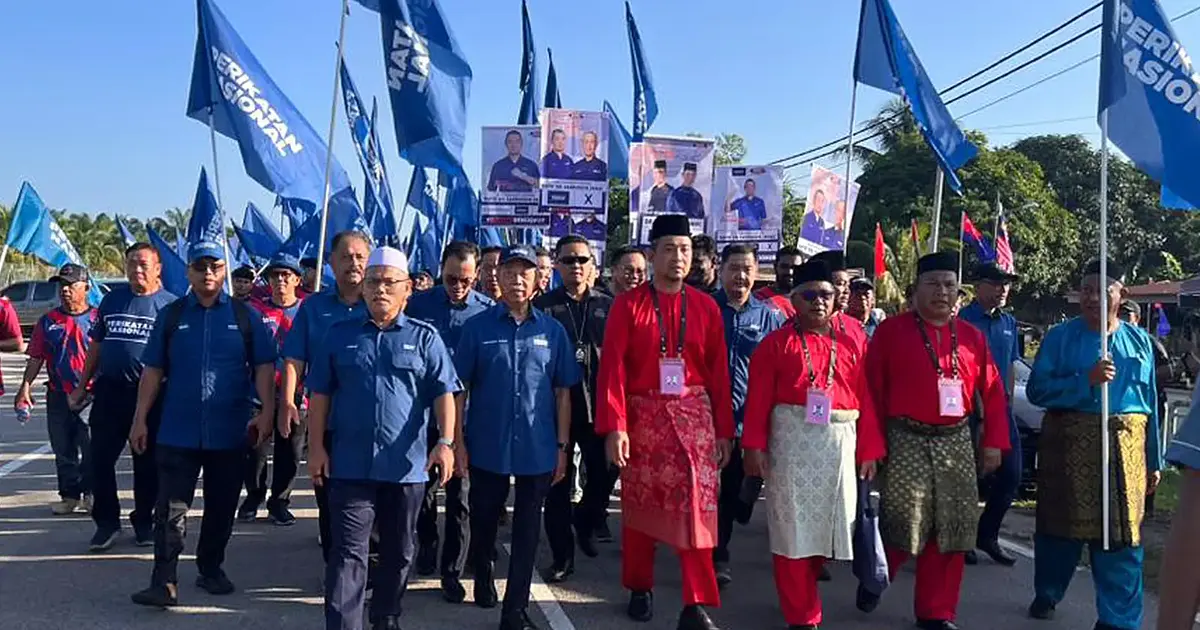
Perikatan Nasional chairman Muhyiddin Yassin mounted a show of grassroots support by joining several hundred party members in campaigning for Dr Sahruddin Jamal, the coalition's chosen candidate for the Bukit Kepong constituency. The gathering underscored PN's determination to consolidate voter backing in what appears to be a competitive electoral contest, with the party leadership directly endorsing the two-term assemblyman's candidacy through public demonstration.
Dr Sahruddin Jamal's selection as Bersatu's standard-bearer in Bukit Kepong represents a continuation of the party's strategy to retain representation in the state legislature through experienced incumbent politicians. His two terms as assemblyman suggest an established track record in the constituency and familiarity with local issues, advantages that opposition parties typically emphasize during campaign periods. The decision to field him again reflects confidence within Bersatu's organizational structure that he remains the strongest candidate to defend PN's interests in this particular seat.
Muhyiddin's personal involvement in the campaign rally carries symbolic weight within Malaysia's political landscape. As the helmsman of Perikatan Nasional, his presence signals that the coalition views this particular race as significant enough to warrant senior leadership attention. In the context of PN's broader political positioning in recent years, such visible campaigns help demonstrate organizational vitality and party cohesion to both supporters and the electorate. The scale of the gathering, with hundreds attending, suggests that mobilization efforts have been reasonably successful in the local area.
The Bukit Kepong seat holds relevance within the state's political geography and party dynamics. As a constituency previously held by PN, defending it is crucial to the coalition's goal of maintaining legislative influence. Electoral contests in Malaysia often turn on ground-level organization, voter sentiment toward incumbents, and the appeal of individual candidates rather than national factors alone. By bringing his leadership directly to the campaign, Muhyiddin was attempting to energize the party apparatus and reinforce messaging to local voters about continuity and performance.
PN's coalition structure, which includes Bersatu, PAS, and other partners, depends on effective coordination and unified messaging in state-level contests. Bersatu's decision to field Dr Sahruddin Jamal as its Bukit Kepong representative reflects internal party processes that balance candidate quality, electability assessments, and coalition partner dynamics. The presence of Muhyiddin at the rally provided a tangible endorsement from the highest levels of the alliance, potentially influencing undecided voters and consolidating support among party members.
For Malaysian political observers, the campaign intensity being directed toward Bukit Kepong indicates that contest is being treated as competitive rather than a safe seat. The need to deploy senior leadership and mobilize substantial supporter turnout suggests PN perceives genuine vulnerability or recognizes opportunity to expand influence in the constituency. Such deployments are typically calculated decisions reflecting internal party polling and assessment of voter sentiment on the ground.
Dr Sahruddin Jamal's experience as a two-term assemblyman provides him with institutional knowledge of constituency needs and established relationships with community stakeholders. This continuity argument often resonates with voters seeking stable representation, though it can also prompt questions about whether incumbents have adequately addressed longstanding local concerns. His candidacy must balance these considerations while campaigning in an increasingly competitive political environment.
The rally also reflects PN's broader strategy of maintaining visibility and organizational presence in state-level politics despite the coalition's more mixed fortunes at federal level in recent years. State seats remain important building blocks for political power in Malaysia's federal system, and contesting aggressively in each constituency is essential for any coalition seeking to govern effectively at state level. The involvement of top leadership helps signal seriousness about these contests to party cadres and voters alike.
For Southeast Asian context, Malaysian state-level elections and campaigns demonstrate how coalition politics operate in competitive democracies. PN's coordination across multiple parties and its approach to candidate selection and campaign resource allocation illustrate the organizational complexity required to maintain electoral relevance. The visibility of senior leaders like Muhyiddin during campaign season is a standard feature of Malaysian political life, helping keep party brands prominent and reinforcing connections between leadership and grassroots.
The campaign for Bukit Kepong ultimately reflects broader patterns in Malaysian politics: the importance of incumbency, the role of personal political brands and organizational capacity, and the significance of state-level representation in maintaining political influence. As Dr Sahruddin Jamal enters the active campaign phase with PN leadership support, the race will likely serve as a barometer of voter sentiment in the broader region and party performance in retaining contested seats. Such contests provide practical indications of party strength that extend beyond symbolic value in shaping Malaysia's political trajectory.

