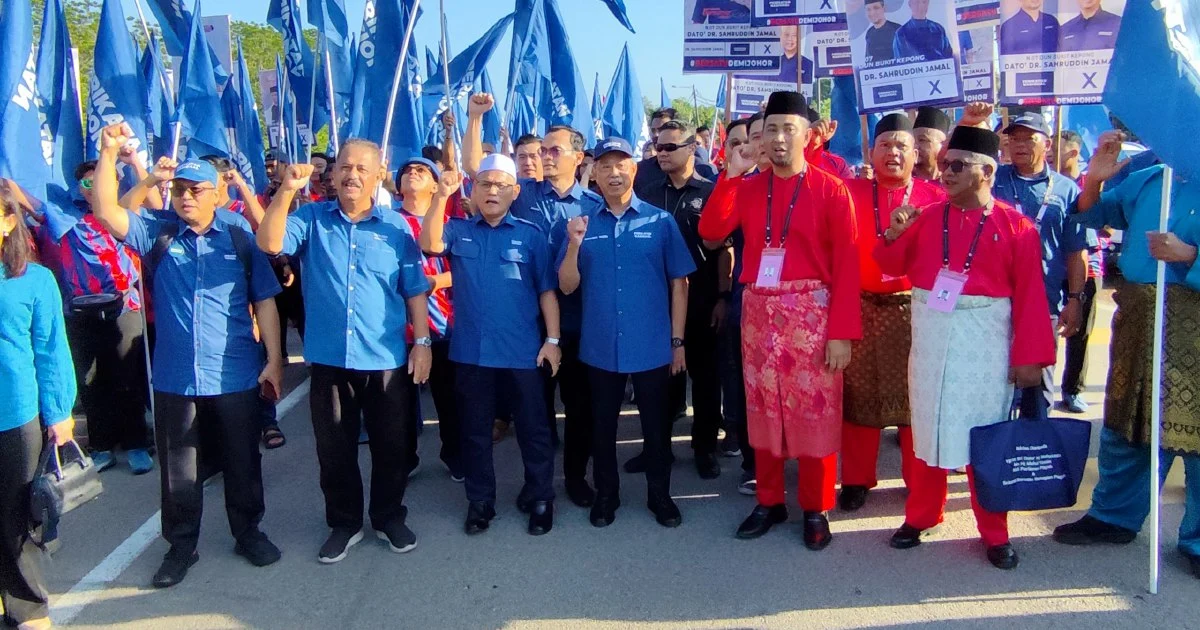
Tan Sri Muhyiddin Yassin, the Bersatu president, made an early morning appearance at the Pagoh Sports Complex Hall nomination centre on Friday, arriving just before 8.45 am to demonstrate visible party support for the Bukit Kepong candidacy. The timing and location of his presence underscored Bersatu's commitment to contesting the Johor state election with momentum, as the party seeks to consolidate its position within the broader coalition framework in Malaysia's southern industrial heartland.
The nomination process in Bukit Kepong represents a critical juncture for Bersatu, which has undergone significant organisational shifts over recent years. By positioning Muhyiddin at the nomination centre alongside candidate Sahruddin, the party leadership signalled internal cohesion and grassroots confidence at a moment when state elections across Malaysia often serve as indicators of broader political sentiment. The public display of party unity carries particular weight given the competitive nature of Johor politics, where multiple coalitions vie for voter attention and legislative seats.
Johor's electoral dynamics have shifted considerably, with various political blocs contesting for influence and representation. The state remains economically vital to Malaysia, driving significant manufacturing, trade, and services activity. When senior party figures like Muhyiddin engage directly in nomination events, they communicate to party cadres, supporters, and rival camps that candidate selections reflect leadership priorities and resource allocation. Sahruddin's candidacy in Bukit Kepong thus carries the implicit endorsement of Bersatu's top echelon.
The Pagoh constituency itself holds historical significance within Johor politics, possessing strong local networks and voting patterns shaped by demographic composition and economic interests. The nomination centre's location at a sports complex indicates the anticipated scale of the event, with such venues typically selected to accommodate larger gatherings of party supporters, media, and registered voters conducting official business. The early morning timing suggests organisational discipline and an effort to secure prominent news coverage during morning news cycles.
Bersatu's strategic positioning in Johor reflects its broader role within Malaysia's political landscape. The party maintains presence across multiple states while navigating relationships with other coalition partners. By securing nomination procedures and supporting candidates publicly, Bersatu reinforces its claim to seats and influence in any post-election negotiations or government formation. Muhyiddin's direct involvement at nomination events demonstrates how Malaysian political parties maintain hierarchical discipline and coordinate candidate selections according to central leadership directives.
The appearance also carries implications for party morale and candidate recruitment. When presidential-level figures attend nomination ceremonies, they amplify the perceived importance of specific contests and candidates. Sahruddin benefits from this elevation, accessing Muhyiddin's political capital and media presence. Such gestures encourage party members to respect the nomination process and accept the leadership's chosen candidates, particularly important when internal factions might hold competing interests.
From a broader Malaysian perspective, state elections in Johor function as important political experiments where coalitions test messaging, ground organisation, and policy platforms ahead of potential national contests. The energy that party presidents invest in nomination processes often correlates with strategic priority allocation. Muhyiddin's presence signals that Bersatu considers Johor competitive and significant enough to warrant high-level personal engagement during the formal nomination phase.
The nomination process itself represents a democratically structured but party-controlled mechanism for selecting candidates. While registered voters cast ballots, party leadership typically influences outcomes through pre-nomination endorsements, resource distribution, and media messaging. When a party president accompanies a candidate, this effectively communicates the desired outcome to party machinery. Nomination centres thus become venues where party leadership demonstrates power while maintaining formal compliance with electoral regulations.
Looking forward, Sahruddin's candidacy in Bukit Kepong will face scrutiny from both opposing parties and coalition observers assessing candidate competitiveness and winnability. Muhyiddin's attendance provides a public platform for articulating why Bersatu selected this particular candidate for this particular seat, though formal campaign messaging typically follows formal nomination completion. The nomination phase represents the threshold between internal party politics and public electoral competition.
For Malaysian voters in Johor and beyond, such scenes illuminate how party leadership operates at critical junctures. The appearance of senior figures at nomination ceremonies demonstrates the ongoing importance of state-level politics within Malaysia's federal system. Johor's significance as a major economic and population centre ensures that its electoral outcomes influence national political calculations and coalition dynamics. As the state moves toward polling day, these early signals from party hierarchies will inform both supporter mobilisation and opposition strategy development.

