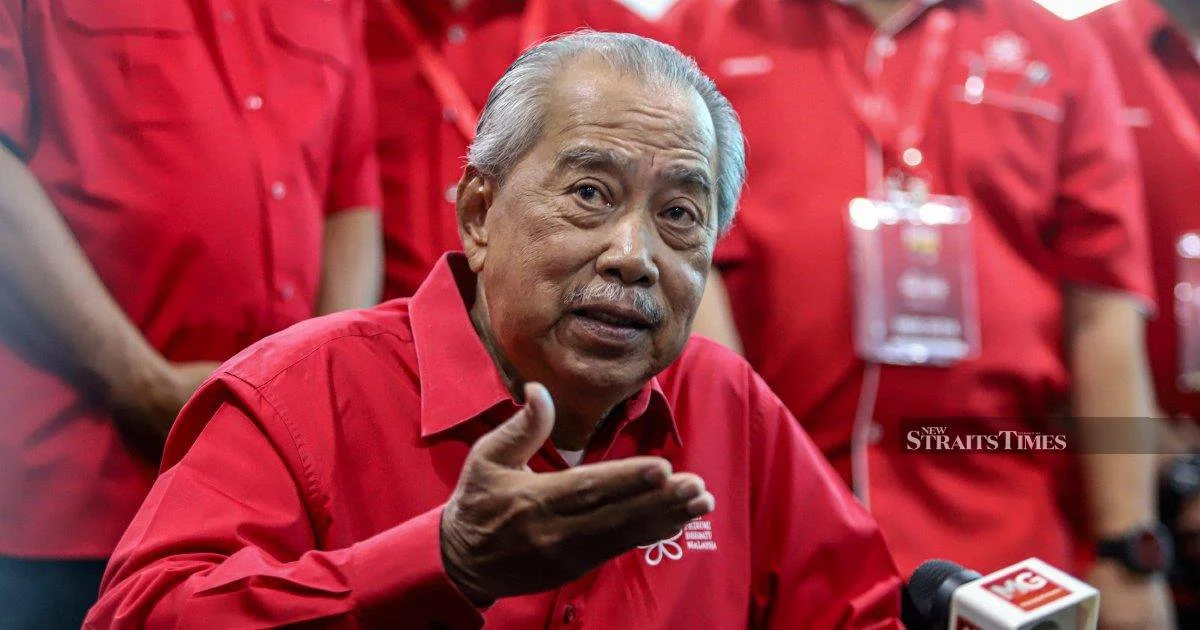
Tan Sri Muhyiddin Yassin has moved to settle persistent doubts about Bersatu's future within Perikatan Nasional, issuing a firm assurance that his party will maintain its membership in the opposition coalition on a permanent basis. The Bersatu president's statement comes amid recurring speculation about the cohesion and durability of PN as an electoral alliance, particularly given the shifting political landscape that has characterised Malaysian politics since the 2022 general election.
The question of coalition stability has become a recurring theme in opposition politics, with observers and political analysts consistently probing the strength of alliances forged to counter the governing Barisan Nasional and Pakatan Harapan administrations. Bersatu's position within PN holds particular significance given the party's role as a bridge between different political constituencies. Muhyiddin's unequivocal language appears designed to eliminate any ambiguity regarding his party's strategic orientation and to project an image of a unified opposition presence.
Bersatu's trajectory since its formation has been marked by significant shifts in political alignment. The party, which traces its roots to an earlier factional dispute within the United Malays National Organisation, has positioned itself as an alternative force capable of appealing to Malay-Muslim voters dissatisfied with UMNO's leadership. Within PN, Bersatu represents a pivotal component alongside PAS, the Pan-Malaysian Islamic Party, and smaller coalition partners. The party's continued participation is essential to PN's electoral architecture and its claims to represent a viable alternative government.
The assurance from Muhyiddin carries implications for the broader opposition landscape in Southeast Asia's largest Muslim-majority democracy. Political coalitions in Malaysia have historically proven fragile, dissolving or reconfiguring in response to electoral setbacks, internal leadership contests, or lucrative defections to the ruling coalition. Bersatu's reaffirmation of loyalty to PN thus serves a stabilising function, particularly important as the coalition prepares for state elections and positions itself for the next general election cycle.
Speculation about PN's future has intensified periodically as different coalition members pursue distinct political interests and electoral strategies. Party presidents and senior leaders have occasionally made contradictory statements about coalition direction, leading to questions from political observers about whether formal commitments reflect genuine strategic alignment or merely tactical positioning. Muhyiddin's categorical statement therefore functions as a signal to both party members and the broader electorate that Bersatu views its coalition membership as non-negotiable and permanent.
The political context in which this statement was made deserves particular scrutiny. Malaysia's opposition has struggled to maintain voter confidence following internal divisions and electoral disappointments. The opposition parties collectively received substantial support in urban centres and among younger voters during recent elections, yet have failed to translate this into parliamentary dominance. PN's role as a consolidating force for opposition voters has consequently become more critical, making the durability and perceived unity of the coalition a matter of political substance rather than mere coalition mechanics.
Muhyiddin's background as a longstanding political operator with extensive experience in factional manoeuvres and coalition-building lends weight to his pronouncement. His previous roles in government and opposition positions have required him to navigate the complex terrain of Malaysian coalition politics, where alliances frequently shift and individual political fortunes depend heavily on maintaining reliable partnerships. His characterisation of Bersatu's commitment as permanent suggests a deliberate choice to anchor his party firmly within the PN structure rather than preserve flexibility for alternative arrangements.
The statement also addresses concerns among PN's other constituent parties, particularly PAS, which has historically harboured ambitions for opposition leadership and pursued its own electoral calculations independent of coalition discipline. By explicitly committing to the PN framework indefinitely, Bersatu signals that it will not exploit potential divisions among coalition partners to advance its own interests or pursue independent electoral ventures that might fragment the opposition vote.
For Malaysian voters and political observers attempting to assess the opposition's viability as a governing alternative, Muhyiddin's assurance provides clarity about at least one dimension of coalition sustainability. However, such declarations require continual reinforcement through consistent behaviour and shared electoral achievements. The true test of Bersatu's commitment to PN will emerge through the party's organisational decisions, resource allocation, and behaviour during upcoming electoral contests.
The regional dimension of this Malaysian political development warrants consideration. Malaysia's opposition coalitions operate within a broader Southeast Asian context where coalition fragmentation has afflicted opposition movements across the region. Stable, united opposition coalitions have become rarer commodities, making Muhyiddin's explicit commitment to coalition permanence noteworthy. For observers across Southeast Asia monitoring opposition dynamics, the sustainability of Malaysia's PN coalition offers insights into whether disciplined, durable opposition alliances remain feasible in contemporary Southeast Asian electoral environments.


%22%2F%3E%3C%2Fpattern%3E%3C%2Fdefs%3E%3Crect%20width%3D%22100%25%22%20height%3D%22100%25%22%20fill%3D%22url(%23ph5xlpvg)%22%2F%3E%3Crect%20width%3D%22100%25%22%20height%3D%22100%25%22%20fill%3D%22url(%23ph5xlpvp)%22%2F%3E%3Ctext%20x%3D%2250%25%22%20y%3D%2250%25%22%20text-anchor%3D%22middle%22%20dominant-baseline%3D%22central%22%20fill%3D%22rgba(255%2C255%2C255%2C0.95)%22%20font-family%3D%22Georgia%2C%20'Times%20New%20Roman'%2C%20serif%22%20font-weight%3D%22700%22%20font-size%3D%22170%22%20letter-spacing%3D%22-0.02em%22%3EMalaysia%3C%2Ftext%3E%3C%2Fsvg%3E)