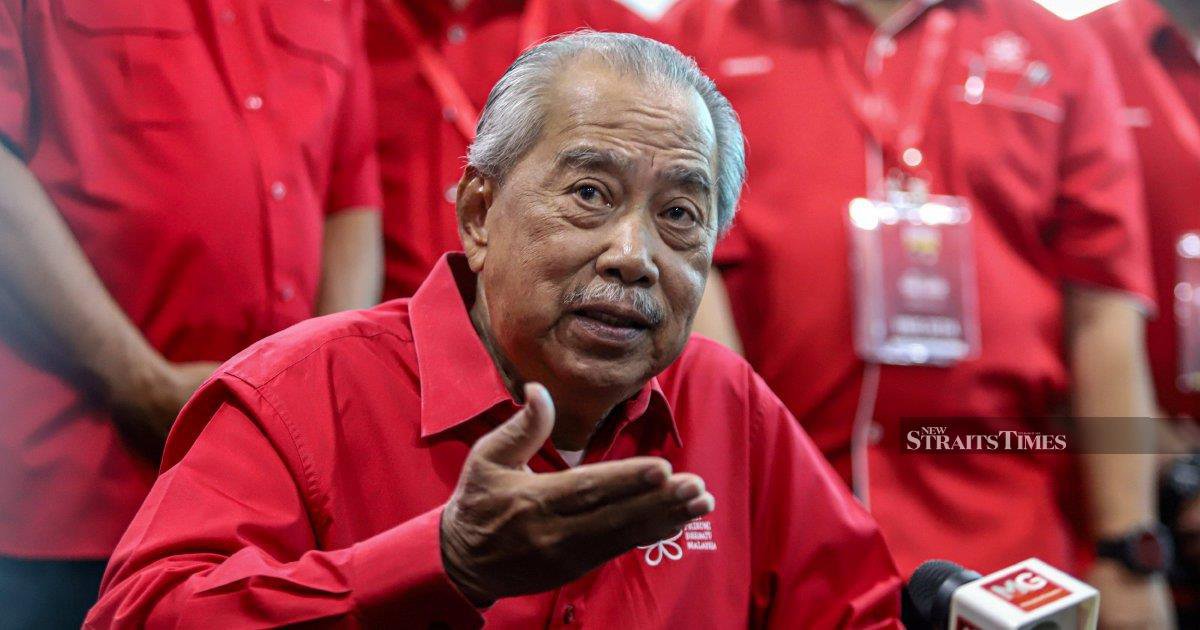
Tan Sri Muhyiddin Yassin has publicly challenged Tan Sri Annuar Musa's account of how Bersatu separated from Perikatan Nasional, disputing the suggestion that his party willingly chose to exit the coalition. The disagreement centres on the circumstances surrounding Bersatu's departure and its timing relative to the Negri Sembilan state election, with the two senior political figures offering competing narratives about who initiated the split and whether it was a calculated decision or a forced outcome.
Annuar Musa, a prominent Perikatan Nasional figure, had publicly stated that Bersatu had voluntarily decided to mufarakah—the Islamic term for formal separation—from the coalition. This characterization implies that Muhyiddin's party made an independent strategic choice to leave, potentially to pursue alternative political arrangements or to distance itself from partnership complexities. The framing carries significant implications for how both the coalition and Bersatu are perceived in the eyes of the electorate and within the broader Malaysian political landscape.
Muhyiddin's rebuttal suggests a fundamentally different interpretation of events. Rather than accepting the narrative of voluntary departure, the Bersatu chair appears to be arguing that circumstances forced the separation or that the decision was not as straightforward as Annuar presented. This distinction matters considerably in Malaysian politics, where public perception of party strength, autonomy, and decision-making authority directly influences voter confidence and internal party morale.
The Negri Sembilan election served as a critical flashpoint in the coalition's internal dynamics. State elections frequently test the cohesion of larger political alliances, and disagreements over candidate selection, campaign strategies, or electoral outcomes can expose underlying tensions. The dispute between Muhyiddin and Annuar suggests that whatever transpired in Negri Sembilan triggered a chain of events that ultimately resulted in the formal dissolution of the Bersatu-Perikatan Nasional partnership.
For Malaysian readers, this clash between two senior figures highlights the fragility of coalition politics in the current electoral environment. Perikatan Nasional, which comprises Bersatu, PAS, and other constituent parties, has positioned itself as a significant force in Malaysian politics since its formation. The departure of Bersatu represents a material weakening of that bloc and reshapes the competitive dynamics heading into future electoral contests, whether at state or federal level.
The disagreement also illuminates how coalitions manage internal disputes. When partners conflict over the interpretation of events, damage control becomes critical. Annuar's public characterization appears designed to suggest that Bersatu's exit was orderly and perhaps even strategic, while Muhyiddin's counter-narrative suggests that his party retained agency and that the true circumstances differ from the official account. Such competing versions can undermine public trust in both parties' leadership and decision-making processes.
Bersatu's position within Malaysian politics has been unusually fluid since its formation. The party emerged from internal conflicts within the United Malays National Organisation and has subsequently shifted alignments multiple times—joining Pakatan Harapan, then transitioning to Perikatan Nasional, and now operating in a different configuration. This history of repositioning makes the latest separation particularly significant, as it suggests that even relatively recent alliances carry limited durability.
The timing of this public disagreement is strategically important. By openly contesting Annuar's narrative, Muhyiddin positions Bersatu as a party that makes autonomous decisions rather than one that is sidelined or forced out. Maintaining that perception of agency is crucial for any political leader seeking to retain credibility with party members and supporters. A party perceived as being ejected from a coalition faces greater internal cohesion challenges than one that departs by choice.
From a Southeast Asian perspective, Malaysia's coalition dynamics reflect broader regional patterns where political alliances frequently reorganize in response to electoral outcomes and leadership calculations. The Bersatu-Perikatan split fits within these patterns of fluid alignment-making, where ideology often takes secondary importance to electoral mathematics and leadership ambitions. Understanding these shifting partnerships is essential for observers tracking Malaysia's political trajectory.
The substantive question underlying this dispute concerns whether the separation was inevitable or contingent on specific decisions by either party's leadership. If Annuar's version is accepted—that Bersatu chose to leave—the implication is that differences had become irreconcilable or that Bersatu identified more advantageous political opportunities. If Muhyiddin's counter-claim holds weight, it suggests that circumstances or decisions by Perikatan Nasional's other components forced the issue.
Looking forward, this public disagreement may signal deeper fractures within Perikatan Nasional itself. When senior figures cannot agree on the official version of a major coalition event, it suggests insufficient internal communication or unresolved tensions over what should have happened. Such breakdowns in consensus can foreshadow further instability if not addressed promptly through private discussions among party leadership.
The dispute between Muhyiddin and Annuar ultimately reflects Malaysia's ongoing political realignment as various factions recalibrate their positions in preparation for future elections. How these two figures resolve their public disagreement—or whether they allow it to fester—will influence perceptions of both Bersatu and Perikatan Nasional as coherent political entities capable of sustained partnership and effective governance.

