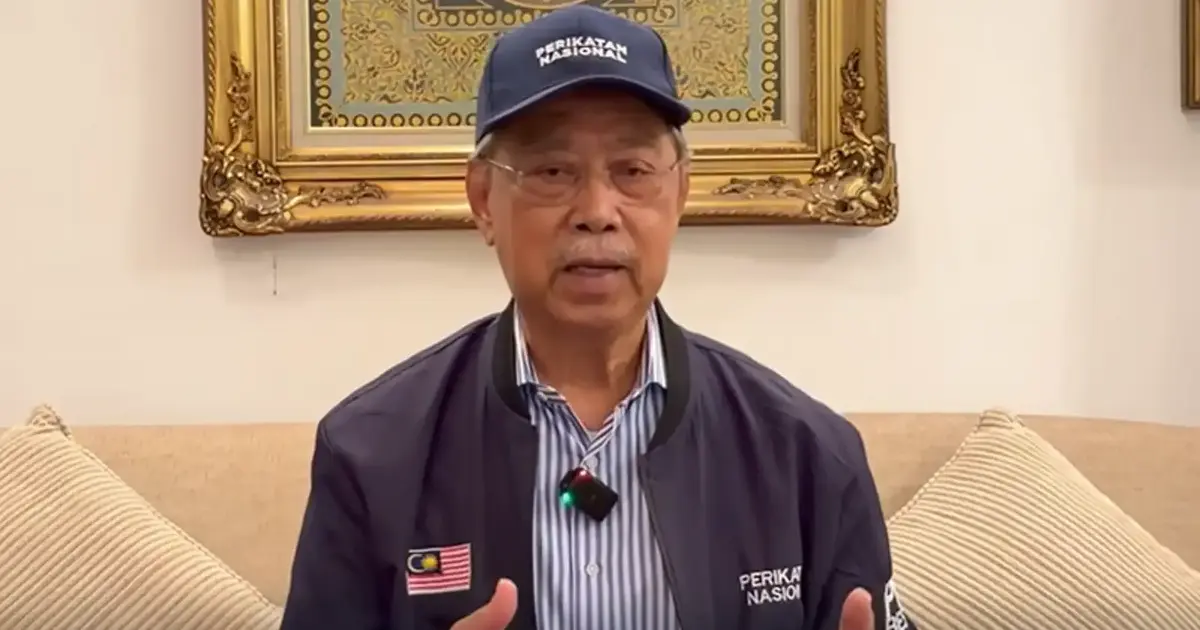
Muhyiddin Yassin, who governed Johor as menteri besar before rising to lead Bersatu and Malaysia's federal government, has intensified his appeal to voters in his home state by positioning himself as a champion of ordinary Johoreans. The strategy reflects Perikatan Nasional's calculated effort to rebuild its political base in a state where it has struggled in recent electoral contests, with the coalition banking on the former premier's personal credibility and long association with the southern peninsula.
Johor, Malaysia's second-largest state by population and a traditional powerhouse of Malaysian politics, represents both opportunity and vulnerability for Perikatan. The coalition's performance here carries symbolic weight beyond local implications, signalling its viability as a national alternative to the ruling Pakatan Harapan administration. By positioning Muhyiddin as an embodiment of Johor's interests rather than merely a national political figure, Perikatan is attempting to transcend the technocratic governance narrative that often dominates state and federal politics.
Muhyiddin's framing of his political journey as fundamentally about serving Johoreans is a deliberate rhetorical choice designed to anchor his appeal in locality and familiarity. This approach acknowledges a broader Malaysian political reality: voters in each state maintain distinct concerns and often reward politicians who demonstrate long-term commitment to local prosperity and identity. By invoking his decades-long association with Johor—from his tenure as menteri besar through his current national role—Muhyiddin is constructing a narrative of continuity and accountability that transcends typical party-political messaging.
The timing of this appeal coincides with Perikatan's broader repositioning strategy following its disappointing performance in recent national elections. The coalition has gradually shifted emphasis toward regional strongholds where it retains organizational capacity and voter sympathy. Johor, despite being demographically diverse and politically competitive, remains sufficiently aligned with Perikatan's traditional support base to represent a realistic target for recovery. Securing substantial gains here would provide the coalition with crucial parliamentary seats and strengthen its claim to be a serious contender for federal power in future contests.
Johor's electoral dynamics have shifted considerably over the past decade. The state has moved between different coalition dominance, reflecting broader patterns of voter volatility that characterize post-2018 Malaysian politics. Perikatan's challenge lies in convincing voters that supporting the coalition serves their immediate material interests while also contributing to a viable national political alternative. This requires anchoring national political messaging to local economic and social priorities—a task where Muhyiddin's background as an administrator carries particular weight.
The appeal to Johoreans as "son of Johor" also serves a secondary purpose within Perikatan's internal dynamics. It reinforces Muhyiddin's position as the coalition's unquestioned leader while demonstrating his capacity to deliver electoral support. In Malaysian coalition politics, leaders who cannot mobilize votes in their home territories face diminished influence in national negotiations. By campaigning energetically in Johor, Muhyiddin is simultaneously shoring up his leadership credentials within Perikatan and attempting to expand the coalition's base.
Muhyiddin's insistence that his political struggle has always prioritized the people operates as a counternarrative to criticism that he has been primarily driven by personal ambition or factional advantage. This positioning is particularly significant given the complex circumstances of his assumption of the premiership in 2020 and subsequent political manoeuvres. By reframing his career through the lens of public service and community benefit, he is attempting to rehabilitate his public image and establish grounds for renewed support among voters who may have become disillusioned with his previous national performance.
For Malaysian voters and observers across Southeast Asia, Muhyiddin's appeal underscores the persistent importance of regional political bases in a federation as large and diverse as Malaysia. Even as the country's federal system creates national political contests, control of crucial states like Johor remains essential to competitive positioning. The coalition that controls Johor gains not only parliamentary seats but also executive resources, development allocation authority, and symbolic legitimacy that strengthens its national standing. Perikatan's determination to recapture ground here reflects understanding of these structural realities.
The broader implications extend to Malaysia's overall political trajectory. A successful Perikatan recovery in Johor would suggest the coalition retains viable organizational and popular support despite recent electoral setbacks. Conversely, continued struggles in the state would reinforce impressions that Perikatan's political influence is gradually contracting. Either outcome would reshape calculations about coalition viability and potentially influence decisions by smaller parties considering alliance options in future contests.
Muhyiddin's approach also reflects the enduring Malaysian practice of deploying local and regional identities within national political competition. By appealing to Johorean pride and invoking his personal history in the state, he is tapping into voter psychology that political scientists have long identified as significant in Malaysian electoral behaviour. This strategy acknowledges that abstract ideological or policy platforms often matter less to voters than personal connections, demonstrated commitment, and perceived alignment with regional interests and values.

