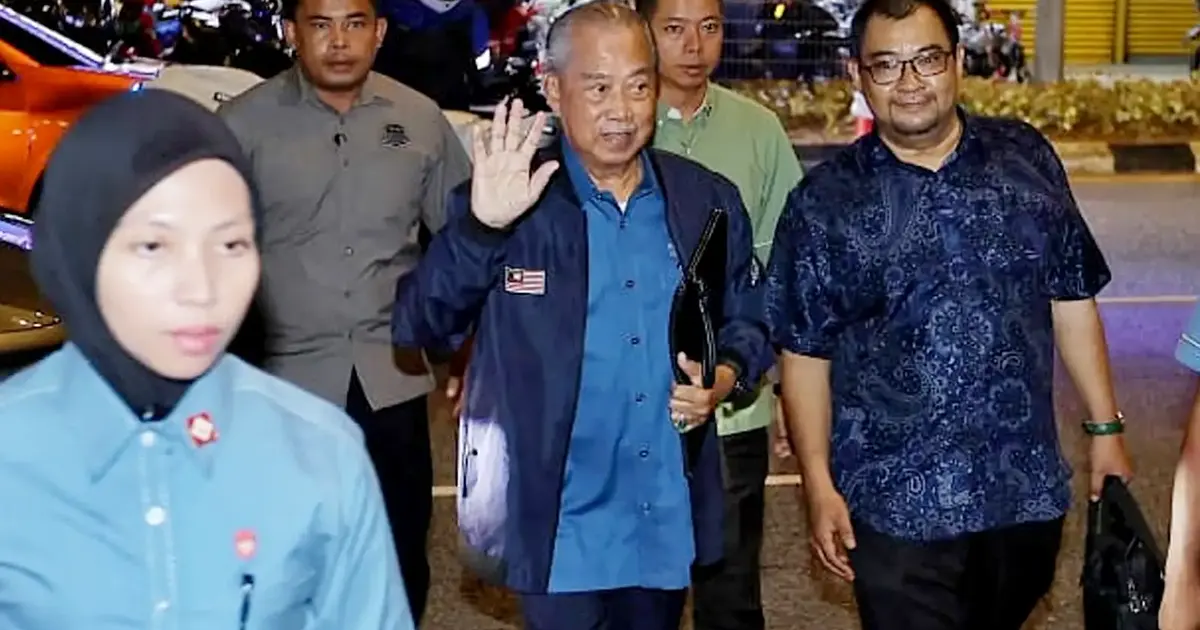
Tan Sri Muhyiddin Yassin and senior Bersatu officials convened an urgent leadership gathering this evening to deliberate on the party's future within the Perikatan Nasional coalition following PAS's shock decision to withdraw from the bloc. The hastily arranged session underscores mounting tensions within Malaysia's second-largest political coalition, which has already weathered numerous internal disputes since its formation in 2020.
PAS's departure represents a significant rupture in the PN framework, leaving Bersatu in an increasingly vulnerable position within the alliance. The Islamic party's exit removes a crucial pillar of support and fundamentally alters the power dynamics that have sustained the coalition through multiple political cycles. This development threatens to expose Bersatu to intensified pressure from rival coalitions seeking to exploit the apparent fracturing of PN's united front.
The emergency convocation signals that Bersatu's leadership recognises the gravity of the situation and the need for rapid strategic reassessment. With PAS no longer committed to the coalition, questions inevitably arise about the viability of PN as a coherent political force capable of competing effectively in future electoral contests. The party must now contemplate its options, ranging from attempting to stabilise what remains of PN to exploring alternative political alliances or repositioning strategies.
Bersatu's predicament is particularly acute given its relatively modest parliamentary representation compared to larger coalition partners. The party has long depended on strategic partnerships to amplify its political influence and secure ministerial portfolios. PAS's withdrawal removes a key ally and creates uncertainty regarding resource allocation, committee positions, and influence within any reconfigured coalition arrangements.
The timing of tonight's meeting reflects the urgency with which Bersatu's leadership is treating this crisis. Emergency sessions typically convene only when parties face existential threats or must make consequential decisions with limited time for deliberation. This suggests that Bersatu officials anticipate rapid developments and want to ensure the party presents a unified response rather than allowing individual members to chart separate courses.
For Malaysian politics more broadly, the unravelling of PN represents another chapter in the country's ongoing coalition volatility. Since the 2022 general election, various blocs have formed, reformed, and dissolved with considerable frequency, creating persistent uncertainty about the durability of any governing arrangement. This instability complicates policy implementation, deters long-term planning, and undermines public confidence in political institutions.
The implications for regional stability and Malaysian leadership in Southeast Asia cannot be overlooked. Political uncertainty at home inevitably constrains a government's bandwidth for international engagement and strategic positioning. ASEAN affairs, bilateral relations with neighbouring countries, and Malaysia's broader diplomatic agenda may receive less attention during periods of acute domestic political turbulence.
Bersatu's response to tonight's discussions will likely include evaluating whether the party can negotiate improved terms within whatever PN structure remains, or whether it should seek accommodations with other political actors. The party's leadership under Muhyiddin must weigh the risks and benefits of various paths forward while maintaining internal party cohesion during a period of acute vulnerability.
The emergency gathering also provides an opportunity for Bersatu to assess which party members or factions might exploit the situation to pursue factional interests. Political crises often trigger defections or leverage-seeking by ambitious individuals, and swift, decisive leadership is essential to maintain organisational integrity during such turbulent periods.
Looking ahead, the outcome of tonight's meeting will likely set the trajectory for Bersatu's political fortunes in the coming months. Whether the party emerges with a coherent strategy, renewed determination to rebuild PN, or a willingness to explore alternative arrangements will significantly influence its capacity to remain a consequential force in Malaysian politics. The decisions made in the coming hours carry implications extending well beyond the party itself, affecting the stability of the broader political system.