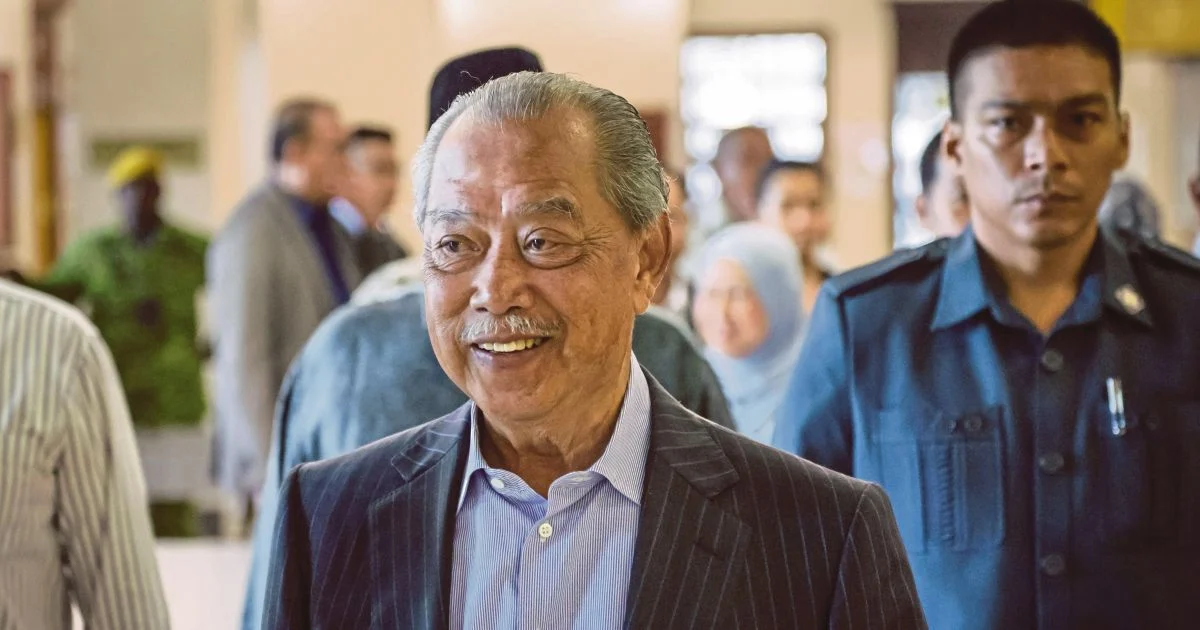
Bersatu president Tan Sri Muhyiddin Yassin has signalled optimism about Perikatan Nasional's prospects in the upcoming Johor state election, asserting that the opposition coalition retains a realistic pathway to power despite the tactical decision to contest only 33 seats. Speaking in his Pagoh constituency, the veteran politician sought to reassure PN supporters that limiting their electoral footprint need not prove fatal to their political ambitions in the state assembly.
The decision by Perikatan Nasional to field fewer candidates than the 56 seats available in the state legislature reflects broader coalition dynamics and seat allocation arrangements between its component parties. This approach, while potentially risky, suggests PN is banking on a combination of direct seat victories and possible post-election coalition-building to secure the 29 seats necessary for a majority government. Such strategies have become increasingly common in Malaysian politics, where the fragmented nature of electoral competition sometimes rewards disciplined seat-sharing over comprehensive coverage of all constituencies.
Muhyiddin's confidence appears rooted in the coalition's performance trajectory and perceived weaknesses within the incumbent administration. The Bersatu leader's public conviction serves multiple strategic purposes: it maintains morale among party members and grassroots supporters who might otherwise feel discouraged by PN's reduced presence on the ballot, and it signals to potential coalition partners that PN views itself as a viable governing force rather than a marginal player. Such positioning becomes crucial in post-election negotiations where perception of momentum can influence which political players are willing to cooperate.
For Malaysian observers, this development underscores the increasingly complex nature of state-level politics in which the simple calculation of vote share and seat count no longer determines outcomes as predictably as traditional electoral theory might suggest. Johor's political landscape has become notably fluid in recent years, with shifting allegiances among Malay-Muslim parties creating new coalitional possibilities that diverge from the conventional BN-versus-opposition binary that dominated earlier periods. The state serves as a testing ground for how PN might operate in competitive environments where it must negotiate its position among multiple powerful players.
The strategic limitation of PN's campaign reach also reflects practical considerations around resource allocation and candidate selection. By focusing organizational efforts on winnable seats where the party possesses strong ground networks or individual candidate appeal, Perikatan Nasional can theoretically maximize its return on investment and concentrate messaging in areas where persuasion remains genuinely possible. This precision approach contrasts with broader strategies that attempt to blanket all constituencies regardless of local political dynamics or party viability.
Muhyiddin's statement carries particular significance given Bersatu's relatively recent emergence as a major peninsular political force. The party, which split from UMNO in 2020 amid internal power struggles, has worked to establish itself as a credible alternative within Malay-Muslim politics. PN's performance in Johor will provide important evidence regarding whether this newer coalition has successfully embedded itself as a genuine competitor capable of winning state government control, or whether it remains primarily a vehicle for specific leaders to maintain relevance within a contested political marketplace.
The Johor election also tests PN's capacity to build durable electoral coalitions that extend beyond its core Bersatu base. The coalition includes PAS, a party with strong Islamic credentials and considerable grassroots organization, particularly in rural constituencies. How effectively these partners coordinate their campaigns and allocate voter attention across the 33 contested seats will substantially influence whether Muhyiddin's optimism translates into actual seat gains. Coordination breakdowns between coalition members have historically undermined opposition efforts in Malaysian elections, a lesson PN must apply successfully to realize its governing ambitions.
For regional political observers, Johor's election represents a significant contest in Southeast Asia's largest Muslim-majority democracy. The state's economic weight and cultural significance within Malay-Muslim identity make its governance a matter of broader national consequence. Whether PN can successfully challenge the existing government despite limited electoral presence will demonstrate whether Malaysian politics has fundamentally shifted toward a more competitive multi-party system, or whether established incumbents retain structural advantages that constrain genuine alternation in power.
Muhyiddin's public optimism also responds to potential internal doubts within PN's supporter base. Contesting only 33 of 56 seats creates openings for critics to argue that the coalition lacks confidence or capacity to present itself as a comprehensive governmental alternative. By publicly asserting that PN's prospects remain viable, Muhyiddin attempts to preempt narratives of weakness or retreat that might suppress voter enthusiasm or create momentum advantages for rivals. In closely contested elections, such psychological and perceptual factors frequently prove as consequential as underlying demographic or structural variables.
The coming weeks will reveal whether Muhyiddin's confidence reflects genuine strategic clarity and organizational strength, or represents wishful thinking about PN's actual competitive position. Johor voters will ultimately determine whether an opposition coalition willing to stake its claims on roughly 60 percent of available seats possesses sufficient appeal and organizational prowess to overturn incumbent governing arrangements. The result will carry implications far beyond the state itself, potentially signalling directions for Malaysian politics at the federal level and establishing precedents that other opposition coalitions may seek to replicate.

