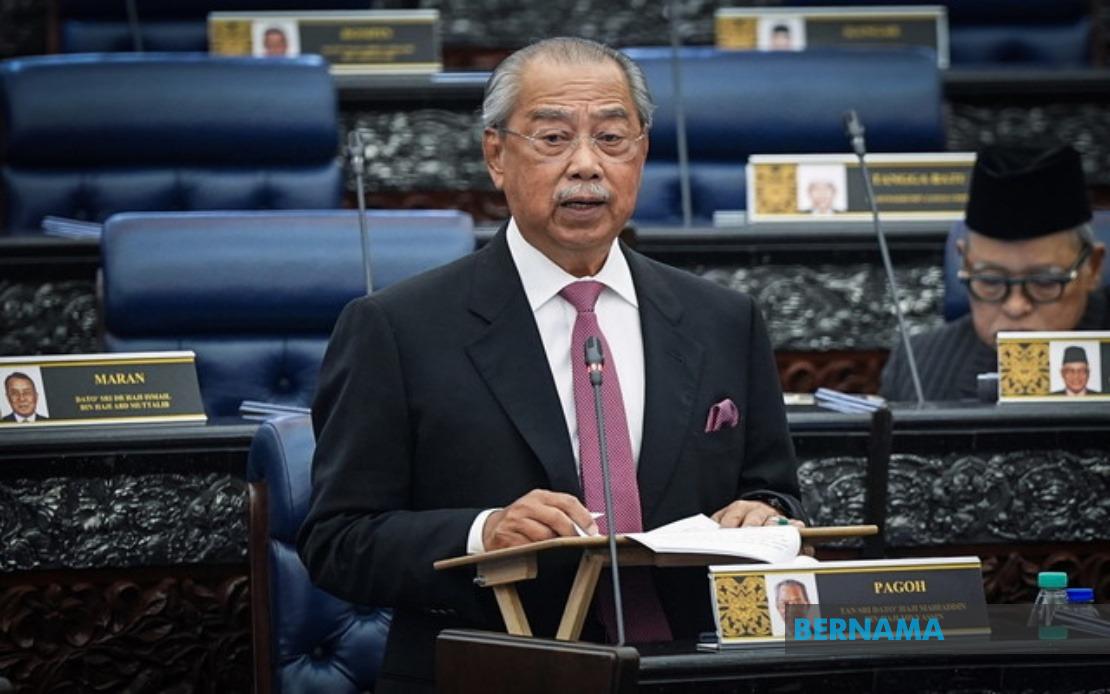
Tan Sri Muhyiddin Yassin has pressed the government to initiate an immediate and transparent forensic audit of Tabung Haji's fund management, demanding completion of the investigation within twelve months. The former prime minister and current Bersatu president made the call during parliamentary debate on the Royal Commission of Inquiry report into the institution, underscoring that weaknesses in governance and transparency exposed by the inquiry demand urgent corrective action.
The RCI report, released publicly on July 29, revealed that Tabung Haji incurred estimated cumulative losses ranging between RM10 billion and RM12.6 billion throughout the 2014 to 2020 period. Muhyiddin argued that such significant financial deterioration warranted decisive intervention beyond mere acknowledgement of the findings. He characterised the forensic audit as essential for establishing the movement of funds, uncovering fraudulent activities, detecting misuse of authority, and determining whether negligent management contributed to the losses.
According to Muhyiddin, individuals found culpable for financial harm to the fund must face legal accountability, whether their actions constituted deliberate fraud, abuse of position, or careless oversight. His remarks reflected growing pressure from multiple quarters of parliament for rigorous investigation and prosecution of those responsible for the pilgrimage fund's deterioration. The timing of his intervention coincided with broader calls across the political spectrum for systematic action rather than incremental reforms.
Young reformist MP Syed Saddiq Syed Abdul Rahman from MUDA's Muar constituency expanded the scope of recommended intervention by proposing a Multi-Agency Task Force specifically targeting the fourteen problematic Tabung Haji investments documented in the RCI findings. Syed Saddiq contended that coordinating enforcement efforts across multiple agencies would prevent fragmented investigations that might overlook systemic connections between individual investment failures. He specifically suggested involving the Malaysian Anti-Corruption Commission, Royal Police Force, and Inland Revenue Board in a unified investigative framework.
Syed Saddiq's proposal extended beyond Tabung Haji itself, recommending that similar scrutiny apply to other statutory funds including Felda, FGV Holdings, and Eagle High that may have encountered comparable governance challenges. By proposing forensic audits of the specific problematic investments, he aimed to determine causative factors and quantify resultant losses with precision. This comprehensive approach reflected concerns that isolated investigations might fail to identify cross-institutional patterns of mismanagement or connected parties benefiting from multiple schemes.
Barisan Nasional backbencher Datuk Seri Hasni Mohammad from Simpang Renggam urged enforcement agencies to establish regular reporting mechanisms with explicit timelines regarding investigations emerging from the RCI recommendations. Hasni's intervention signalled the coalition's commitment to parliamentary oversight, seeking assurance that investigative momentum would not dissipate following the special sitting. His proposal for continuous monitoring suggested awareness among senior government-aligned MPs that public confidence required visible, sustained action rather than symbolic gestures.
Hasni additionally advocated for establishing permanent bipartisan parliamentary oversight mechanisms to track implementation of the RCI's twenty-five recommendations. By framing oversight as institutional rather than purely partisan, he sought to insulate the monitoring process from electoral cycles or changes in government composition. This proposal carries particular significance given Malaysia's political volatility and the need to ensure accountability measures survive potential future shifts in parliamentary coalitions. Regular reporting to the Dewan Rakyat would maintain public awareness and prevent recommendations from becoming dormant bureaucratic documents.
The special parliamentary sitting reflected a shift toward greater transparency concerning Tabung Haji's operations, following the government's decision to publicly release the RCI findings rather than suppress them. The inquiry had systematically examined management and operational failings spanning the seven-year period through 2020, producing a detailed catalogue of institutional weaknesses alongside concrete recommendations for remediation. As of July 30, Tabung Haji had purportedly implemented approximately seventy-five percent of the recommendations, though parliamentary discussion suggested doubt about the adequacy and pace of reform efforts.
The convergence of demands from prominent voices across different political factions—the reformed government coalition, opposition parties, and cross-cutting reformist voices—creates potential momentum for substantive action. Muhyiddin's insistence on timebound completion of forensic audit contrasts sharply with the leisurely pace typically characterising Malaysian investigations into institutional scandals. Similarly, the emphasis on criminal accountability rather than mere administrative restructuring signals that MPs increasingly resist accepting explanations centred on procedural reforms without corresponding prosecutions.
For Malaysian pilgrims and their families, the debate carries direct implications. Tabung Haji functions as the primary savings mechanism for Muslims undertaking the Hajj pilgrimage, holding funds from hundreds of thousands of contributors awaiting their pilgrimage year. Losses of the scale documented represent diminished returns on accumulated savings and potentially delayed pilgrimage opportunities if the institution cannot honour withdrawal requests at anticipated times. Beyond individual pilgrims, the institution's weakened financial position affects its capacity to provide essential services including accommodation, transportation, and healthcare support during the Hajj season.
The parliamentary discourse also reflects broader Malaysian governance concerns regarding accountability within government-linked institutions. Tabung Haji's experience demonstrates how governance gaps can persist within statutory bodies wielding substantial public resources, particularly when oversight mechanisms prove insufficient and enforcement against wrongdoing remains inconsistent. The recommendations for inter-agency coordination and forensic investigation methodology could establish precedents applicable to other troubled institutions, potentially strengthening institutional accountability frameworks across the statutory sector.
Implementation of the recommended forensic audit within a prescribed timeline would test whether Malaysian governance institutions can sustain reform momentum under public scrutiny. The year-long completion deadline mentioned by Muhyiddin provides a measurable target against which parliament and public can assess progress, preventing indefinite delays common in previous institutional inquiries. Success or failure in this high-profile case will likely influence future parliamentary willingness to approve similar investigations and invest resources in rigorous institutional oversight mechanisms.

