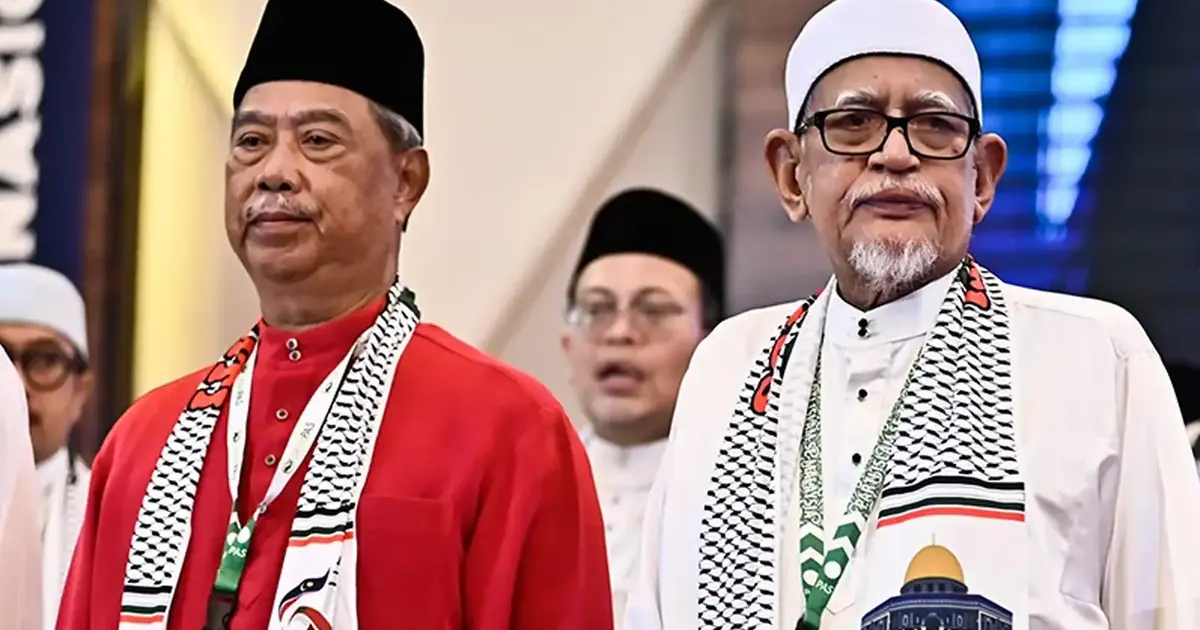
Tensions within Malaysia's opposition Perikatan Nasional coalition have escalated sharply as Bersatu president Muhyiddin Yassin launched a frontal attack on PAS, the Islamic party at the heart of the alliance, over what he characterised as secretive talks with the ruling Barisan Nasional bloc. The accusation strikes at fundamental questions of political trust and coalition discipline at a moment when the opposition's combined strength faces critical tests in forthcoming legislative contests and state-level politics across the federation.
Muhyiddin's criticism zeroes in on what he views as unilateral decision-making by PAS leadership, suggesting the party has breached the implicit compact that binds coalition members together. In multi-party alliances, especially those operating outside government, maintaining unity typically depends on consultation mechanisms and agreed protocols for engaging third parties. The Bersatu president's public rebuke indicates these safeguards may have broken down, or never existed in sufficiently robust form to constrain PAS's diplomatic overtures.
For Malaysian observers, this rupture reveals deeper structural weaknesses within Perikatan Nasional. Since its formation, the coalition has struggled to maintain coherence precisely because its constituent members—Bersatu, PAS, and other smaller parties—retain competing strategic ambitions and divergent ideological commitments. PAS, as an Islamist party with its own institutional interests and support base, has consistently pursued parallel tracks in negotiations with various political actors, treating the coalition framework as one option among several rather than an exclusive commitment.
The timing of these accusations matters considerably. By openly criticising PAS's approach, Muhyiddin signals that he has grown impatient with arrangements that appear to grant his coalition partner excessive autonomy. Bersatu, despite its significance in previous government formation, commands a narrower political base than PAS and depends on coalition stability to maintain relevance. Muhyiddin's willingness to air grievances publicly rather than address them through private channels suggests he may calculate that aggressive positioning strengthens his hand in any forthcoming coalition restructuring or renegotiation of terms.
The substance of PAS's reported negotiations with Barisan Nasional deserves attention as context for understanding Malaysia's fractured political landscape. The Islamic party has long maintained that it can work with any grouping serving its constituencies' interests and advancing its legislative agenda. From PAS's perspective, exploring dialogue with Barisan Nasional components—whether the United Malays National Organisation, Malaysian Chinese Association, or others—represents pragmatic politics rather than coalition betrayal. This fundamentally different conception of coalition membership versus transactional political cooperation lies at the root of current tensions.
Regionally, Malaysia's coalition instability reflects broader Southeast Asian patterns where opposition blocs struggle to maintain discipline outside government, lacking the centralised resources and patronage mechanisms that keep ruling coalitions intact. Thailand and Indonesia offer instructive comparisons: opposition groups frequently fragment when their members pursue separate accommodation with incumbents or hedge their bets across multiple political camps. The Perikatan Nasional experience suggests Malaysian opposition politics faces similar gravitational forces pulling constituent parties toward centripetal strategies.
For ordinary Malaysians concerned with political direction, these coalition machinations carry significant implications. A fragmented opposition reduces the likelihood of strong policy coherence and accountability mechanisms. If Perikatan Nasional collapses or weakens substantially, the federation's political terrain shifts toward scenarios where smaller parties and independent players exercise disproportionate leverage in government formation—potentially empowering actors with narrow sectional interests rather than broad-based mandates.
Muhyiddin's public criticism also reflects calculation about his own political standing. Bersatu, once a pivotal actor in federal government formation, has seen its influence diminish relative to PAS. By challenging the Islamic party's autonomy, Muhyiddin attempts to reassert leadership over coalition direction. Whether this manoeuvre strengthens Bersatu's position or accelerates the coalition's dissolution remains uncertain, but the aggressive posture indicates he perceives the current arrangement as untenable.
The dispute raises fundamental questions about coalition governance that Malaysian political parties have yet to resolve satisfactorily. Sustainable alliances require clear protocols distinguishing legitimate individual party activity from actions that compromise collective interests. Written coalition agreements, regular coordination meetings, and agreed dispute-resolution procedures help prevent precisely the kind of escalation now unfolding between Bersatu and PAS. The apparent absence of such mechanisms suggests Perikatan Nasional was constructed on personal relationships and shared opposition to incumbent coalitions rather than institutional foundations.
Moving forward, this controversy will likely shape calculations around the next general election and any intervening state-level contests. Voters must assess whether Perikatan Nasional can overcome internal tensions sufficient to offer a coherent alternative vision, or whether divisions will paralyse the coalition's capacity to present unified policy platforms and coordinated campaigns. The accusations flying between coalition partners in public forums inevitably damage perceptions of their readiness to govern together.
Muhyiddin's intervention simultaneously opens space for Barisan Nasional to pursue selective accommodation with individual coalition members, potentially peeling away support from Perikatan Nasional through bilateral arrangements that circumvent coalition constraints. If PAS indeed pursues such negotiations, the Islamic party gains leverage in any eventual settlement but risks alienating coalition partners whose support it may ultimately require. The coming weeks will reveal whether Muhyiddin's public criticism catalyses internal coalition reforms or accelerates its fragmentation into separate competitive actors.

