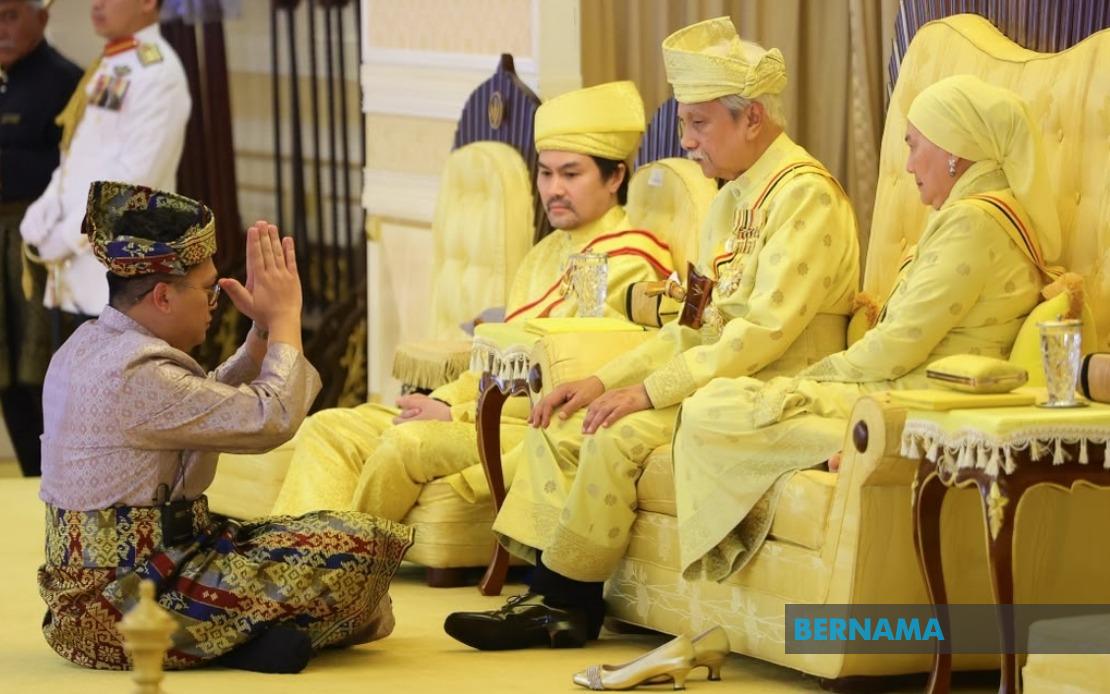
Muhammad Faris Johari has been formally installed as the 11th Undang of Luak Sungei Ujong following a traditional ceremony conducted by the Yang Dipertuan Besar of Negeri Sembilan, Tuanku Muhriz Tuanku Munawir, at Istana Besar Seri Menanti in Kuala Pilah on June 27. The appointment marks an important transition in the state's customary leadership structure, adding another chapter to Negeri Sembilan's unique system of governance that interweaves constitutional monarchy with traditional Adat Perpatih principles.
The installation ceremony adhered to established protocols within Negeri Sembilan's distinctive feudal framework. Proceedings commenced with the Orang Empat Istana, comprising senior palace officials, formally seeking the sovereign's permission to begin the investiture. Muhammad Faris subsequently took an oath pledging his allegiance to the ruler, reinforcing the hierarchical bonds that characterise the state's governing relationships. Following this ritual, Tuanku Muhriz issued a formal proclamation elevating Muhammad Faris to his new position and bestowing upon him the honorific title Datuk Klana Petra, a designation historically associated with the chieftaincy of Sungei Ujong.
During his address, Tuanku Muhriz emphasised the significance of the pledges exchanged and the expectations placed upon the newly appointed Undang. The ruler underscored that sincere commitment, moral integrity and a robust sense of accountability must underpin the execution of customary duties. These principles reflect broader concerns about maintaining institutional credibility and public trust in traditional leadership structures across Malaysia, where the role of feudal leaders has evolved significantly in the modern context.
The Yang Dipertuan Besar directed particular attention toward the broader cohort of Orang Kaya, the collective body of customary chiefs within Negeri Sembilan. Tuanku Muhriz reminded them of their fundamental obligation to remain steadfast in their loyalty to the monarchy and to cultivate respectful, collaborative relationships with the Palace. This directive underscores the delicate equilibrium required between traditional authority and modern governance, especially in a state where customary law and constitutional arrangements coexist.
Tuanku Muhriz articulated a broader political philosophy concerning the sustainability of Malaysia's constitutional monarchy. He argued that relationships grounded in mutual respect, institutional trust and consensual decision-making serve as essential pillars for preserving both the monarchy and customary traditions whilst simultaneously promoting the state's ongoing prosperity and stability. This framing reflects contemporary debates within Malaysian political circles about balancing traditional institutions with modern democratic expectations.
The royal gathering attracted significant attendance, signifying the ceremonial importance of the occasion. Present were Tunku Ampuan Besar Tuanku Aishah Rohani Tengku Besar Mahmud, Tunku Besar Seri Menanti Tunku Ali Redhauddin Tuanku Muhriz, and Tunku Panglima Besar Tunku Zain Al-'Abidin, representing the extended royal household. Menteri Besar Datuk Seri Aminuddin Harun and heads of state government departments also participated, reflecting the intertwining of palace affairs with administrative governance in Negeri Sembilan's political structure.
The 28-year-old Undang brings professional credentials that distinguish him from traditional custodians of Adat Perpatih. Born on October 30, 1997, Muhammad Faris obtained a bachelor's degree in accountancy from Universiti Teknologi MARA and subsequently completed professional certification through the Association of Chartered Certified Accountants programme in 2022. His financial expertise potentially equips him to manage customary affairs with contemporary administrative rigour, though the extent to which formal education informs customary leadership remains an open question within Malaysia's feudal structures. Muhammad Faris is married to Sharifah Amirah Syed Ismail Ash-Shahab.
The installation ceremony reflects Negeri Sembilan's particular constitutional arrangement among Malaysian states. Unlike most other sultanates that employ a straightforward hierarchical system, Negeri Sembilan operates through an electoral monarchy wherein the Yang Dipertuan Besar is selected from among the Undangs of the state's constituent luaks, or territories. This system necessitates the careful cultivation of relationships between the monarchy and its chief vassal families, making ceremonial occasions such as this one significant moments for reaffirming constitutional bonds.
Tuanku Muhriz's exhortation to preserve Adat Perpatih reflects ongoing efforts to maintain cultural continuity in an increasingly modernised Malaysian context. The Adat Perpatih system, which governs customary matters in Negeri Sembilan, represents a distinct body of communal law that differs substantially from other Malay-Muslim legal traditions. As urbanisation and economic development reshape rural communities, the practical application and cultural salience of customary practices faces mounting pressures, making formal affirmations of commitment to these traditions politically and culturally significant.
A further installation ceremony was scheduled to follow immediately after, formalising the appointment of the 22nd Undang of Luak Rembau. This consecutive scheduling underscores the deliberate choreography surrounding transitions within Negeri Sembilan's feudal hierarchy, with multiple investitures frequently occurring within compressed timeframes to demonstrate the continuity and vitality of the state's customary institutions. Such demonstrations of institutional continuity carry particular symbolic weight within Malaysian constitutional arrangements, reinforcing both the legitimacy and ongoing relevance of traditional structures within the modern nation-state.

