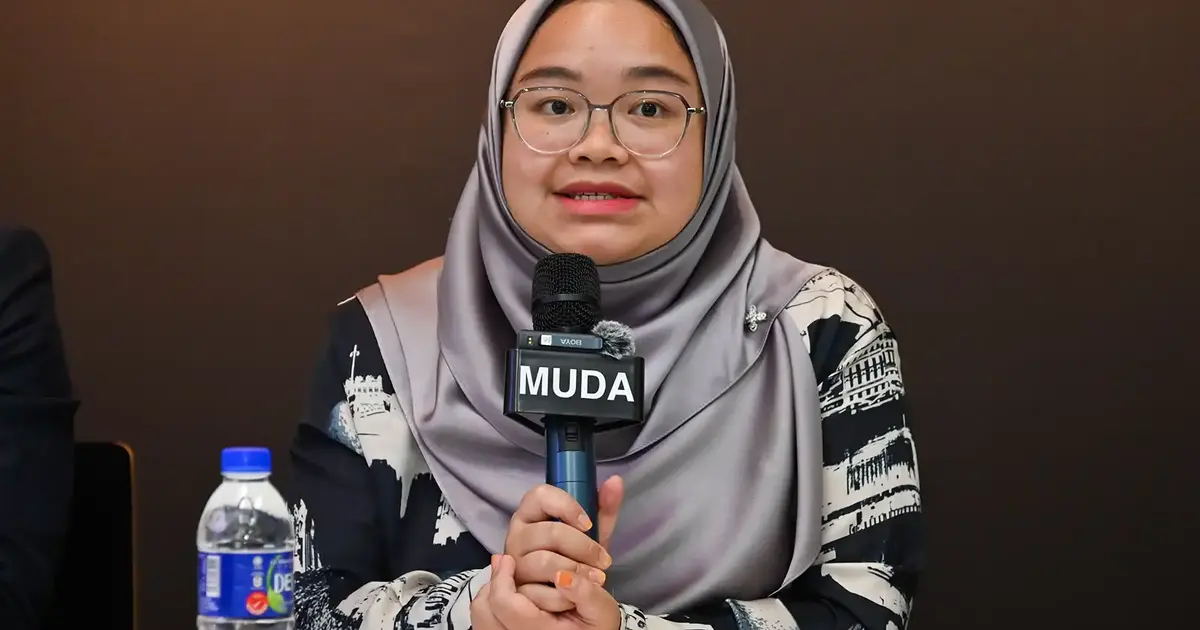
The youth-oriented political movement Muda has announced Rashifa Aljuneid as its candidate for the Puteri Wangsa constituency ahead of Johor's state election scheduled for July 11, marking a notable shift in the party's representation in the southern state. The selection represents a strategic repositioning for Muda in one of its traditionally contested seats, with the decision carrying implications for how the party intends to strengthen its foothold in Johor's increasingly competitive political landscape.
Amira Aljuneid, the current president of Muda, will not be defending her position in Puteri Wangsa, a development that underscores potential changes in the party's electoral strategy ahead of the upcoming poll. The decision to field a different candidate suggests internal deliberation about seat allocation and resource deployment as Muda navigates the complexities of a fragmented political environment in Malaysia's southern state. Such decisions often reflect broader assessments of electoral viability and party positioning within coalitions or independent candidacies.
Rashifa Aljuneid's nomination brings a fresh face to Muda's campaign in this constituency, potentially signalling the party's commitment to developing new talent and engaging emerging voices within its political structure. For Malaysian readers familiar with Johor's electoral dynamics, the substitution of candidates typically indicates organisational assessment of ground conditions and voter sentiment. The timing of such announcements, particularly several months before polling day, allows parties to establish grassroots campaigns and build community engagement.
Puteri Wangsa has been a constituency of interest for various political actors in recent electoral cycles, reflecting broader demographic and political shifts within the Johor landscape. The seat's composition and voting patterns have made it a focal point for parties seeking to expand or consolidate support across different demographic segments. Muda's continued contest for this seat demonstrates the party's intention to maintain relevance in state-level politics despite competition from more established political formations.
The shift in Muda's candidate selection process relates to the broader context of Malaysian politics, where new parties such as Muda have sought to carve out distinct niches by appealing to younger voters and promoting reform-oriented agendas. However, translating electoral appeal into constituency-level victories remains challenging, particularly in state elections where established parties command considerable organisational machinery and voter loyalty. The decision to field Rashifa Aljuneid represents the party's ongoing effort to identify viable candidates capable of competing in this demanding political arena.
Amira Aljuneid's transition away from defending the Puteri Wangsa seat may allow the Muda president to focus on broader party management and strategic planning responsibilities at the national level. Party leaders often face difficult choices about balancing their personal electoral contests with organisational leadership duties, particularly when parties are operating with limited resources and competing across multiple constituencies. This reallocation of leadership attention can sometimes enable parties to develop more cohesive statewide or national strategies.
The July 11 Johor state election itself represents a significant moment for Malaysian politics, as voters in the state select representatives to the state legislative assembly. Johor's political importance derives from its substantial population, economic weight, and historical significance within Malaysian federalism. The state's electoral outcomes often carry implications for national political calculations, particularly regarding coalition mathematics and the viability of different political alignments.
Muda's participation in the Johor election reflects the party's ambitions to establish itself as a meaningful electoral force beyond its base in more urbanised constituencies. The party has increasingly sought to contest in both urban and suburban areas, attempting to build a broader coalition of support that extends beyond its initial demographic base. However, breakthrough performances in state elections remain inconsistent, suggesting the party continues to grapple with structural challenges related to party infrastructure and voter recognition.
For regional observers, Muda's candidate selections and electoral strategies in Johor provide indicators of how new political parties in Southeast Asia navigate saturated political markets and attempt to gain traction against entrenched competitors. The Malaysian context, with its relatively stable democratic institutions and regular electoral cycles, offers a particular laboratory for understanding how emerging political movements adapt their strategies and messaging. The choice of candidates, in this regard, functions as a window into broader organisational thinking about electoral viability and strategic priorities.
Rashifa Aljuneid's candidacy in Puteri Wangsa will likely attract attention from political observers monitoring Muda's development as an institution, particularly regarding questions about the party's ability to identify and promote candidates with genuine appeal to local electorates. The constituency-level campaign that will unfold over the coming months will provide substantive evidence about the effectiveness of Muda's candidate selection process and the resonance of its political messaging with Johor voters navigating complex choices about representation and governance.

%22%2F%3E%3C%2Fpattern%3E%3C%2Fdefs%3E%3Crect%20width%3D%22100%25%22%20height%3D%22100%25%22%20fill%3D%22url(%23ph5rekpg)%22%2F%3E%3Crect%20width%3D%22100%25%22%20height%3D%22100%25%22%20fill%3D%22url(%23ph5rekpp)%22%2F%3E%3Ctext%20x%3D%2250%25%22%20y%3D%2250%25%22%20text-anchor%3D%22middle%22%20dominant-baseline%3D%22central%22%20fill%3D%22rgba(255%2C255%2C255%2C0.95)%22%20font-family%3D%22Georgia%2C%20'Times%20New%20Roman'%2C%20serif%22%20font-weight%3D%22700%22%20font-size%3D%22151%22%20letter-spacing%3D%22-0.02em%22%3ESoutheast%3C%2Ftext%3E%3C%2Fsvg%3E)
%22%2F%3E%3C%2Fpattern%3E%3C%2Fdefs%3E%3Crect%20width%3D%22100%25%22%20height%3D%22100%25%22%20fill%3D%22url(%23ph3blhog)%22%2F%3E%3Crect%20width%3D%22100%25%22%20height%3D%22100%25%22%20fill%3D%22url(%23ph3blhop)%22%2F%3E%3Ctext%20x%3D%2250%25%22%20y%3D%2250%25%22%20text-anchor%3D%22middle%22%20dominant-baseline%3D%22central%22%20fill%3D%22rgba(255%2C255%2C255%2C0.95)%22%20font-family%3D%22Georgia%2C%20'Times%20New%20Roman'%2C%20serif%22%20font-weight%3D%22700%22%20font-size%3D%22136%22%20letter-spacing%3D%22-0.02em%22%3EBangladesh%3C%2Ftext%3E%3C%2Fsvg%3E)