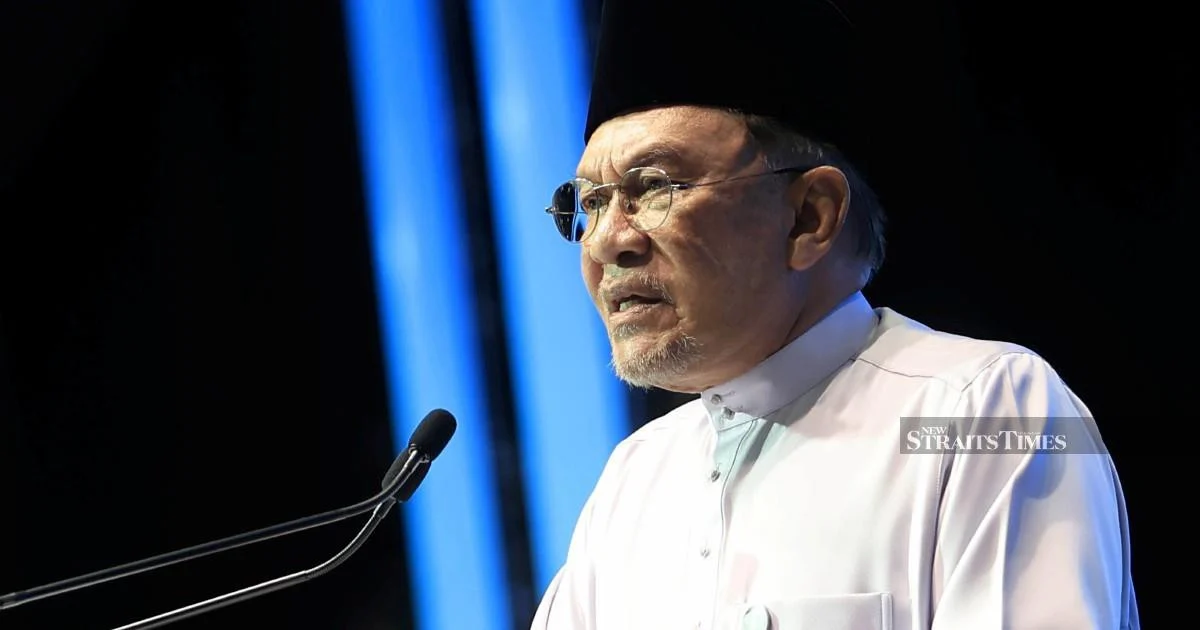
The Muar district office moved to dispel widespread allegations that Prime Minister Datuk Seri Anwar Ibrahim encountered barriers to utilising a government venue for public engagement activities, saying the claims fundamentally misrepresented the circumstances surrounding the event scheduled for last month. The clarification addresses mounting speculation about potential restrictions placed on the country's top political leader during the Johor state election campaign, a period marked by heightened political activity across the southern state.
The disputed event was originally planned for the Penghulu Mukim Sungai Balang Complex, a state-run facility in Muar designed for community programmes and public gatherings. Allegations had circulated suggesting that local authorities declined to permit the Prime Minister's office from hosting the engagement programme at this location, raising questions about political neutrality and the administration's obligations to facilitate access to public resources across all major political actors. Such claims, if substantiated, would have sparked broader concerns about institutional impartiality during electoral periods.
The district office's categorical denial suggests that no formal prohibition existed preventing the Prime Minister from booking or conducting activities at the government complex. The statement appears designed to clarify misunderstandings that may have arisen from administrative processes, scheduling conflicts, or other procedural matters that were subsequently recharacterised as deliberate obstruction. Officials likely sought to remove ambiguity that could have fuelled political accusations of institutional bias during a sensitive electoral window.
Muar, as one of Johor's most politically significant districts, holds considerable weight in the state's electoral calculations and governance landscape. The district encompasses diverse voter demographics and has historically been contested between major political coalitions, making it a focal point for campaign activities and high-profile visits. Any perception of unequal treatment by government institutions could amplify political tensions and undermine public confidence in administrative neutrality, particularly during election periods when scrutiny of institutional conduct intensifies substantially.
For Malaysian readers, such disputes underscore the ongoing challenges in ensuring that government facilities remain equally accessible to all political parties and leaders during electoral campaigns. The Commonwealth principle of administrative impartiality requires that state resources serve the broader public without discrimination based on political affiliation. When questions arise about venue access or facilities availability, clarifications become essential to maintaining the legitimacy of public institutions and the integrity of democratic processes.
The incident reflects broader dynamics within Malaysia's political landscape, where questions about institutional neutrality periodically surface during state and federal electoral cycles. The apparent confusion between allegation and reality highlights how quickly claims can circulate in contemporary media environments, particularly when involving national political figures and electoral campaigns. The district office's prompt response suggests recognition of the importance of addressing such matters expeditiously to prevent further speculation.
Contextualising this within Johor's political environment proves instructive. The state has experienced significant shifts in political alignment over recent years, and election periods typically intensify partisan dynamics. Government departments must navigate expectations of neutrality while serving diverse political constituencies, a balancing act that occasionally generates friction or misunderstanding. The Muar district office's intervention demonstrates awareness that clarification can help restore public understanding of procedural matters that might otherwise be reframed through explicitly political lenses.
The episode also illustrates how community engagement programmes by national leaders depend heavily on coordinated access to public infrastructure. When such access involves state or local facilities, proper administrative channels and transparent procedures become crucial for both operational efficiency and perceptual fairness. The district office's denial suggests that appropriate procedures were followed, though fuller detail about the actual circumstances would strengthen public understanding of what transpired and why initial confusion arose.
Regionally, Malaysia's approach to managing government facility access during electoral periods varies across states and levels of administration, reflecting different institutional cultures and political contexts. Johor, as Malaysia's second-largest state economically and politically, operates within frameworks that must accommodate multiple major political actors and their campaign requirements. The Muar situation underscores the necessity for clear, published policies regarding government venue availability that apply consistently regardless of the applicant's political identity.
The clarification from Muar's district office serves an important function beyond the immediate incident, helping to establish or reinforce that government resources remain legitimately accessible to the Prime Minister and other political leaders for lawful public engagement activities. As Malaysia navigates increasingly complex electoral cycles with heightened public scrutiny, institutional transparency and consistent adherence to impartial administrative principles become even more vital for sustaining democratic confidence and public trust in state machinery. The Muar precedent, whether framed as denial or clarification, contributes to establishing expectations around how such situations should be resolved.

