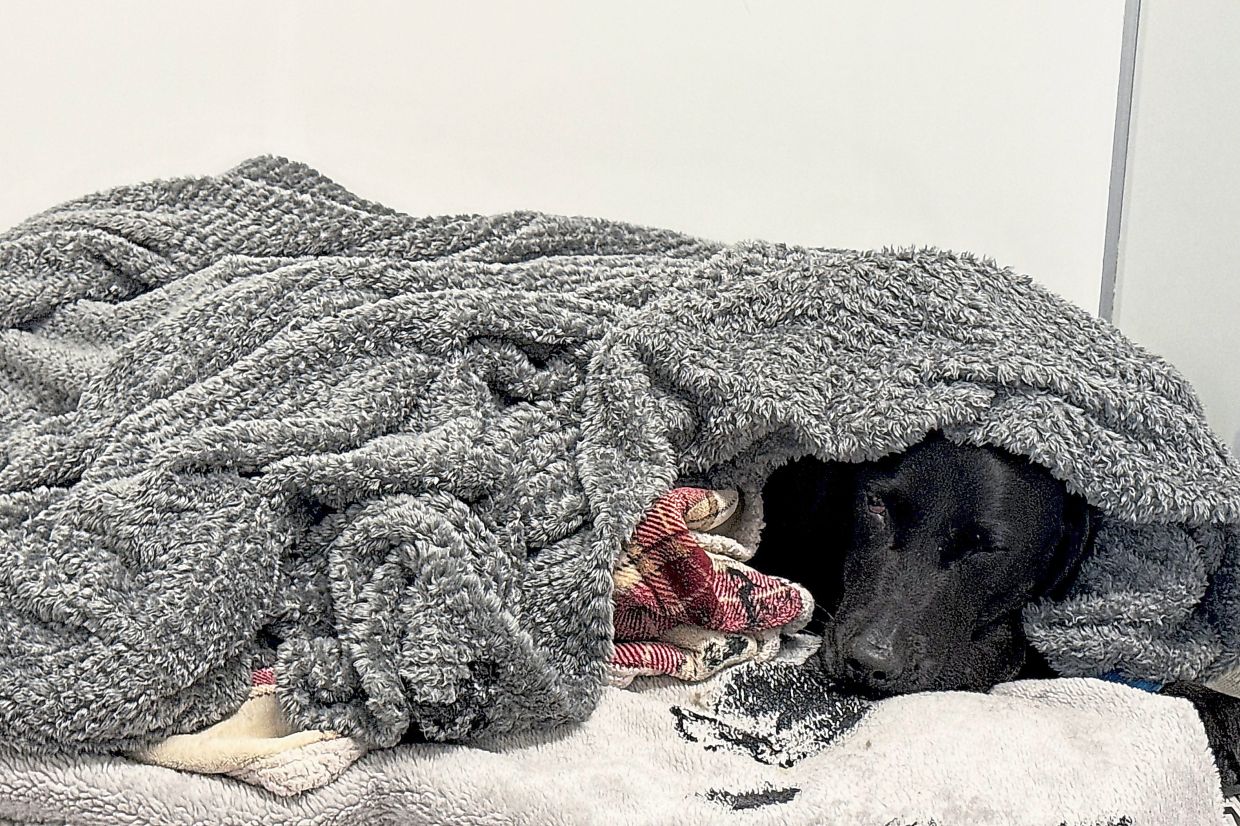
An off-trail encounter with discarded cannabis during a July 5 climb of Ben Nevis, Britain's highest peak, turned into a life-threatening emergency for Tokyo, a five-year-old black Labrador retriever. The dog's owner, Christina Bluhme, found herself navigating a harrowing three-hour descent through deteriorating weather after her beloved companion suddenly became dangerously incapacitated at altitude, forcing her to abandon the summit push and call for emergency assistance on the 1,345-meter Scottish mountain.
Tokyo's symptoms emerged gradually as the party climbed higher. The dog began displaying obvious signs of severe intoxication, swaying unsteadily and eventually losing the ability to walk independently. Bluhme, who has spent 25 years working professionally as a canine trainer and understands canine health intimately, initially found herself bewildered by Tokyo's rapid deterioration. The circumstances offered no obvious explanation for the sudden onset of such dramatic neurological symptoms at that moment during an otherwise routine hiking expedition. The combination of Tokyo's distress and the mountain's increasingly hostile environment—rain replacing the clear skies from earlier in the day and temperatures dropping to 5°C—created a pressing situation demanding immediate action.
With her son Magnus at her side, Bluhme made the difficult decision to abandon their climbing objective and focus entirely on getting Tokyo down safely. Magnus telephoned emergency services, but the police dispatcher expressed considerable uncertainty about whether they could actually dispatch a mountain rescue team to their location. The situation appeared genuinely precarious, with limited visibility, challenging terrain, and a collapsed animal requiring transport along a steep, wet, and rocky descent.
Fortunately, the mountain's circumstances aligned favorably for an intervention. The Lochaber Mountain Rescue Team, a dedicated all-volunteer organisation, happened to be already descending from the summit after assisting a helicopter rescue of another injured hiker. Upon learning of Tokyo's condition, the team swiftly mobilised, securing the 25-kilogram dog into their stretcher and undertaking the challenging transport down the mountain. Bluhme recalled the rescuers moving with remarkable speed and agility across the treacherous landscape, virtually running along the slick trail while she steadied the stretcher. What might have been a multi-hour ordeal was accomplished in approximately one hour, bringing Tokyo safely to the trailhead.
Meanwhile, police had coordinated with Crown Vets in Fort William, positioning a veterinary team in readiness. Upon arrival at the clinic, the initial diagnostic impression favoured a spinal issue, but a senior veterinarian recognised the clinical presentation more accurately. The vet observed that Tokyo was drifting in and out of consciousness in patterns inconsistent with spinal trauma, instead suggesting exposure to a neurotoxin. When the practice consulted with a poison control centre and reviewed Tokyo's symptom profile, the diagnosis crystallised: cannabis intoxication. Treatment involved activated charcoal administration, and the dog made a complete recovery overnight, awakening the following morning apparently unaffected by her ordeal.
The incident underscores a widening public health concern affecting companion animals across multiple jurisdictions. Cannabis toxicity in pets has emerged as a measurable problem in Britain, but the situation proves significantly more acute in the United States. The American Society for the Prevention of Cruelty to Animals formally recognised cannabis toxicity's escalating prevalence by including it within their top 10 list of animal toxins for the first time in 2023. The inclusion reflected years of climbing case numbers as cannabis products have proliferated and become more easily accessible across North American communities.
The risk profile for animals differs markedly from humans, particularly regarding products containing concentrated cannabinoids. Dogs and cats lack certain enzymatic pathways that humans possess, rendering them substantially more susceptible to toxicity at lower doses. Mountain environments and recreational areas present particular hazards, as visitors may dispose of cannabis products carelessly during outdoor activities, leaving them accessible to foraging animals. The pattern mirrors other recreational drug exposure incidents, where pets encounter substances left behind by humans in shared spaces.
Bluhme's experience also highlights the unpredictability of cannabis exposure timing and severity. Dogs may ingest product along a trail with no immediate symptoms, then develop serious neurological effects hours later as the substance processes through their system. This delayed onset complicates both diagnosis and emergency response, as owners may not initially connect the dog's condition to a specific ingestion event. The challenge compounds in remote locations where veterinary expertise proves distant and emergency services must improvise rapidly.
The veterinary bill of £1,000 (RM5,445) proved significant but readily justified in Bluhme's reassessment. Having feared she might lose Tokyo on the mountain—a scenario that seemed plausible given the severity of the dog's condition and the environmental hazards—she regarded the treatment expense as entirely reasonable. The emotional toll of the experience extended beyond Tokyo, as Bluhme acknowledged still processing the anxiety days after the incident, while her dog bounced back to complete normalcy within 24 hours.
This rescue operation reflects both the dedication of volunteer mountain rescue teams and the evolving challenges facing veterinary medicine in the contemporary environment. As cannabis products become increasingly normalised and widely distributed across populated regions, companion animals face a hazard their owners often fail to anticipate. For travellers and outdoor enthusiasts in regions with established recreational cannabis markets, awareness of this risk remains valuable. The incident serves as a cautionary reminder that mountain safety planning must extend beyond human emergency preparedness to encompass the wellbeing of canine companions accompanying hikers into challenging terrain.

