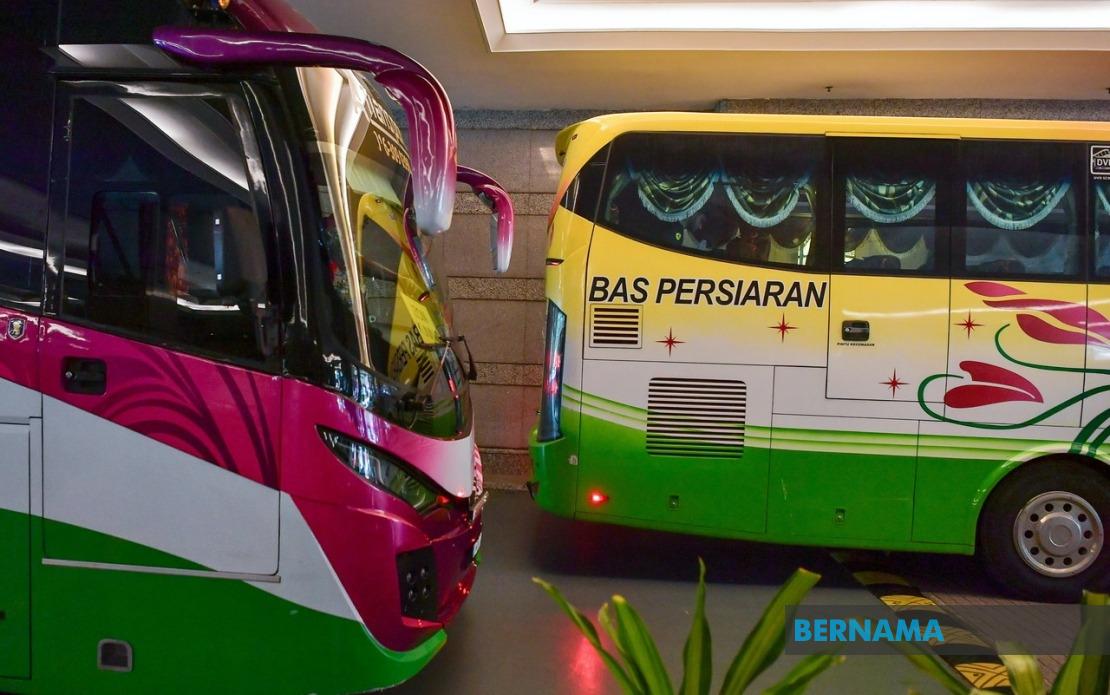
The Ministry of Tourism, Arts and Culture (MOTAC) has issued an urgent call for tour bus operators and affiliated tourism associations to furnish comprehensive diesel usage data and supporting documentation without further delay. The government's drive to gather this information stems from the need to structure an equitable assistance programme that responds to the genuine operational pressures facing Malaysia's ground transportation sector within the tourism industry, particularly following recent fluctuations in fuel pricing driven by Middle Eastern developments.
MOTAC emphasized in its statement that such detailed quantitative information forms the essential foundation upon which any meaningful policy response must rest. Without concrete figures demonstrating how much additional expenditure individual operators and the sector as a whole are absorbing, the government risks designing a relief package that either overshoots genuine needs—wasting limited fiscal resources—or falls short of the actual burden, leaving industry participants dissatisfied and vulnerable. The ministry appears to have recognized that transparency and data-driven decision-making will prove crucial to maintaining confidence in whatever scheme ultimately emerges.
The Ministry of Finance (MOF) has signalled its preparedness in principle to examine proposals for targeted support, conditional upon receiving solid empirical backing. This qualified endorsement suggests that while the government acknowledges the tourism sector's predicament, it will not commit to spending without first understanding the scale and distribution of the problem. For operators who have already submitted their records, this stance represents vindication; those who have delayed face the risk that their circumstances may be inadequately represented in the final calculations.
MOTAC has specifically requested operators to furnish not merely current diesel consumption figures but also detailed before-and-after cost comparisons anchored to the period before the Middle East crisis disrupted global energy markets. This comparative approach enables analysts to isolate the incremental burden attributable to geopolitical events rather than conflating it with pre-existing cost fluctuations or operational inefficiencies. The methodology demonstrates that Malaysian policymakers are attempting to craft a response grounded in attribution—distinguishing between costs operators could reasonably have anticipated and those imposed by sudden external shocks.
The ministry has already engaged with representatives from nine tourism associations that collectively brought this challenge to government attention. These preliminary consultations have allowed MOTAC to grasp the qualitative dimensions of industry distress: compressed profit margins, pressure to maintain competitive pricing despite higher input costs, and difficulty securing credit or investment when revenues remain uncertain. Yet such anecdotal evidence, however compelling, cannot substitute for systematic data that quantifies the problem across different operator scales, geographic regions, and market segments.
MOTAC's insistence that assistance cannot be responsibly designed without full transparency reflects mature fiscal governance. Poorly targeted subsidies or tax breaks risk creating perverse incentives—rewarding inefficient operators or those with inflated claims while neglecting genuinely struggling businesses. The ministry has pointedly noted that any relief programme announced without comprehensive information risks breeding resentment among industry players who feel their situations have been misunderstood or undervalued, potentially eroding government credibility and making future negotiations with the sector more fraught.
For Malaysian tourism businesses and the broader hospitality ecosystem, timely submission of requested data becomes a collective action problem. Individual operators who delay or provide incomplete information harm not only their own prospects but potentially compromise the entire sector's ability to secure swift and calibrated support. The transparency imperative therefore creates both competitive pressure and an incentive for industry associations to encourage rapid compliance among their membership, signalling that cooperation serves everyone's medium-term interests better than strategic withholding of information.
MOTAC has committed to treating any relief measures as part of a sequenced implementation rather than a one-off intervention. This staged approach acknowledges that fiscal sustainability and macroeconomic health cannot be ignored when designing sectoral support. The government has signalled its intention to balance tourism sector relief against broader economic constraints, which means the quantum and design of assistance will reflect not only industry hardship but also Malaysia's overall fiscal position and growth objectives. Operators should therefore expect a measured response rather than sweeping exemptions or subsidies.
The timing of this push assumes particular importance given that fuel prices and energy costs remain volatile, influenced by geopolitical developments beyond Malaysia's control. The data collected now will provide a contemporaneous snapshot of impact; delayed submission risks creating a picture distorted by subsequent price movements that either worsen the apparent crisis or provide false relief. Early submission ensures that government assessments reflect the actual conditions operators faced when claiming hardship, not hypothetical scenarios.
For the wider tourism sector in Southeast Asia, Malaysia's methodical approach to designing relief offers a useful model. Rather than reflexively implementing subsidies or price controls that often create market distortions, MOTAC's emphasis on evidence-based design suggests that policymakers can maintain both fiscal discipline and sectoral support simultaneously. This principle will likely resonate across the region as other governments confront similar pressures from tourism operators struggling with elevated energy costs.
The ministry's appeal ultimately represents a deadline: operators who fail to submit required documentation soon risk being omitted from relief calculations or having their circumstances inadequately weighted. The government's commitment to fairness and accuracy thus creates a window of opportunity that will not remain open indefinitely. Those who respond promptly position themselves to benefit from whatever assistance emerges, while those who delay face the prospect of explaining their absence when the programme launches and relief becomes reality for competitors.

