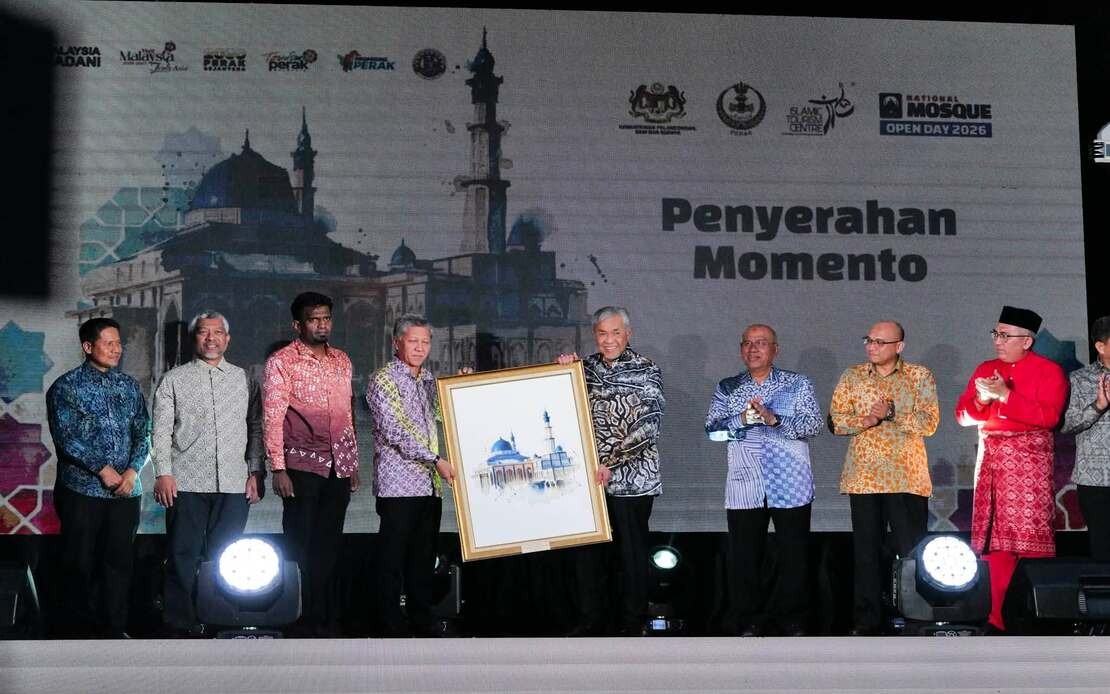
Deputy Prime Minister Datuk Seri Dr Ahmad Zahid Hamidi has outlined an ambitious vision for Malaysia's mosques, positioning them as vital components of the nation's tourism landscape without compromising their core religious and community functions. Speaking at the National Mosque Open Day 2026 in Bagan Datuk, Ahmad Zahid articulated a strategy that seeks to transform these sacred spaces into gateways for cultural and spiritual discovery, allowing visitors from diverse backgrounds to experience Malaysia's Islamic civilisation firsthand.
The initiative reflects a nuanced approach to tourism development that extends beyond conventional sightseeing. Ahmad Zahid emphasised that when international tourists visit Malaysian mosques, they should depart not merely with photographs but with tangible memories of warm hospitality, genuine human connection, and practical exposure to Islamic teachings and values. This experiential dimension distinguishes the concept from superficial heritage tourism, instead creating opportunities for meaningful cross-cultural and inter-faith dialogue. The National Mosque Open Day itself exemplifies this philosophy by creating structured occasions when mosque facilities welcome visitors of all faiths and backgrounds in carefully managed environments.
The Deputy Prime Minister stressed the timeliness of expanding such programmes across the country's mosque network. By encouraging more religious institutions to develop visitor-oriented initiatives, Malaysia can harness its existing infrastructure as a soft power tool while demonstrating Islam's inclusive and compassionate dimensions. These programmes serve multiple constituencies simultaneously—local Muslim communities gain opportunities to articulate their faith and values to outsiders, while visitors encounter living expressions of Islamic culture rather than static museum exhibits. The resulting mutual understanding can challenge misconceptions and foster appreciation for mosques as custodians of national heritage and identity.
Ahmad Zahid highlighted the educational potential of opening mosque doors to outsiders, framing such engagement as a pathway to bridge perception gaps and build deeper understanding of Islam. By controlling the narrative through welcoming interactions and thoughtful hospitality, Malaysian mosques can demonstrate the religion's fundamental values of compassion, wisdom, and benevolence. This approach transforms tourism into a form of informal da'wah, or Islamic preaching, where believers communicate their faith through actions and relationships rather than rhetoric alone.
The Bagan Datuk event also marked the recognition of Masjid Tuminah Hamidi as Malaysia's 98th Tourism Mosque. Completed in 2023 as a waqf honouring Ahmad Zahid's parents, the mosque earned designation from the Islamic Tourism Centre due to its distinctive architectural design and integrated gallery serving as an Islamic knowledge centre. This designation reflects careful vetting, ensuring that promoted mosques meet standards for visitor experience, architectural or historical significance, and community engagement capacity.
The Islamic Tourism Centre, operating under the Ministry of Tourism, Arts and Culture, is spearheading this transformative effort. The centre's director-general, Mohammad Faisal Abu Suaib Khan, revealed that Malaysia's 6,851 registered mosques represent enormous untapped potential for Islamic tourism products. The ITC aims substantially to increase the number of officially designated Tourism Mosques by identifying institutions with distinctive features, compelling histories, or architectural merit worthy of international promotion. This selective approach ensures quality over quantity, maintaining standards that enhance Malaysia's reputation as a sophisticated Islamic tourism destination.
Coordinating this expansion requires inter-agency collaboration. The ITC is working with the Department of Islamic Development Malaysia (JAKIM) and state-level Islamic religious authorities to establish consistent guidelines and manage mosque participation. This institutional framework prevents ad-hoc approaches and ensures that mosque representatives possess training and understanding necessary to welcome and accommodate international visitors respectfully. Standardised protocols protect both visitor experiences and the integrity of religious spaces.
Complementary initiatives strengthen the broader Muslim-friendly tourism ecosystem. The ITC has developed the Muslim-Friendly Tourism and Hospitality Assurance and Recognition programme and established Muslim-Friendly Tourist Guides certification. These programmes extend hospitality standards beyond mosques to encompassing the entire visitor journey—from halal food availability to prayer facilities to culturally informed tour commentary. The underlying philosophy, articulated as "Muslim-friendly, not Muslim-only," emphasises inclusive hospitality that benefits all tourists regardless of faith background.
For Malaysia's tourism industry, this mosque-centred strategy offers distinctive competitive advantages. While Southeast Asian destinations compete on beaches, cuisine, and adventure activities, Malaysia can differentiate itself through authentic Islamic heritage experiences unavailable in competing destinations. Regional Muslim tourists from Indonesia, Brunei, and Singapore represent high-value market segments with disposable income and interest in halal tourism. Simultaneously, international visitors increasingly seek meaningful cultural experiences beyond commercial attractions, positioning spiritual tourism as a growing niche market.
The National Mosque Open Day 2026, held from August 13-15 at Bagan Datuk, demonstrated the practical implementation of this vision. The three-day event combined spiritual activities, community gatherings, cultural performances, recreational elements, and family-oriented programming. This diverse scheduling ensures accessibility for varied visitor motivations while maintaining reverent respect for religious purposes. Such balanced programming proves crucial for sustainable tourism that preserves mosque sanctity while creating welcoming environments.
Looking forward, this initiative carries implications for Malaysia's positioning within global Islamic tourism markets. The strategy acknowledges that modern tourism demands authenticity, cultural sensitivity, and genuine engagement rather than commercialised spectacle. By leveraging mosques as tourism assets while preserving their spiritual primacy, Malaysia demonstrates how religious institutions and economic development can coexist harmoniously. This model potentially offers lessons for other Muslim-majority nations seeking to balance tourism growth with cultural and religious preservation.
The framework Ahmad Zahid advocates requires nuanced management. Success depends on mosque leadership commitment, visitor education about behavioural expectations, adequate infrastructure for welcoming guests, and protection against overtourism that could disrupt religious functions. State Islamic religious departments must ensure that commercial considerations never compromise congregational worship or Islamic teachings. Tourism operators must recognise that these spaces are not theme parks but living centres of faith where visitor activities must accommodate primary religious functions.
Ultimately, the integration of mosques into Malaysia's tourism ecosystem represents a forward-thinking approach to leveraging cultural assets for economic benefit while simultaneously promoting interfaith understanding and showcasing Islam's values on a global stage. For Malaysia to realise this potential fully, sustained investment in infrastructure, training, and coordination remains essential, coupled with ongoing commitment from religious authorities and communities to welcome visitors with authenticity and grace.

