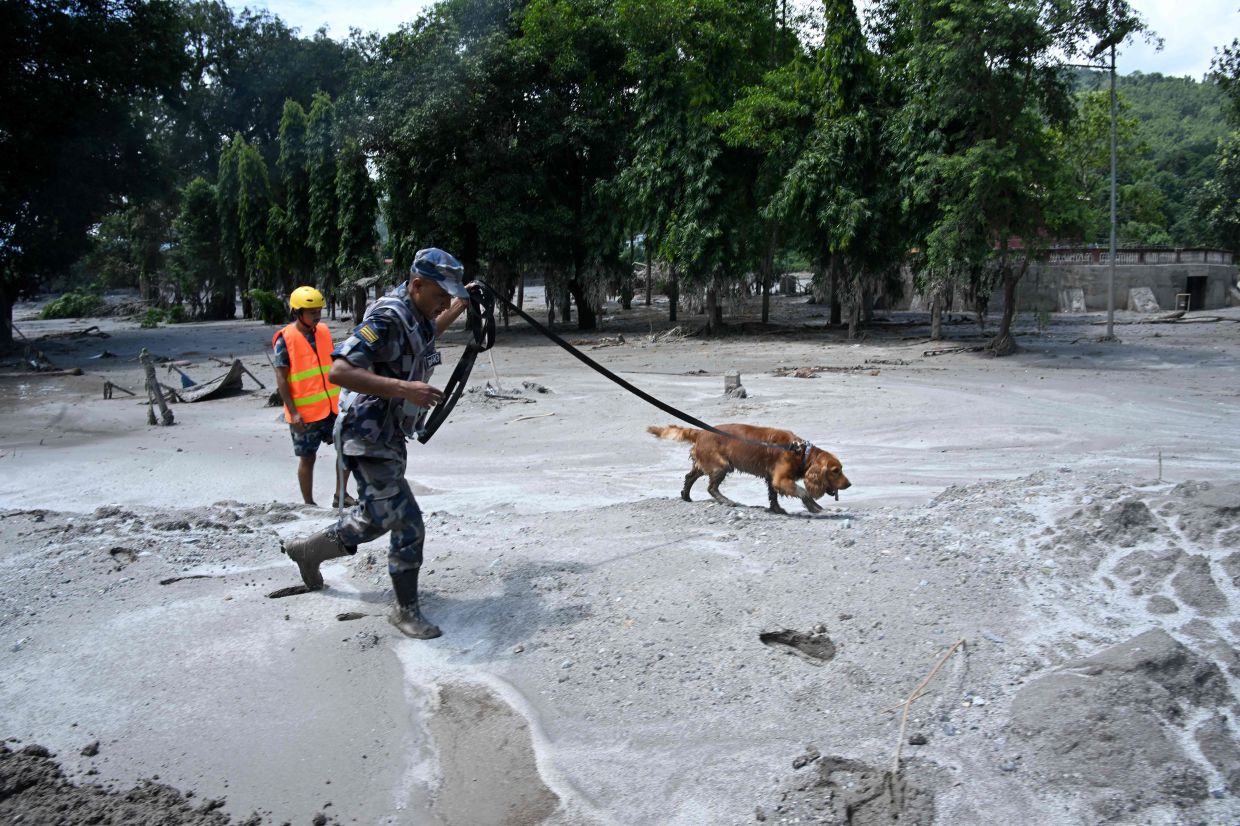
A catastrophic sequence of flash floods and landslides along the Nepal-Tibet border has devastated the mountainous region, leaving 392 confirmed dead and more than 1,400 people unaccounted for. The scale of the disaster underscores the vulnerability of high-altitude communities and the unpredictable nature of climate-driven natural disasters in the Himalayas, a region that attracts thousands of trekkers and climbers annually from across Southeast Asia and beyond.
Authorities on both sides of the Nepal-China border are grappling with surging casualty figures that are likely to shift as rescue operations continue and missing persons databases are cross-referenced. Nepal's disaster management agency reported 910 people unaccounted for as of Thursday, 27 August, with at least 517 identified as foreigners. Simultaneously, Chinese officials indicated that 558 individuals, including 260 non-nationals, had gone missing on the Tibetan side of the frontier. The difficulty in establishing precise figures stems from the inherent chaos of major disasters—dual nationals being counted in multiple jurisdictions, the challenge of matching recovered remains with missing persons lists, and the disruption of communications infrastructure across the affected zone.
For Malaysia, the disaster carries particular resonance. Prime Minister Anwar Ibrahim confirmed on Thursday that more than 50 Malaysians trekking or working in Nepal had become unreachable following the floods. The Nepal Tourism Board placed the figure at 51 missing Malaysians. This represents a significant contingent of Malaysian citizens caught in the catastrophe, raising urgent questions about the adequacy of travel advisories and contingency planning for nationals in high-risk regions. The Malaysians unaccounted for include tourists, trekkers, and potentially workers involved in tourism and hospitality sectors that depend heavily on the Nepal-Tibet border region.
The international dimensions of this disaster are staggering, with nationals from dozens of countries reported missing. India has seen 178 of its citizens unaccounted for, according to the Nepal Tourism Board, though eleven have been rescued. The United States faces uncertainty regarding 90 missing citizens, though the State Department confirmed that three have been rescued and no American fatalities have been confirmed. Australia reported 39 nationals missing, while Canada's government indicated awareness of 30 Canadians and permanent residents whose status remains unknown—a figure slightly higher than the Nepal Tourism Board's count of 25. These variations highlight the challenge facing diplomatic missions and tourism authorities in establishing reliable information during the immediate aftermath of such widespread devastation.
Ukraine has accounted for 56 nationals listed as out of contact, though its foreign ministry emphasised that no Ukrainians have been confirmed among the deceased or injured, a point of cautious reassurance. The United Kingdom reported 33 missing citizens, while Nepal's tourism data identified 39 Australian nationals unaccounted for. Singapore has nine citizens missing, and South Korea initially reported nine hydropower workers missing in the Rasuwa district, though the Nepal Tourism Board subsequently noted that four South Koreans had been rescued. Smaller national populations in the affected region include eight Germans, eight Russians, six South Africans, six Latvians, five Japanese, five New Zealanders, and four French nationals.
The discrepancies between figures reported by individual nations and those compiled by the Nepal Tourism Board reveal the complexity of managing crisis information. Some countries operate independent verification systems through their diplomatic missions, while others rely on data aggregated by local tourism authorities. China's foreign ministry stated that nearly 100 Chinese nationals were among those missing on the Nepali side, substantially higher than the Nepal Tourism Board figure of 24, suggesting either different methodologies for counting or evolving information as rescue operations progress.
For Malaysia and other Southeast Asian nations, this disaster serves as a stark reminder of the hazards confronting adventure tourism in the Himalayas. The Nepal-Tibet border region, whilst offering spectacular trekking opportunities and spiritual sites that draw visitors worldwide, remains inherently vulnerable to sudden geological and meteorological events. Climate change patterns are intensifying the frequency and severity of such events, making it increasingly critical for governments to strengthen coordination with tourism operators and establish robust emergency response protocols.
The recovery operation presents formidable challenges. Mountainous terrain, disrupted infrastructure, and harsh weather conditions complicate search and rescue efforts. The likelihood that casualty figures will fluctuate upwards—as additional bodies are discovered and further missing persons reports are filed—means that international attention and resource mobilisation must remain sustained over coming weeks. Nepal's tourism infrastructure, already stressed by this disaster, faces potential long-term impacts on visitor confidence and economic stability.
For families of the missing across Malaysia, the United States, India, Canada, and elsewhere, the current period represents excruciating uncertainty. Diplomatic channels are working to identify the missing, coordinate rescue efforts, and eventually facilitate the return of remains and survivors. Regional cooperation, particularly among ASEAN nations, will be essential for supporting affected citizens and strengthening resilience in cross-border tourism zones.
The broader policy implications extend to regional disaster preparedness and climate adaptation strategies. As the Himalayas face accelerating environmental pressures, governments in South Asia and across Asia-Pacific must invest in early warning systems, infrastructure hardening, and emergency preparedness training. For Malaysian travellers and those from neighbouring countries, enhanced due diligence regarding destination risk, travel insurance adequacy, and communication protocols with embassies could prove lifesaving in future incidents.

