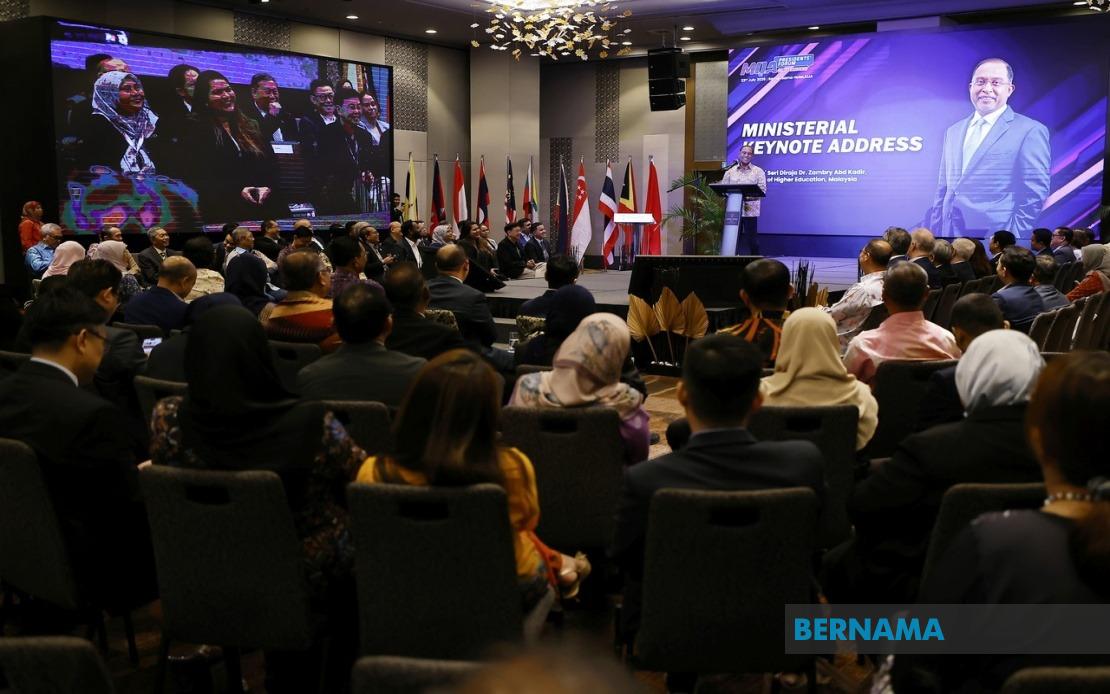
The Malaysian government is moving to resolve critical housing constraints at polytechnic institutions nationwide, acknowledging that dormitory facilities have become strained under the weight of record-breaking student enrolments. Higher Education Minister Datuk Seri Dr Zambry Abd Kadir outlined a comprehensive approach involving facility repairs and maintenance upgrades during remarks at the 2026 Malaysian Qualifications Agency Presidents' Forum in Sepang, signalling ministerial commitment to improving living conditions for tens of thousands of technical students.
The accommodation pressures have emerged as an unintended consequence of policy success. Malaysia's strategic push to redirect secondary school graduates toward technical and vocational education training has fundamentally altered the landscape of skills development in the country. Where applications to polytechnics and community colleges once plateaued at predictable levels, the system is now grappling with demand that has shattered previous records. During the June intake for the 2026/2027 academic year, polytechnics received applications at more than 125 per cent of available places—a remarkable achievement that underscores shifting attitudes toward vocational qualifications among Malaysian families.
This extraordinary uptake translated into concrete enrolment numbers when 30,488 new students formally registered across polytechnic campuses nationwide in June. For a tertiary education sector long overshadowed by the conventional university pathway, such figures represent validation of years of promotion and curriculum development. Yet the timing reveals an infrastructure gap that had been manageable under previous lower demand scenarios. Many polytechnic hostels, particularly those constructed decades ago, lack the resilience to accommodate sudden surges without experiencing operational stress.
Minister Zambry framed the housing challenge within a broader narrative of intentional success rather than systemic failure. The government, he explained, had actively encouraged SPM holders to pursue technical pathways through multiple initiatives, and the corresponding surge in applications represented the desired outcome of those efforts. Rather than viewing accommodation constraints as a crisis, Zambry positioned the ministry's response as a necessary calibration to ensure that policy ambitions align with physical infrastructure. The acknowledgement that overcrowding has occurred came paired immediately with assurances that solutions were already being formulated.
The ministry's strategy focuses on systematic identification and repair of hostels most urgently requiring intervention. Certain polytechnic facilities have deteriorated beyond acceptable standards for student habitation, and MOHE has prioritised these properties in its maintenance proposal to the government. Rather than constructing new dormitory buildings—an approach requiring substantially greater capital expenditure and longer implementation timelines—the ministry is emphasizing cost-effective rehabilitation of existing structures. This pragmatic approach reflects budget realities within the higher education sector while still promising tangible improvements to student living conditions.
Zambry disclosed that MOHE has already formally requested government approval to proceed with repair works at multiple polytechnic campuses identified as priority cases. The invocation of "Insya-Allah" when discussing timeline expectations suggests that while the ministry is confident in its plans, final outcomes depend on broader governmental budget allocation and coordination with works ministries. This layered approval process is typical of Malaysian public sector infrastructure projects, where multiple agencies must align before resources flow to implementation.
To accelerate resolution of placement and accommodation matters, Zambry instructed Polytechnic and Community College Education Department director-general Dr Shamsuri Abdullah to take immediate action. This direct ministerial intervention signals that the issue has escalated beyond routine administrative management into the purview of senior leadership. By tasking the department director-general specifically, Zambry ensured that accommodation challenges would receive dedicated attention alongside ordinary departmental functions.
The broader implications for Malaysia's technical education trajectory remain significant. The 125 per cent application achievement demonstrates that demand-side momentum for polytechnic education is genuine and sustainable, not a temporary spike. As long as labour market conditions reward vocational credentials and school counsellors guide capable students toward technical pathways, applications should remain robust. This means accommodation pressures will likely persist unless the ministry simultaneously pursues a multi-year programme to expand total hostel capacity across the polytechnic network.
For regional observers, Malaysia's experience offers relevant lessons. Southeast Asian nations pursuing similar TVET expansion face comparable risks: policy success can outpace infrastructure readiness. Thailand, Vietnam, and Indonesia have all promoted technical education as a development priority, yet often discover that dormitory facilities and other student services become bottlenecks when applications surge. Malaysia's transparent acknowledgement of these constraints and willingness to publicly commit to solutions contrasts with less forthcoming approaches in some neighbouring jurisdictions.
The housing challenge also underscores tension between enrolment targets and quality assurance. Overcrowded accommodation can degrade the student experience and potentially affect retention and completion rates. Malaysian polytechnics will need to balance maximizing intake with maintaining standards that ensure graduates meet industry expectations. This equilibrium becomes increasingly delicate as student numbers increase without proportional expansion of support infrastructure.
Looking forward, the ministry's repair programme should be viewed as a medium-term intervention rather than a permanent solution. If technical education demand continues expanding, MOHE will ultimately need to commission new hostel construction alongside ongoing maintenance of aging facilities. Strategic planning should therefore incorporate longer-term capital investment frameworks that accommodate projected enrolment growth beyond the current 2026/2027 cohort. The government's immediate response to the accommodation crisis demonstrates political will, but sustained commitment to infrastructure development will prove essential for maintaining momentum in Malaysia's technical education expansion.

