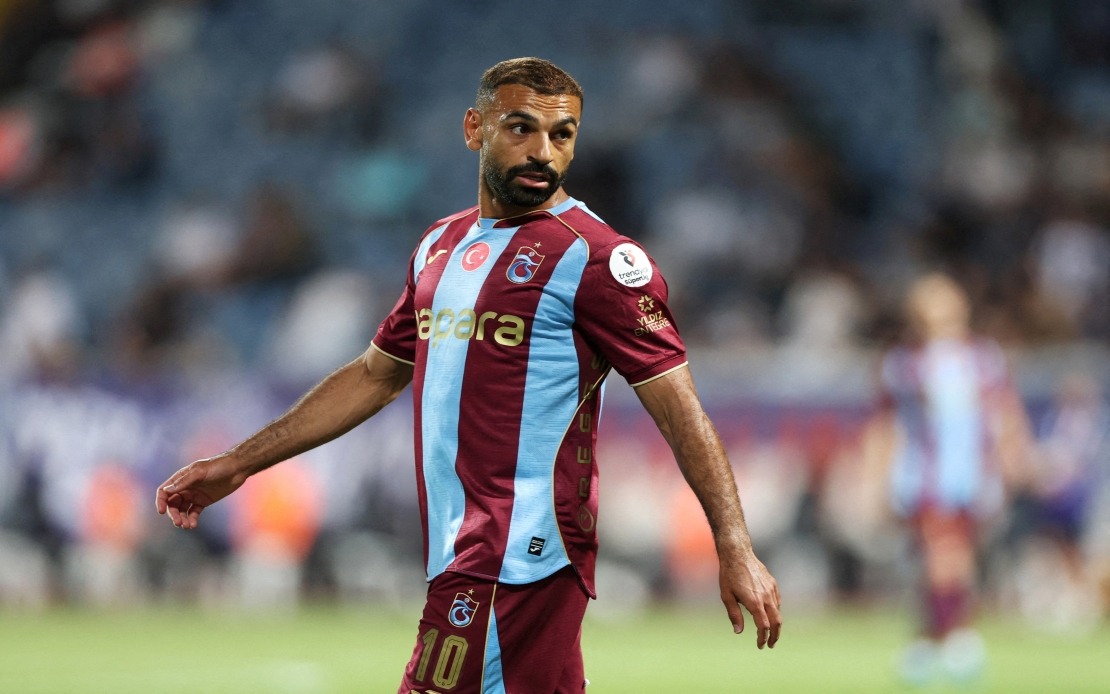
The sight of Mohamed Salah's claret-and-blue Trabzonspor No. 10 jersey adorning shop windows throughout Cairo's Khan el-Khalili bazaar signals more than just commercial enthusiasm for a celebrated footballer's latest career move. Since the Egyptian international joined the Turkish Super Lig club in early August, merchandise featuring the 32-year-old winger has become ubiquitous across one of the Arab world's most iconic marketplaces, nestled in the heart of historic Cairo. Sports retailers throughout the ancient bazaar, famed as a tourist destination and traditionally a barometer of popular sentiment, have rapidly stocked the new shirt, positioning it prominently alongside Egypt's national team colours.
The commercial momentum has been swift and substantial. Traders report selling Salah's Trabzonspor jersey at prices ranging from 400 to 500 Egyptian pounds—equivalent to roughly $8 to $10—demonstrating brisk demand among the bazaar's diverse clientele of local shoppers, tourists, and passionate football devotees. In a market accustomed to reading consumer behaviour as a reflection of broader social currents, the rapid uptake of merchandise bearing a single player's name represents something noteworthy. Local shopkeepers, who have witnessed countless football fashions come and go, express genuine satisfaction at the commercial opportunity while simultaneously articulating a deeper sentiment about Salah's departure to Turkey.
Shopkeeper Salah Abdulmecid, speaking from within Khan el-Khalili's labyrinthine corridors, framed the footballer's transfer not merely as a sporting transaction but as a meaningful cross-cultural moment. The bazaar itself has recently hosted diplomatic visits of the highest order—Egyptian President Abdel Fattah el-Sisi and French President Emmanuel Macron both recently toured the historic site—underscoring its symbolic importance as a venue where national narratives are constructed and displayed. Abdulmecid's remarks revealed an outlook common among many Egyptians: enthusiasm for Salah's success is tempered by appreciation for Turkey as a society whose cultural values and religious commitments resonate with Egyptian sensibilities.
The emotional dimension of Salah's transfer extends beyond commercial transactions. Supporters captured on video wearing the new Trabzonspor colours express not reluctant acceptance but genuine optimism about the player's prospects in Turkey. One enthusiast, photographed outside a Khan el-Khalili shop in the borrowed jersey, invoked religious blessing for Salah's pathway forward—a sentiment reflecting the spiritual lens through which many Egyptians view their sporting heroes. This blend of patriotic pride in an Egyptian success story combined with respect for the destination club reveals the complex negotiation of identity that Salah's career has come to represent across the Arab world.
The diplomatic dimensions of Salah's move have not escaped the attention of observers attuned to broader geopolitical developments. Egyptian sociologist Said Sadik characterised the footballer as a "soft power" asset whose influence extends far beyond the football pitch. During Turkish Foreign Minister Hakan Fidan's visit to Egypt on August 14, discussions between Turkish and Egyptian diplomatic counterparts—Foreign Minister Fidan and Egyptian Foreign Minister Badr Abdelatty—explicitly referenced Salah as a symbol of strengthening bilateral relations. This formal acknowledgment of a footballer's role in state-to-state relations underscores how thoroughly integrated sports personalities have become into diplomatic and cultural frameworks across the Middle East.
Sadik's analysis emphasizes a crucial reality about Salah's position within Egyptian society: his appeal transcends conventional football fandom. Even citizens who do not regularly follow football make conscious efforts to track developments in Salah's career, a phenomenon that speaks to his status as a national figure embodying Egyptian achievement on the global stage. This broad-based engagement means that merchandise bearing his name will find ready customers across demographic segments, from devoted supporters to casual observers who nonetheless feel invested in his success. The bazaar, as a historical centre of commerce and cultural exchange, provides the perfect venue for this enthusiasm to manifest in tangible form.
The reception Salah encountered upon arriving in Turkey further validates the notion that his transfer serves purposes beyond individual sporting ambition. Enthusiastic welcomes from Turkish fans and media organisations, widely circulated through social media and covered by Egyptian broadcasters, reinforced a message of mutual respect and shared cultural values between Turkish and Egyptian populations. When Turks embrace an Egyptian athlete with genuine warmth, it sends signals about bilateral openness that diplomatic statements alone cannot convey. Sadik views this genuine popular reception as concrete evidence of deepening ties between the two societies, extending beyond government initiatives to encompass grassroots cross-cultural appreciation.
For Malaysian readers and Southeast Asian observers, the Salah phenomenon offers insight into how football functions as a vector for soft power and cultural diplomacy in the Middle East and beyond. Just as Southeast Asian nations have leveraged their own sporting talents to enhance international standing, Egypt has benefited from Salah's prominence as a symbol of national pride and capability. Turkey's enthusiastic reception of the player reflects strategic interest in cultivating closer relationships with major Arab nations, using sports as a non-threatening medium for building cultural bridges. The dynamism of Khan el-Khalili's market response demonstrates how popular commercial activity often outpaces and responds to diplomatic initiatives.
The broader pattern evident in Salah's transfer relates to structural shifts in football's labour market and the growing economic integration between Turkish and Arab football markets. Turkish clubs have increasingly attracted prominent Arab players, reflecting both improved financial conditions in the Turkish Super Lig and a deliberate diversification strategy by Turkish teams seeking to expand their appeal across the Middle East and North Africa. Salah's arrival in Turkey represents a significant milestone in this trend, bringing global recognition and commercial value to Turkish football while simultaneously opening new markets for merchandise and broadcast revenues.
From Khan el-Khalili's ancient stone walls to living rooms across Egypt and the wider Arab world, Mohamed Salah's Trabzonspor colours have become emblematic of something larger than sporting achievement. The bustling trade in jerseys reflects authentic popular sentiment about Salah's place in Egyptian society, Turkey's regional aspirations, and the complex dance of national pride, cultural affinity, and individual ambition that characterises contemporary Middle Eastern football. As shopkeepers count their sales and supporters wear their new colours with visible satisfaction, they participate in a quiet but powerful assertion that Egypt's greatest athletes belong, in some fundamental sense, to the broader Arab and Islamic world—and that their success abroad ultimately redounds to the honour of the home nation.

