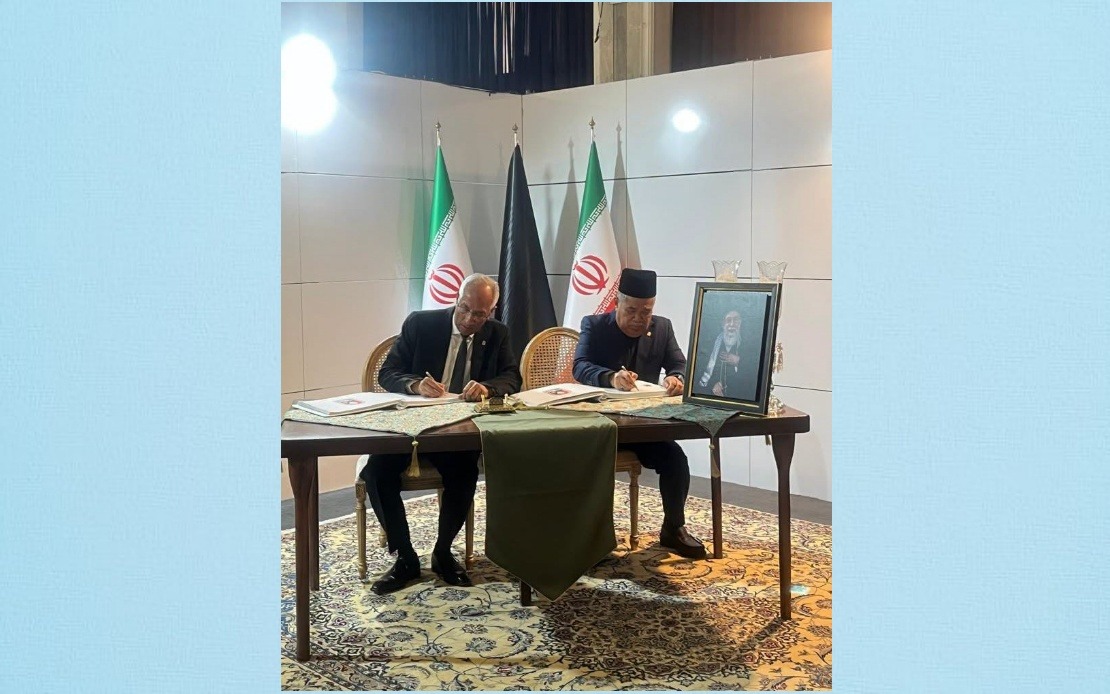
Malaysia's Agriculture and Food Security Minister Datuk Seri Mohamad Sabu has represented the Malaysian government in paying final respects to Ali Khamenei, Iran's former Supreme Leader, during ceremonies held at the Grand Mosalla in Tehran. The delegation's presence underscores the diplomatic ties between Malaysia and Iran, with Mohamad receiving formal recognition from senior Iranian officials upon arrival, including Speaker of the Iranian Parliament Mohammad Bagher Ghalibaf and Foreign Minister Abbas Araghchi.
The commemorative events honouring Khamenei extend across multiple locations and span several days, reflecting the significant stature accorded to the late leader within Iranian society. Preliminary ceremonies in Tehran will be followed by observances in the holy cities of Qom, Najaf, and Karbala, demonstrating the religious and political importance of the occasion throughout the Muslim world. The sequence culminates with the transferral of remains to the Imam Reza Shrine in Mashhad, where the burial is scheduled for July 9, one of Islam's most sacred pilgrimage destinations.
Khamenei's death occurred following a military incident on February 28 involving the United States and Israel, an event that reverberated across the Middle East and prompted responses from nations maintaining diplomatic relationships with Iran. The extended timeline between the initial incident and these July memorial ceremonies—more than 100 days—reflects the customary practices within Shia Islamic tradition, which often incorporates extended periods of mourning and remembrance for revered religious and political figures. Malaysia's formal participation in these observances signals respect for these traditions and maintains the country's careful diplomatic balance in regional geopolitical matters.
Modamad's public acknowledgment of the ceremonies through a Facebook statement demonstrates Malaysia's transparent engagement with significant international events. By detailing the specific locations where tributes would occur and naming the senior Iranian officials present, the minister communicated both the gravity of the occasion and Malaysia's commitment to maintaining constructive relations with Iran. Such visibility is particularly important for Malaysian audiences seeking to understand their government's approach to Middle Eastern affairs.
The religious dimension of these proceedings carries particular resonance for Malaysia, a Muslim-majority nation where Shia Islam maintains a substantial community. The movement of Khamenei's remains through Najaf and Karbala—cities of immense spiritual significance in Shia tradition—reflects protocols that resonate deeply within Malaysia's diverse Islamic landscape. The final resting place at Imam Reza Shrine in Mashhad further emphasises the religious framework through which Iran's leadership is understood and honoured.
Mohamad's invocation of Islamic prayers for the deceased, specifically requesting divine mercy and forgiveness, contextualises the Malaysian delegation's participation within a framework of shared religious values. This approach allows the government to express diplomatic solidarity while grounding its engagement in Islamic principles that transcend purely political calculations. For Malaysian Muslim audiences, such gestures reinforce their nation's role as a responsible member of the wider Islamic community.
The presence of Iran's parliamentary speaker and foreign minister in welcoming the Malaysian delegation reflects reciprocal diplomatic courtesies and suggests that Malaysia maintains channels of engagement with Tehran despite regional tensions and international complications surrounding Iran. The formal reception accorded to Mohamad indicates that Malaysia's representation was taken seriously by Iranian officials, potentially strengthening bilateral relationships and creating opportunities for dialogue on matters of mutual concern.
For Malaysia's foreign policy architecture, participation in these ceremonies represents a calibrated approach to Middle Eastern engagement. By sending a ministerial-level delegation rather than the highest-ranking official, Malaysia demonstrates respect for the occasion without overcommitting to positions that might complicate its relationships with other regional or Western partners. This nuanced diplomacy reflects the careful positioning Malaysia maintains as a Muslim nation engaged with the broader international community.
The memorial ceremonies also occur within a broader context of remembering significant figures within the Islamic world. Khamenei's leadership shaped Iran's domestic and foreign policies for decades, making his death a pivotal moment in Middle Eastern history. Malaysia's formal acknowledgment of his passing and participation in mourning rituals positions the country as a participant in these significant regional developments rather than a mere observer.
Looking forward, the diplomatic engagement demonstrated through Mohamad's delegation may facilitate ongoing discussions between Malaysia and Iran on issues ranging from trade and investment to cultural and religious cooperation. Such formal occasions often provide informal opportunities for senior officials to address bilateral concerns and explore areas of potential collaboration, extending beyond the immediate ceremonial purposes.
Malaysia's involvement in these proceedings also reflects broader patterns of engagement within the Muslim world, where diplomatic protocols often incorporate religious and cultural observances. By honouring these traditions through official participation, Malaysia reinforces its identity as a Muslim nation committed to international engagement grounded in respect for Islamic values and practices. The delegation's participation ultimately serves multiple audiences—satisfying domestic expectations regarding Malaysia's role in the broader Islamic community while maintaining the diplomatic relationships essential for regional stability and Malaysian interests.

