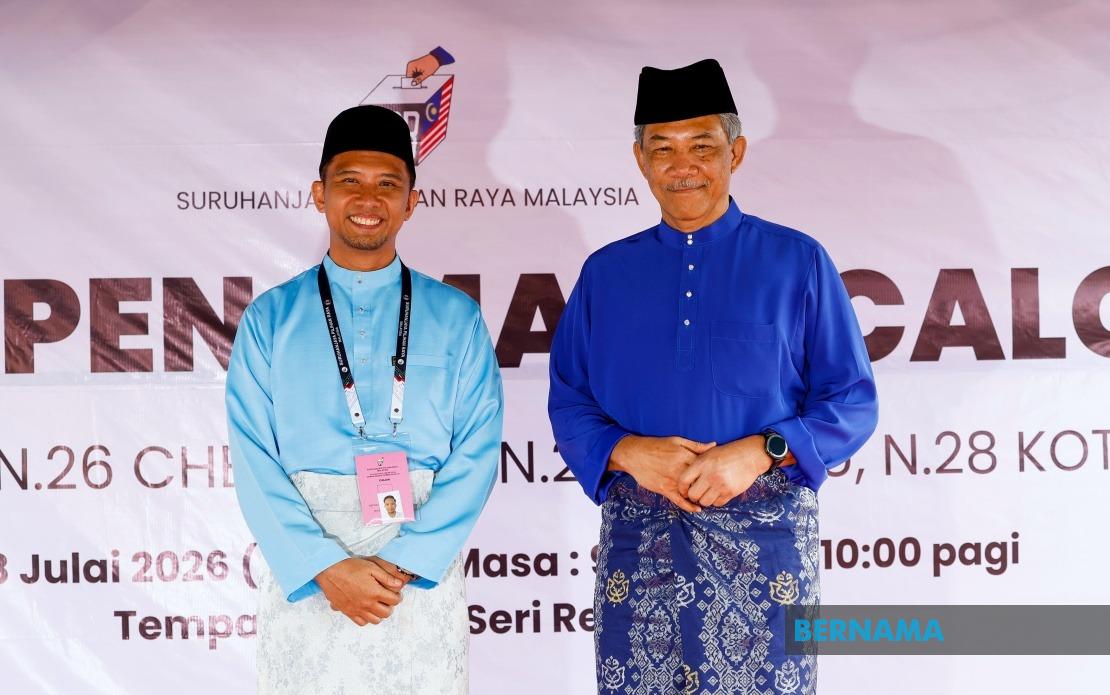
The Negeri Sembilan state election campaign officially commences following the close of nominations, with Foreign Minister and state Barisan Nasional chairman Datuk Seri Mohamad Hasan set to defend his long-held Rantau seat against Pakatan Harapan candidate Dr Azizul Hakim Mahdi in what will be a direct contest between the two coalitions' representatives. The returning officer, Mohd Zamri Mohd Esa, confirmed the straight fight configuration after the nomination process concluded at Dewan Sri Rembau on July 18, clearing the way for what observers anticipate will be one of the state election's most closely watched races.
Modamad's grip on the Rantau constituency has remained secure since 2004, and his position as UMNO deputy president underscores the national significance of this particular state-level contest. The incumbent's commanding performance in 2023, when he amassed 16,957 votes against Pakatan Harapan's Rozmal Malakan's 6,677, established a formidable 10,280-vote majority that will be difficult for any challenger to surmount. His electoral dominance in the rural-leaning seat reflects both his political machinery and deep roots in the constituency built over two decades of representation.
Speaking to journalists after the nomination proceedings, Mohamad outlined Barisan Nasional's strategic approach for the coming weeks, emphasising the importance of systematic campaign organisation and effective grassroots mobilisation. He stressed that the coalition's messaging would revolve around its manifesto promises and the need for voters to provide the electoral mandate required for continued governance. His emphasis on methodical campaigning suggests an expectation of a competitive race that will require sustained effort from party machinery across the constituency.
Dr Azizul Hakim's candidacy represents a generational and professional contrast to the veteran politician he faces. At 35 years old, the Pakatan Harapan nominee brings a decade of medical practice and entrepreneurial experience through his ownership of three clinic outlets across the Selangor and Melaka region. His campaign positioning focuses on healthcare accessibility and community-centric policymaking, issues that resonate particularly in a state where healthcare infrastructure remains a persistent concern for many voters. This emphasis on sectoral expertise and professional credentials reflects a broader opposition strategy of projecting competent, issue-focused alternatives to establishment figures.
The healthcare angle that Dr Azizul propounds holds particular relevance for Negeri Sembilan voters. Rural and semi-urban areas within the state have frequently reported inadequate access to primary healthcare facilities, lengthy waiting times at government clinics, and limited specialist services outside major centres. By positioning himself as someone with direct healthcare experience and a vested interest in the sector through his clinical operations, the candidate is attempting to establish credibility on an issue where incumbent administrations have faced persistent criticism from residents.
Beyond the Rantau battleground, the broader 16th Negeri Sembilan state election encompasses a complex political landscape across multiple constituencies. The Paroi seat will witness a three-way contest involving Pakatan Harapan's Ahmad Shahir Mohd Shah, the Menteri Besar's press secretary, against Perikatan Nasional's Kamarol Ridzuan Mohd Zin and Bersatu's Mohd Nazree Mohd Yunus, complicating calculations for all parties contending in that division. Similarly, the Kota constituency presents a three-cornered affair pitting Barisan Nasional's incumbent Suhaimi Aini against Pakatan Harapan's Muhammad Allif Ibrahim and Bersatu's Akmal Noradzmi Abdul Rahim.
The fragmentation of the opposition vote across Perikatan Nasional and Bersatu representatives in multiple constituencies may inadvertently benefit the more unified Barisan Nasional machinery in several divisions. This splitting of anti-establishment votes becomes particularly consequential in constituencies where margins are expected to be narrow, a dynamic that could ultimately determine overall state-level control. Chembong presents a cleaner straight fight between Barisan Nasional incumbent Datuk Zaifulbahri Idris and Pakatan Harapan's Danish Nazran Murad, offering a more straightforward contest between the two major coalitions.
The Election Commission has structured the polling schedule to accommodate diverse voter categories, designating July 28 as early voting day for military personnel, their spouses, and police officers, with the main election set for August 1. This bifurcated polling approach reflects the need to balance operational security considerations with electoral accessibility for serving personnel who maintain critical national functions. The 36-seat state assembly, to be contested across various constituencies, represents a legislature whose composition will significantly influence development priorities and resource allocation across Negeri Sembilan's districts for the coming term.
The electorate participating in this state election comprises 889,490 registered voters, distributed across 867,151 ordinary voters, 16,884 military and police personnel, and related categories. This substantial voter base encompasses diverse demographic segments, from urban professionals in larger towns to rural agricultural communities and industrial workers, each bringing distinct policy priorities and electoral calculations to their voting decisions. The geographic and demographic diversity of the Negeri Sembilan electorate means that candidates and coalitions must calibrate messaging to address localised concerns while articulating broader policy platforms.
For Mohamad Hasan specifically, the Rantau contest carries implications beyond the state constituency itself. His position as Foreign Minister and national party deputy president means that electoral success in his home seat reinforces his stature within UMNO and national Barisan Nasional calculations. Conversely, a significantly narrowed margin or defeat would reverberate through party hierarchies and potentially reshape perceptions of his political strength heading into any future national electoral cycle. The race therefore transcends its state-level framing to assume national political dimensions that various political observers will scrutinise closely throughout the campaign period.

