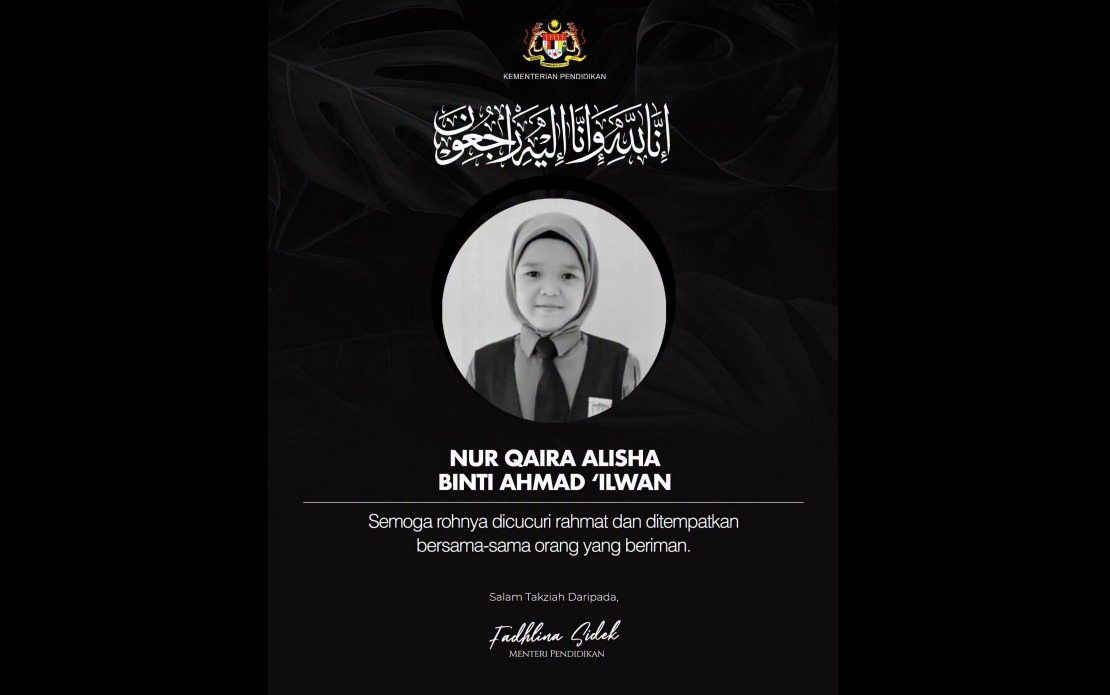
Education Minister Datuk Seri Fadhlina Sidek has instructed the Ministry of Education's Integrity Unit to pursue further investigation into the family's complaint regarding Year Four pupil Nur Qaira Alisha Ahmad Ilwan, who passed away after suffering heart complications. The minister indicated that any action undertaken must comply with established protocols and maintain fairness toward all involved parties. The directive represents the ministry's formal engagement with a matter that has raised serious questions about student welfare supervision and adherence to medical documentation within schools.
Fadhlina disclosed that the Kedah State Education Department (JPN) has already completed an initial inquiry into the circumstances surrounding the child's death. She emphasised that the Ministry of Education considers all issues affecting student safety and overall wellbeing to be matters of paramount importance requiring careful institutional attention. Her statement stressed that the ministry's immediate focus remains providing the grieving family with appropriate emotional support and space during their period of loss, acknowledging the profound impact of such tragedy on parents and relatives.
The nine-year-old pupil had lived with a chronic cardiac condition since infancy, diagnosed when she was just three months old. Throughout her school years, this health vulnerability had resulted in formal exemption from participation in competitive sports and vigorous physical activities—a standard accommodation for students with serious medical conditions. Medical professionals had deemed strenuous exercise potentially dangerous for her wellbeing, a clinical assessment that should have been integrated into all decisions affecting her participation in school events.
The circumstances that preceded her death centre on a sports day competition held on April 15 at her school. According to the family's account, a teacher directed Nur Qaira to participate in a running event during the school's annual sports house selection process. This directive allegedly occurred despite the school having received and retained a medical certification from her doctors explicitly prohibiting her involvement in such physical activities. The alleged disregard for documented medical guidance has become the focal point of the family's complaint and raises broader questions about institutional safeguards.
Nine days after the sports event, on April 24, Nur Qaira was brought to Sultanah Bahiyah Hospital following a serious medical crisis involving severe vomiting and significant swelling in the tissues around her eyes. These symptoms prompted urgent evaluation and diagnostic testing, which confirmed a grave cardiac condition: heart failure resulting from decompensated dilated cardiomyopathy. This diagnosis indicated that her heart muscle had become dangerously weakened and enlarged, a progressive condition that can be triggered or accelerated by physical strain.
Despite intensive medical intervention, the child's condition deteriorated, and she ultimately succumbed to her cardiac complications at the hospital. Her death has raised difficult questions within the education sector about institutional responsibility for protecting vulnerable students and the mechanisms through which medical restrictions should be enforced across all school personnel. The timing between her participation in physical exertion and the onset of acute symptoms has naturally drawn scrutiny regarding causation and whether proper safeguards were observed.
Fadhlina's response indicates that the ministry recognises the gravity of these allegations and the need for thorough institutional examination. By directing the Integrity Unit to conduct follow-up investigation, the ministry has signalled commitment to examining whether protocols for protecting students with documented medical conditions were properly implemented. The emphasis on procedural fairness suggests the ministry will examine both accountability and any systemic gaps that may have contributed to the tragic outcome.
This incident highlights broader concerns across Malaysian schools regarding the communication and enforcement of medical exemptions. While most educators are conscientious about student welfare, institutional mechanisms for ensuring that medical letters reach relevant personnel and are consistently applied remain variable across different schools and regions. Teachers, particularly those involved in sports and physical education, must have reliable systems for identifying students with restrictions before assigning them to physically demanding activities.
The case also underscores the vulnerability of children with chronic conditions within school environments, where organisational complexity and staff turnover can compromise continuity of care. In Malaysia's increasingly large school system, ensuring that critical health information flows reliably to all decision-makers requires robust administrative procedures and regular staff training. The investigation outcome may influence how the ministry implements or strengthens protocols for managing such information across its network of institutions.
For Malaysian families managing children with serious medical conditions, this incident serves as a sobering reminder of the importance of maintaining direct communication with schools and repeatedly emphasising medical restrictions. However, it also underscores that students should not bear responsibility for ensuring compliance with their own medical restrictions—institutional systems should provide that protection automatically. The ministry's investigation will likely examine whether such systemic failures existed in this case and whether reforms are necessary.
As the Integrity Unit proceeds with its examination, education stakeholders will be watching closely for signals about accountability and institutional learning. While the family's grief cannot be remedied through any investigation, a thorough process that identifies what went wrong and establishes preventive measures might protect other vulnerable students. The outcome will carry significance beyond this single family, potentially shaping how Malaysian schools approach the intersection of medical welfare and institutional responsibility.

