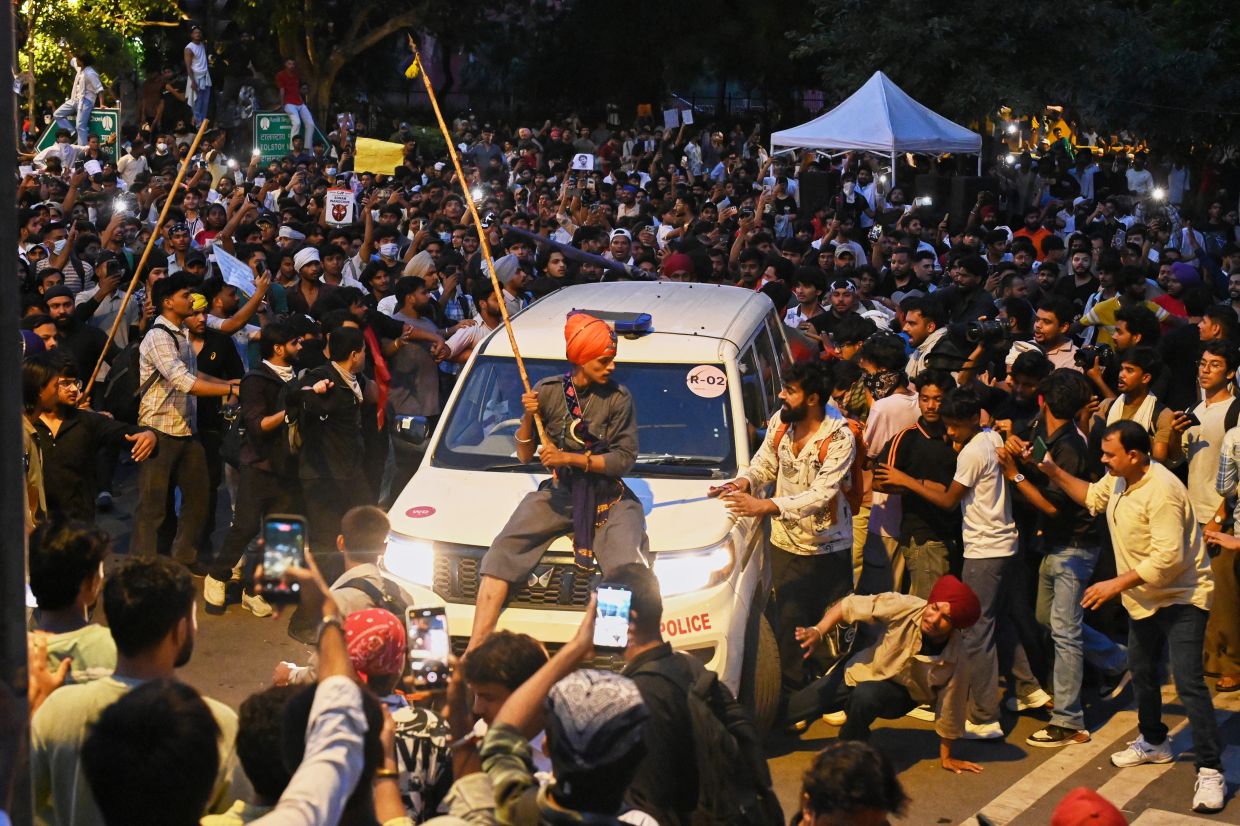
Prime Minister Narendra Modi has broken his silence on the education crisis gripping India, pledging "stringent punishment" for those implicated in widespread examination fraud that has ignited the largest student uprising in the capital for approximately five years. Speaking through social media on Thursday, Modi emphasised that "nothing is more important than the welfare and future of our youth," while announcing plans to establish fast-track courts dedicated to prosecuting those responsible for question paper leaks. The government's sudden pivot towards accountability comes after days of escalating demonstrations that have presented one of the most serious challenges to Modi's authority since his re-election for a third consecutive term in 2024.
The immediate trigger for the current unrest stems from a cascading series of examination irregularities that have shaken public confidence in India's entire testing infrastructure. Most notably, the leak of a medical entrance examination question paper forced more than two million candidates to undertake the test again, a logistical nightmare that exposed systemic vulnerabilities in national-level assessment procedures. Adding to the crisis, complications surrounding the online marking of high school examinations affecting nearly two million students have further compounded frustration among families and educational institutions. These failures have created a perfect storm of anger, particularly among young people already grappling with concerns about employment prospects and what many perceive as diminishing opportunities in a competitive economy.
The protest movement took its most dramatic form on Monday when police responded to a march towards parliament with tear gas and baton charges, leaving at least 178 people injured according to official accounts. The demonstrators, predominantly students, hurled stones in response, transforming what began as an educational grievance into a significant security challenge for authorities. Wednesday saw renewed violence when crowds gathered outside Jantar Mantar, a traditional protest site in New Delhi, leading to late-night confrontations with police. According to protest movement spokesperson Ashutosh Ranka, the security response was severe, with officers employing what he characterised as "brutal" tactics while authorities simultaneously shut down internet connectivity to restrict communication and coordination among protesters.
The movement has galvanised around an unlikely symbol: the Cockroach Janta Party, or CJP, which originated in May as a satirical online response when Chief Justice Surya Kant reportedly compared young people to "cockroaches" and "parasites" during court proceedings. What began as digital mockery has metastasised into a comprehensive youth-centred movement encompassing unemployment anxieties, lack of economic opportunity, and broader critiques of what participants describe as increasingly authoritarian governance. The CJP commands millions of followers across social media platforms, providing organisational infrastructure that traditional political parties have struggled to match. The movement represents a significant generational shift in protest dynamics, leveraging digital networks to mobilise constituencies that conventional political actors have long taken for granted.
Opposition parties have seized upon the unrest to challenge Modi's government, with lawmakers disrupting parliament proceedings and demanding an apology for Monday's police response. Congress Party member Rahul Gandhi directly confronted Modi on social media, stating that the Prime Minister had fundamentally undermined India's education system and protected officials responsible for its deterioration. This parliamentary dimension adds political weight to what might otherwise remain a student-driven movement, creating pressure from multiple quarters for meaningful administrative change and accountability beyond symbolic gestures.
The geographical spread of demonstrations reveals the depth of dissatisfaction extending well beyond the capital. Protests erupted in major metropolitan areas including Mumbai, Bengaluru, and Patna on Wednesday, suggesting that examination fraud and educational concerns resonate across diverse regions and socioeconomic contexts. The movement has attracted international attention and solidarity, with student groups in neighbouring Bangladesh organising a "torch rally" Thursday evening in support of Delhi protesters, invoking memories of their own 2024 youth uprising that toppled Sheikh Hasina's government. This cross-border dimension underscores how educational grievances and youth frustration with governance have become transnational concerns in South Asia.
Modi's promised response through fast-track courts and punitive measures represents an attempt to neutralise escalating discontent through administrative action and visible consequences for culprits. However, critics argue that such measures, while necessary, address symptoms rather than underlying systemic failures. The education system's vulnerability to fraud suggests deeper structural problems including insufficient oversight, inadequate technological safeguards, and potentially insufficient resources dedicated to examination administration. Students have specifically demanded the resignation of the education minister, viewing individual accountability as essential to demonstrating governmental commitment to reform.
The timing of Modi's statement, occurring only after major street violence and widespread disruption, raises questions about governmental responsiveness. Rather than proactively addressing educational failures, the administration appeared forced into a reactive posture by mounting public pressure and international scrutiny. For Malaysian observers, the Indian experience offers instructive parallels regarding how education system failures can catalyse broader political movements among youth populations increasingly connected through digital platforms and animated by shared frustrations about economic opportunity and governance quality.
The CJP movement's evolution from satirical commentary to substantive political force reflects how social media amplification can transform isolated grievances into generalised discontent with governance models. The movement's ability to mobilise millions without traditional institutional structures demonstrates changing patterns of political organisation across Asia, where younger demographics increasingly bypass conventional parties and unions in favour of digitally-coordinated collective action. Whether Modi's promises of accountability will genuinely address education system failures, or merely provide temporary political cover, will substantially influence whether youth movements in India consolidate into durable political alternatives or dissipate as anger gradually subsides.

